
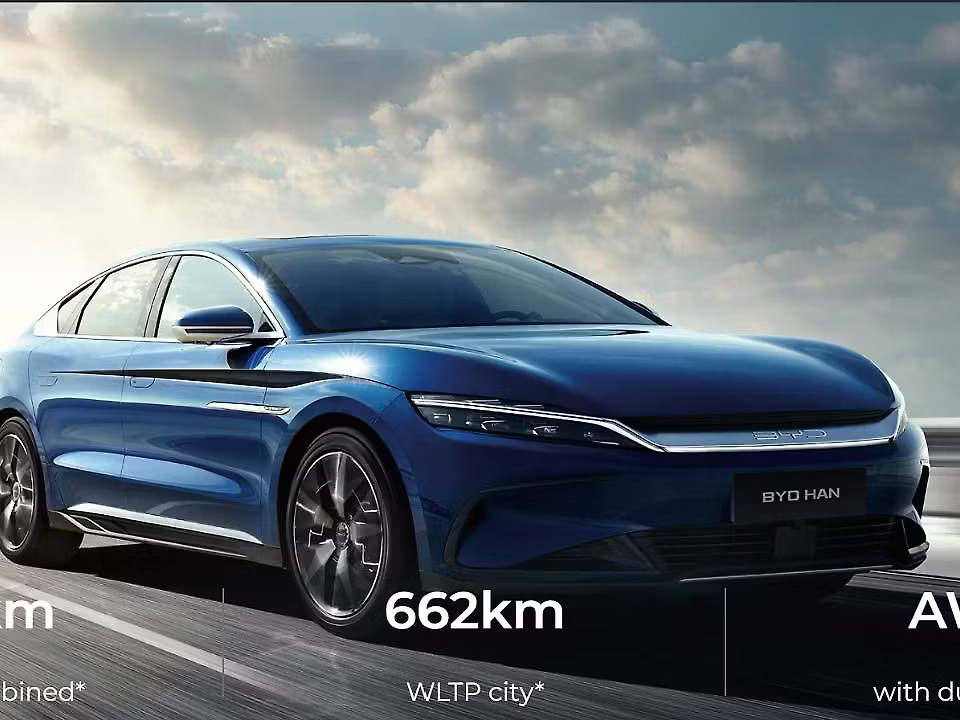
With the advancement of technology in the electric vehicle industry, several companies are focusing on building next-generation electric vehicles by pushing for fast charging, longer driving range, and higher power efficiency. Supplying power to electric vehicles has become a key role in shaping the future of electric mobility as it converts the available stored energy into useful kinetic energy and determines the vehicle range, charging speed, and battery lifespan.
To enhance the efficiency of power distribution in electric vehicles, BYD which is a Chinese manufacturer, has launched its latest-generation 1500V automotive-grade silicon carbide (SiC) power technology built for high-voltage applications that would offer higher efficiency and higher thermal capabilities along with super-fast charging technologies.




The new SiC technology is intended to work with BYD’s Super e-Platform (a 1000V high-voltage system integrating batteries, EV Motors and power electronics) which offers megawatt-level charging performance. The company claims that with a voltage rating of 1500V, this is currently the highest voltage rating for mass-produced automotive-grade SiC power chips (capable of high electrical loads).
Car manufacturers are increasingly turning to silicon carbide (SiC) instead of conventional silicon for electric vehicle power electronics. This type of semiconductor technology is characterized by significant improvements in electrical parameters compared with traditional silicon systems offering greatly reduced switching losses, ability to withstand high temperatures, and higher energy efficiency. This enables automotive companies to achieve greater compactness and weight reduction, and reducing cooling systems requirements in their inverters.

