
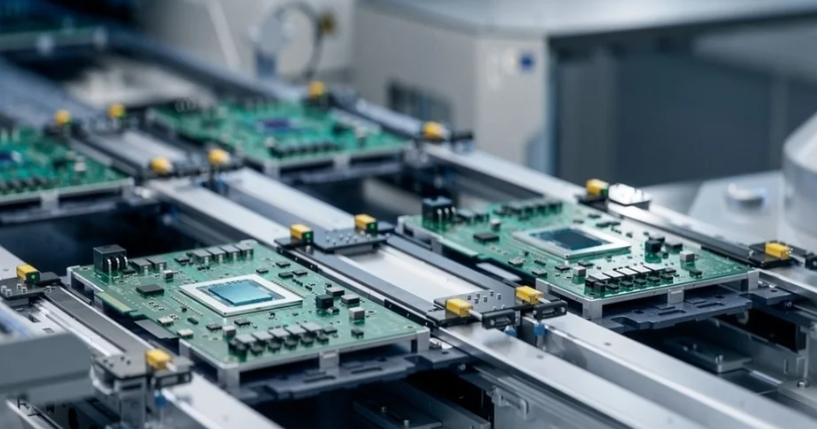
The Central government has introduced major reforms to Special Economic Zone (SEZ) Rules to push India’s aspirations in semiconductor and electronics manufacturing, with the aim of drawing global investments and minimizing procedural bottlenecks for high-tech sectors. The Ministry of Commerce & Industry said that these measures are going to change India’s industrial policy scenario where SEZs shall henceforth be more accessible and investment-friendly.
Major Policy Changes to SEZ Norms




Amendment on Rule 5 of the SEZ Rules, 2006, is among the landmark reforms, which includes the minimum land size to be established for a semiconductor or electronic component-specific SEZ being curtailed from 50 hectares to just 10. This is expected to benefit the smaller yet highly potential players and thus fast-track building advanced manufacturing hubs.
Another important change is Rule 7, which gives more latitude in acquiring and using land. There will no longer be an encumbrance-free clause attached to mortgaging or leasing land to federal or state government agencies. This will ease a significant regulatory hurdle faced by developers and investors.
In Rule 53, a new method to compute Net Foreign Exchange (NFE) has been introduced so as to include goods being received or supplied free of cost, if such valuation is carried out as per the customs valuation norms. This will align India’s SEZ policy with global best practices and allow easier trade reporting by SEZ units.
On the other hand, Rule 18 has been amended to enable the sale of goods from SEZs into the Domestic Tariff Area (DTA) on payment of the applicable duties. This upgrade will offer enhanced flexibility to the SEZ manufacturers, as well as improve viability of commercial operations by extending market access across the country.
Focus on Capital-Intensive, Long-Gestation Sectors
These strategic reforms notified by the Department of Commerce on June 3, 2025, will be targeted toward industries with higher capital investment needs and long development time frames-such as semiconductor fabrication and advanced electronics.
By minimizing the compliance cover and raising operational flexibility, the government would like to induce global majors and homegrown innovators to invest in the evolving high-tech landscape in India.
The policy shift would also aid job creation, particularly in areas, that are highly skilled. Amongst the jobs created would be those requiring skills in chip design, fabrication engineering and electronics system manufacturing.
Early Gains: Two Major SEZ Projects Approved
In a speedy follow-up to the announcement, the Board of Approval for SEZs has cleared two proposals of major import intended to create the desired impact of the reform:
- Micron Semiconductor Technology India Pvt Ltd would construct a semiconductor LRD of SEZ at Sanand, Gujarat, 37.64 hectares in extent, with an investment commitment of ₹13,000 crore. This unit would become one of the biggest nodes in the Indian-chip making landscape.
- The Hubballi Durable Goods Cluster Pvt Ltd, promoted by Aequs Group, would set up an electronics components SEZ at Dharwad, Karnataka, spread over an area of 11.55 hectares, with an investment of about ₹100 crore.
Such approvals speak of the desire of the government to swiftly translate the policy into action and brand India as reliable partner in the global semiconductor value chain.
Strengthening India’s Global Competitiveness
Due to the soaring worldwide demand for semiconductors and electronics as digital transformation and geopolitical realignments take place, India positions itself, almost by way of strategy, as an option for manufacturing. The new SEZ framework enhances ease of doing business and gives credence to India’s claim to become a self-reliant, technology-driven economy.
These are the steps towards building a strong semiconductor ecosystem, one offering innovativeness, resilience and global relevance.

