

An innovative analysis of two-dimensional (2D) materials from engineers at the University of Surrey could boost the development of next-generation solar cells and LEDs.
Three-dimensional perovskites have proved themselves remarkably successful materials for LED devices and solar panels in the past decade. One key issue with these materials, however, is their stability, with device performance decreasing quicker than other state-of-the-art materials. The engineering community believes the 2D variant of perovskites could provide answers to these performance issues.



In a study published in the Journal of Physical Chemistry Letters, researchers from Surrey’s Advanced Technology Institute (ATI) detail how to improve the physical properties of 2D perovskite called Ruddlesden-Popper.
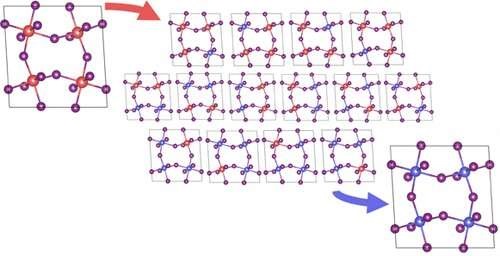
The study analyzed the effects of combining lead with tin inside the Ruddlesden-Popper structure to reduce the toxic lead quantity. This also allows for the tuning of key properties such as the wavelengths of light that the material can absorb or emit at the device level—improving the performance of photovoltaics and light-emitting diodes.
Cameron Underwood, lead author of the research and postdoctoral researcher at the ATI, said:
“There is rightly much excitement about the potential of 2D perovskites, as they could inspire a sustainability revolution in many industries. We believe our analysis of strengthening the performance of perovskite can play a role in improving the stability of low-cost solar energy and LEDs.”
Professor Ravi Silva, a corresponding author of the research and Director of the ATI, said:
“As we wean ourselves away from fossil energy sources to more sustainable alternatives, we are starting to see innovative and ground-breaking uses of materials such as perovskites. The Advanced Technology Institute is dedicated to being a strong voice in shaping a greener and more sustainable future in electronics—and our new analysis is part of this continuing discussion.”

