
A breakthrough from Deakin University researchers could help address a major obstacle in the development of an environmentally-friendly, cost-effective, polymer-based battery.
The team from Deakin’s Institute for Frontier Materials (IFM) used computer modeling and simulations to design a new type of solid-state polymer electrolyte, showing its potential use in various types of polymer-based solid-state batteries, particularly sodium and potassium batteries.




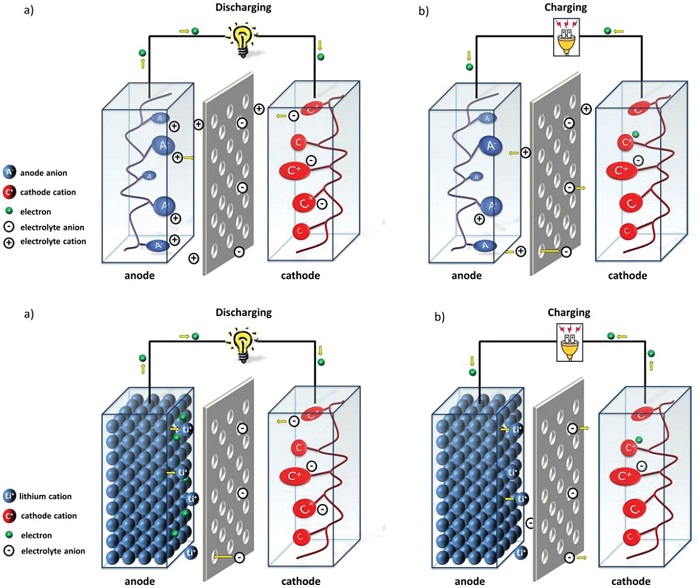
Polymer-based batteries are able to support high-energy density metals in all-solid-state batteries. They use polymer as the ion conductor rather than flammable organic liquid solvents in current lithium-ion batteries. Therefore, a polymer-based solid-state battery offers an energy storage option that is greener, safer and provides a higher capacity, meaning more energy.
Lead researcher Dr. Fangfang Chen said the team used a cost-effective, computer-to-lab material design strategy, applying modeling and simulations to find the best compositions for polymer electrolytes.
“This work has been devoted to developing new polymer electrolyte chemistries that can be used with high-energy metals that are more abundant and less expensive than lithium, such as sodium and potassium,” Dr. Chen says.
“The new materials can contribute to a more sustainable, greener future battery technology, as well as providing society with safer, high-performance energy storage devices.”
Alfred Deakin Professor Maria Forsyth said the work expands current knowledge of these new electrolyte systems.
“Major battery companies, such as LG Chemistry, set a road map to develop next-generation polymer-based solid-state batteries,” Prof. Forsyth says.
“Lithium-based technology is expensive, in-demand, and increasingly scarce, so breakthroughs that provide alternative, inexpensive and safe energy storage options are of major significance.
“We can now offer an alternative path to realizing polymer-based solid-state batteries. This is a significant milestone and this process will act as a design criterion for further development in this field of research.”
The research is the second significant finding. In early July, a team led by Dr. Xiaoen Wang and Prof. Forsyth developed a solid polymer electrolyte material that can replace the flammable liquid solvents currently used in sodium batteries. The newest breakthrough demonstrates how computer-to-lab research is a cost-effective way to drive new discoveries for advanced batteries, which are much needed for energy-hungry applications.
Prof. Forsyth said the back-to-back discoveries have designed two effective, efficient polymer electrolytes from “different angles.”
“This reflects IFM’s leading position in the field of polymer electrolytes,” she says.

