
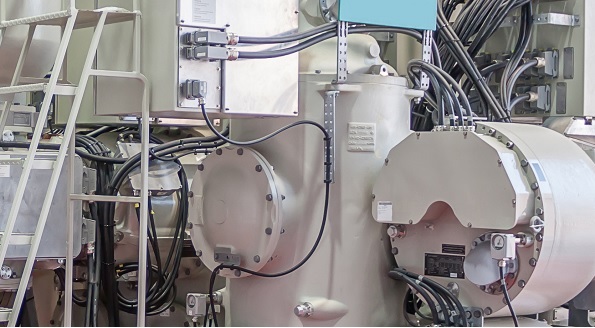
The Power Generation, Transmission, and Distribution sector (PGTD) face various challenges. Due to the large sums of data and signal transmissions required for monitoring all the equipment in the generation and distribution process, reliable connection is critical. Hardwiring does not always present itself as an efficient solution to such a challenge, since it is time-consuming, requiring high efforts and costs. Power networks, however, are calling for short reaction times; the relevant sub-systems need to run safely and smoothly. In order to meet such requirements, it is useful to utilise industrial connectors.
Connectors do not only reduce wiring costs but also allow faster construction, commissioning and maintenance in the field. Connectorisation takes all the guesswork out, especially, where switching and controlling devices are required to operate side-by-side. Moreover, connectors increase safety, since they provide coding options, which guarantee that both sides of a connection only mate with their right counterpart.





Chairman of the Board,
HARTING Technology Group
Mr. Philip Harting statement: “Connector-based wiring provides outstanding advantages over hardwiring at every stage of the product lifecycle. Our connectivity solutions are reducing wiring costs and allow faster reaction times in the field.”
Connector-based wiring instead of hardwiring is beneficial at every stage of an application’s lifecycle:
- Installation time
Connected in series control cabinets or larger switch gear must be disassembled before they can be delivered to the customer’s supply chains or directly to the construction sites. Often electricians or subcontractors are hired for reassembly in the field who are less familiar with the components and the required special tools than the original manufacturer’s teams. This may eventually lead to failed on-site tests and lengthy evaluation processes. Instead, it is much more promising to use pre-tested and countless times have proven connectors for installing electrical components.
- Labour costs
Hardwiring often leads to extra labour. The assembly, testing, and repair of hardwired components takes time and efforts, requiring special skills. The use of connectors dramatically reduces the costs, since it increases efficiency and allows for savings in terms of time and labour.
- Maintenance
Using connectors instead of hardwiring, power generation and transmission facilities and their subsystems are easier to maintain. In the field, the service teams simply have to uncouple parts from the application and replace them with pretested new ones.
- Design and lead-time
Using modules, power, control, and data transmission can take place side-by-side in a single connector housing. The related contacts and inserts are designed for high-voltage/current, thermocouple, Profibus or Ethernet transmission. The modular principle increases the flexibility and saves space on the equipment, making it much easier for specialists to design their applications according to the latest technologies and trends, such as digitalisation, modularisation or miniaturisation.

