
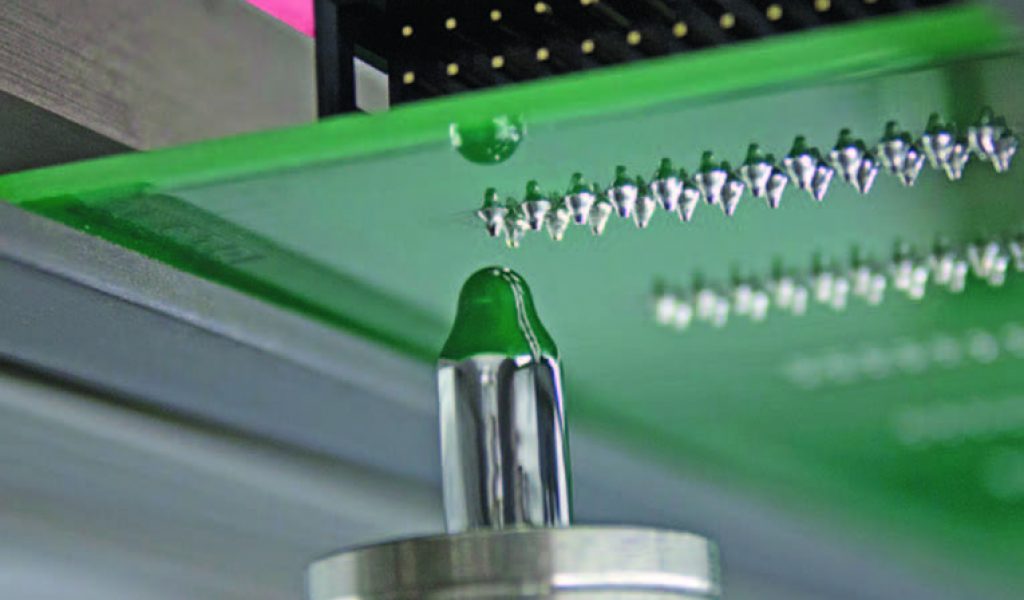
What is Selective Soldering?
Selective soldering is an advanced soldering technique used in electronics manufacturing to solder specific components on a printed circuit board (PCB) without affecting adjacent parts. Unlike traditional wave soldering, which exposes the entire board to molten solder, selective soldering focuses only on designated areas, making it ideal for complex PCB assemblies with mixed technology components.
This method is essential in industries where high precision and reliability are required, such as aerospace, automotive, medical devices, and telecommunications. Selective soldering helps manufacturers meet stringent quality standards while reducing thermal stress on sensitive components.




How Selective Soldering Works
Selective soldering involves applying molten solder to specific areas of the PCB using a programmable system. It typically follows these key steps:
- Flux Application: A controlled amount of flux is selectively applied to solder joints to improve wetting and prevent oxidation.
- Preheating: The PCB is preheated to activate the flux and reduce thermal shock, ensuring better solder flow.
- Soldering Process: A programmable soldering nozzle or mini-wave applies molten solder to the designated areas, forming high-quality solder joints.
- Cooling and Inspection: The board is cooled down gradually, and automated inspection methods such as X-ray or AOI (Automated Optical Inspection) are used to ensure quality.
Selective Soldering Process
The selective soldering process can be categorized into three main techniques:
- Mini-Wave Soldering
This method involves using a small nozzle that creates a miniature solder wave, selectively soldering through-hole components. The PCB moves over the wave, allowing precise solder application.
- Jet Wave Soldering
In this approach, a high-precision nozzle dispenses solder in a controlled manner. It is ideal for densely populated PCBs where precise control is required.
- Laser Selective Soldering
This technique utilizes a laser to heat the solder and create joints without physical contact. It is beneficial for highly sensitive components that require minimal thermal exposure.
Each of these methods is chosen based on factors such as board complexity, component density, and production volume.
Selective Soldering Uses & Applications
Selective soldering is widely used across various industries due to its precision and reliability. Some of the primary applications include:
- Automotive Electronics: Used in engine control units (ECUs), infotainment systems, and safety modules where high-reliability soldering is required.
- Aerospace and Defense: Essential for high-reliability PCBs used in avionics and military communication systems.
- Medical Devices: Applied in medical instrumentation where strict quality standards are necessary.
- Consumer Electronics: Used in complex PCB assemblies for smartphones, tablets, and wearables.
- Industrial Automation: Ensures robust connections in industrial control systems and robotics.
Selective Soldering Advantages
- Precision and Selectivity
Selective soldering allows targeted soldering, reducing the risk of damage to nearby components. This is particularly useful for mixed-technology PCBs.
- Reduced Thermal Stress
Unlike wave soldering, which exposes the entire board to heat, selective soldering minimizes thermal exposure, protecting heat-sensitive components.
- Higher Reliability
With precise solder control, the process ensures consistent joint quality, reducing defects such as solder bridges or cold joints.
- Cost-Effectiveness
Selective soldering reduces solder and flux consumption while minimizing rework and scrap rates, leading to cost savings in production.
- Automation Compatibility
Modern selective soldering systems can be fully automated, improving repeatability and efficiency in high-volume manufacturing.
Selective Soldering Disadvantages
- Slower Process Compared to Wave Soldering
Since each component is soldered individually, the process is slower than wave soldering, making it less ideal for extremely high-volume production.
- Higher Initial Investment
Selective soldering machines are more expensive compared to traditional soldering equipment, requiring a significant upfront investment.
- Complex Programming and Setup
Proper setup and programming are required to achieve optimal results, necessitating skilled operators and additional setup time.
Conclusion
Selective soldering is a vital technique in modern electronics manufacturing, providing high precision, reliability, and cost-efficiency. While it has certain limitations, its advantages make it indispensable for industries requiring robust and precise soldering solutions. As technology advances, selective soldering is expected to become even more efficient, further enhancing its role in electronic assembly processes.

