

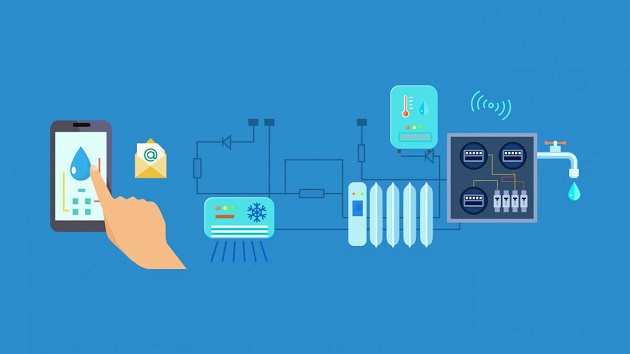
Sensor Technology and Artificial Intelligence for Water Management seem quite fascinating. Likewise, water conservation for sustainable development has been and still the most apprehended process. A better conservation and management process would necessarily help the economy grow secure and stable for the future.
From the elementary levels of education, we learn about the usage of water efficiently for better health and stability. Conservation and management have always been a moral trait and governing this with maximum advocacy was always the challenge.



Technology can necessarily play the role of a watchdog in the process of reducing water wastage and improving usage factors. Failing in this would necessarily end up in the war for water.
Sensors used predominantly in almost all the sectors will account for the maximum factor of analysing wastage. Measurement and Checking of Contaminants can be easily accessed through sensing technologies.
Techniques like AI, Machine Learning, Cognitive Computing and Predictive Maintenance can be used for data interpretation and conversion from sensors for decision making. Precise measurements help in finding faults and needed changes to tackle loss.
Machine algorithms, AR and VR can optimise the water utilities. AI in water will also reduce water wastage and improve health with targeted water-treatment strategies at lower costs.
Areas of AI and Sensor Relevance
- Demand analysing and forecasting
- Tracking quality and maintaining purity levels
- Detection of faults in the utilities
- Level prediction and monitoring of natural water resources
- Condition-based maintenance for pumps and valves
- Natural calamity predictions
- Technical and responsive irrigation mechanism
- Conservation of the extinction resources
Recently, the International Cente for Clean Water (ICCW) known as the Centre of Excellence decided to promote AI and sensing technologies in the water sector by developing clean water technologies and nurturing startups.
An initiative under ICCW and IIT Madras has also been established at IIT Research Park with seven exclusive laboratories for sustainable clean water technologies. Hydroinformatics is the major process factor of ICCW which is an interdisciplinary subject for the management of water resources with AI, Blockchain as well as IoT.
In addition, ICCW is also mentoring startups in AI and developing sensors for major contaminants. Meanwhile, it is also researching the applications of AI and IoT technologies in water to solve real-world water problems. ICCW through its implementation strategies in water treatment plants aims at achieving clean and sustainable water for all.
By: Mannu Mathew | Sub Editor | ELE Times

