
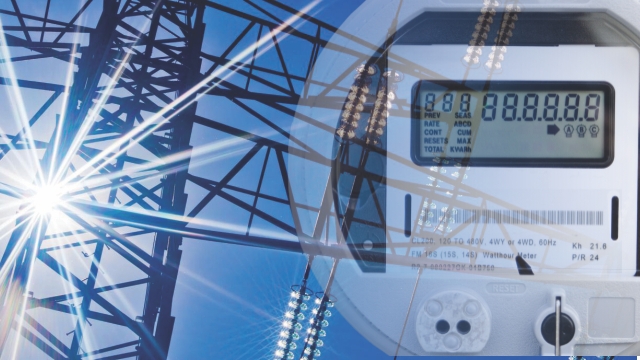
At the Smart City Exhibition ST showed how continuously evolving products and platforms enable efficient and sustainable electric smart grids and cutting-edge technology. Smart cities combine protection of the environment, energy efficiency and economic sustainability in a single urban model to improve quality of life and create new services for residents and local authorities. Our Smart City solutions enable the most modern network management and control systems, smart grids, electricity, electric vehicle charging infrastructure, climate monitoring, parking, traffic, waste management, and smart street lighting. Each city can build its own management system displayed on a single dashboard. Leveraging the strength of both companies, Tatung, Taiwan’s leading electronics company for
Each city can build its own management system displayed on a single dashboard. Leveraging the strength of both companies, Tatung, Taiwan’s leading electronics company for smart home, building and city solutions and ST are developing a range of products from gateways to sensors to OEM modules to fuel the growth in smart buildings and grids. By leveraging HomePlug AV/GP power line communication, ST can create an overlay infrastructure with wireless sensor hubs that can almost instantly transform regular infrastructures into smart systems. The Universal Developer Kit (UDK-21) launched by Tatung and ST was showcased at one of the exhibitions.



By leveraging HomePlug AV/GP power line communication, ST can create an overlay infrastructure with wireless sensor hubs that can almost instantly transform regular infrastructures into smart systems. The Universal Developer Kit (UDK-21) launched by Tatung and ST was showcased at one of the exhibitions.
The Smart Grid end-to-end program in Toulouse, France includes, smart meters, energy sensors, renewable energy, electric vehicles and demand control management where real-time data is communicated through G3-PLC using our STCOMET over ERDF power grid.
Communication Standards in Smart Metering
Power Line Communication (PLC) is the most popular and adopted technology for Smart metering, not only in Europe, but also in China, Africa and South America where still proprietary technologies are used, although the interest for standardized solutions is rapidly growing. In some countries anyhow, due to particular power grid local topology, PLC can be less effective than other communication technologies: this is the case for example of North America or Japan, where each secondary transformer feeds only few customers. Since such transformers usually represent a high attenuation path for PLC signals, more repeaters or complementary communication technologies could be needed to ensure reliable data transmission. That’s why in those countries, RF solutions are more popular for smart metering applications, although the cost of ownership associated
Since such transformers usually represent a high attenuation path for PLC signals, more repeaters or complementary communication technologies could be needed to ensure reliable data transmission. That’s why in those countries, RF solutions are more popular for smart metering applications, although the cost of ownership associated to RF infrastructures is higher.
PLC is by far the most commonly adopted communication technology for smart metering, with more than 50 million installed points just in Europe, thanks to communication proven reliability and lower CAPEX and OPEX figures compared to other technologies. Among multiple available PLC technologies, European Commission has selected “Meters and More”, “PRIME” and “PLC-G3” as the most suitable standards for Smart metering roll-outs. This decision is the results of an
This decision is the results of an in depth analysis including multiple requirements in terms of openness, standardization, interoperability, certification, maturity, field experience, network architecture, functional requirements, stakeholders needs and so on.
In Europe where countries with the largest Power Line Communication based smart metering programs running on field and one of the most advanced in terms of regulations and standards framework guidelines. This experience is a valuable asset for all countries outside Europe who are approaching smart metering implementations and are looking for a cost-effective, reliable, interoperable and future-proof massive deployment. For smart meter to data concentration “last mile“ connectivity, “OPEN meter” project selected Power Line Communication (PLC) as the most suitable technology. Among several PLC technologies and specifications analyzed, including both narrow-band and
For smart meter to data concentration “last mile“ connectivity, “OPEN meter” project selected Power Line Communication (PLC) as the most suitable technology. Among several PLC technologies and specifications analyzed, including both narrow-band and broad-band technologies, only three open communication specifications have been selected as able to satisfy the AMI defined architecture and requirements: “Meters and More” (then published as CENELEC CLC pr TS 50568-4 standard), “PRIME” (then published as CENELEC CLC pr TS 50567-1 standard and ITU-T G.9904) and “G3-PLC” protocols (then published as CENELEC CLC pr TS 50567-2 standard and ITU-T G.9903).

