

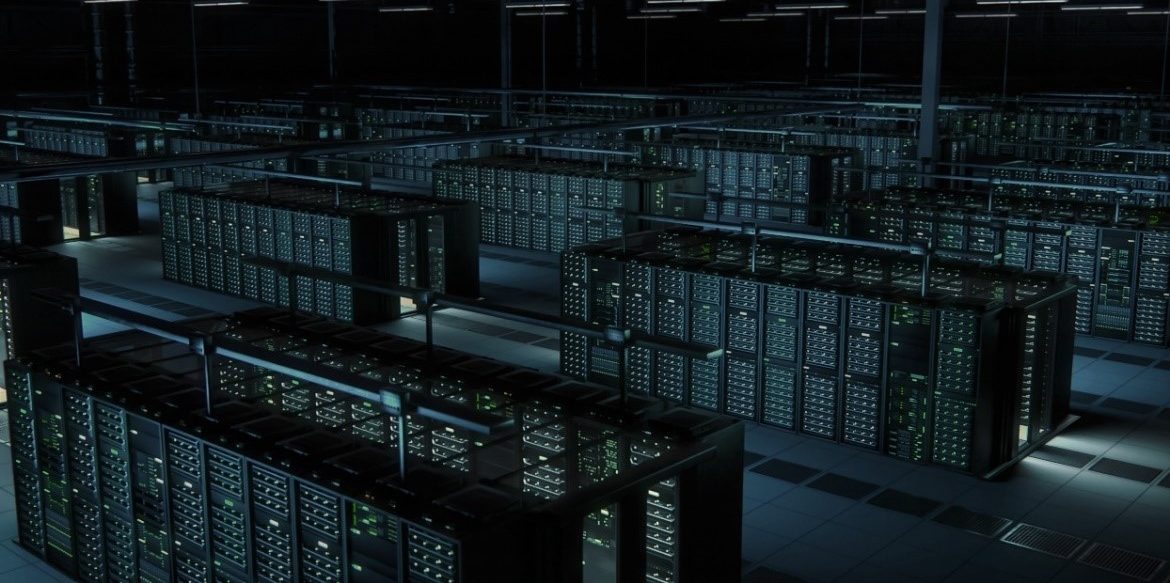
Texas Instruments (TI) debuted new design resources and power-management chips to help companies meet growing artificial intelligence (AI) computing demands and scale power-management architectures from 12V to 48V to 800 VDC. The new solutions will be on display at Open Compute Summit (OCP) Oct. 13-16 in San Jose, and include:
- “Power delivery trade-offs when preparing for the next wave of AI computing growth”: TI is collaborating with NVIDIA to develop power-management devices to support 800 VDC power architecture, as IT rack power is expected to eclipse 1MW in the next two to three years. This white paper reexamines the power delivery architecture within the IT rack, and addresses design challenges and opportunities for high efficiency and high power-density energy conversion at a system level.
- Reference design: 30kW AI server power-supply unit: To support stringent AI workloads, TI’s dual-stage power-supply reference design features a three-phase, three-level flying capacitor power factor correction converter paired with dual delta-delta three-phase inductor-inductor-capacitor converters. The power supply is configurable as a single 800V output or separate output supplies.
- Dual-phase smart power stage:The highest peak power density power stage on the market, TI’s CSD965203B offers 100A of peak current per phase and combines two power phases in a single 5mm-by-5mm quad flat no-lead package. The device enables designers to increase phase count and power delivery across a small printed circuit board area, improving efficiency and performance.
- Dual-phase smart power module for lateral power delivery: The CSDM65295 module delivers up to 180A of peak output current in a compact 9mm-by-10mm-by-5mm package, helping engineers increase data center power density without compromising thermal management. The module integrates two power stages and two inductors with trans-inductor voltage regulation (TLVR) options, while maintaining high efficiency and reliable operation.
- Gallium-nitride intermediate bus converter: Capable of delivering up to 1.6kW of output power in a quarter-brick (58.4-mm-by-36.8mm) form factor, TI’s LMM104RM0 converter module offers over 97.5% input-to-output power-conversion efficiency and high light-load efficiency to enable active current sharing between multiple modules.
AI data centers require architectures designed with multiple foundational semiconductors for efficient power management, sensing and data conversion. With new design resources and a broad power-management portfolio, TI is working alongside data center designers to implement a comprehensive approach that drives efficient, safe power management – from power generation at the grid to the fundamental logic gates of graphics processing units.



“With the growth of AI, data centers are evolving from simple server rooms to highly sophisticated power infrastructure hubs,” said Chris Suchoski, sector general manager, Data Centers at TI. “Scalable power infrastructure and increased power efficiency are essential to meet these demands and drive future innovation. With devices from TI, designers can build innovative, next-generation solutions that are enabling the transition to 800 VDC.”

