
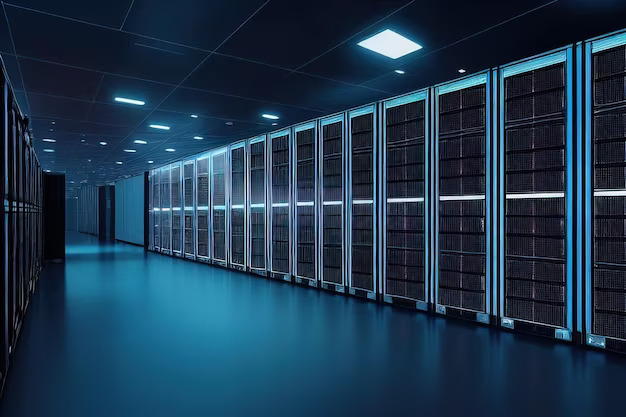
The rise of generative AI and large-language models is forcing a complete redesign of data centers in India. Traditional setups designed for 5 to 10 kW per rack simply cannot handle modern GPU clusters, which regularly push power densities beyond 30 to 100 kW. When you hit those numbers, standard air conditioning stops working, and the risk of thermal throttling or total power failure becomes a daily operational challenge.
Running an AI-ready facility today comes down to specialized power electronics, direct-to-chip liquid cooling, heavy-duty physical enclosures, and rock-solid grid stability. Here is how five key infrastructure providers are building the physical hardware behind India’s AI compute push.




1. Delta Electronics India

AI workloads pull massive, continuous surges of electricity while throwing off extreme heat. Delta handles both sides of that equation with specialized power electronics and liquid cooling built explicitly for compute-dense environments. The portfolio centers on megawatt-scale power shelves, high-efficiency UPS systems, and specialized Liquid-to-Liquid (L2L) and Liquid-to-Air (L2A) Cooling Distribution Units (CDUs). By routing direct-to-chip liquid cooling straight to high-TDP processors, Delta keeps Power Usage Effectiveness (PUE) low without letting high-density racks overheat under peak workloads.
2. Eaton India

Training large AI models creates sudden, severe power spikes that can strain local grids and trigger dangerous voltage sags within a facility. Eaton solves this at the power layer with high-density Power Distribution Units (PDUs), energy-storage-ready UPS setups, and smart switchgear designed to buffer heavy load fluctuations. Their systems make it possible to integrate renewable energy directly into high-density data centers while keeping internal power quality steady around the clock.
3. Stulz India

When heat outputs surpass standard HVAC limits, precision thermal management takes over. Stulz specializes in custom direct to-chip and liquid cooling infrastructure, precision air handling, and high-capacity chillers engineered for dense server rooms. Their fluid distribution loops allow operators to shift from hybrid air-water systems toward full liquid cooling setups, keeping sensitive server components running safely without risking heat-induced performance drops.
4. Rittal India

Heavy AI server nodes—packed with multiple GPUs and fluid lines—are drastically heavier and more complex than standard IT equipment. Rittal manufactures industrial-grade modular rack systems, climate-controlled enclosures, and inline cooling manifolds engineered to bear heavy structural loads. Their sealed rack designs integrate liquid lines directly into the enclosure frame, keeping complex server arrays organized, cooled, and isolated within small physical footprints.
5. CoolIT Systems

When rack densities cross the 100 kW mark, pulling heat directly off the silicon becomes non-negotiable. CoolIT builds the custom cold plates, fluid distribution manifolds, and heat-exchange units that sit directly on top of high-performance chips. Partnering with global server OEMs and data center builders, they provide the internal liquid loops necessary to keep high frequency processors running cool under continuous parallel processing loads.
Building the Foundation for AI Compute
India’s AI growth depends entirely on what is happening on the server room floor. The real work is being done by high efficiency power converters, liquid cooling loops, robust enclosures, and stable sub-stations. As compute demands scale up, these hardware manufacturers are laying down the actual foundation that makes real-world AI processing possible.

