
To maximize the performance of analog input modules in programmable logic controllers (PLCs) used in factory automation, it is essential to focus on several key design considerations. These modules, which convert real-world signals into digital signals, vary based on voltage and current inputs, channel count, and configuration (single-ended or differential). Below are some important factors for consideration:
- System Accuracy and Reproducibility:
- Precision in analog-to-digital converters (ADCs) and the analog front-end is crucial for accurate and reproducible measurements.
- Component Selection:
- Low-Offset-Drift Amplifiers: Help maintain an adequate error budget.
- Low-Noise Operational Amplifiers (Op Amps): Achieve a higher effective number of bits or noise-free resolution.
- Instrumentation Amplifiers: Enhance precision in measurements.
- Power Consumption and Data Acquisition Speed:
- Balance between power usage and the speed at which data is acquired and processed.
- Process Technology: Choose technology that offers an acceptable speed-to-power ratio.
- Converter Topology:
- Successive Approximation Register (SAR) Converters: Preferred for efficiency without compromising performance.
- Bipolar Technology: Offers high efficiency with a good speed-to-power ratio, but be mindful of input bias current and input impedance.
Using Op Amps in Multiplexed Systems
In systems where a multiplexer allows one measurement at a time, issues such as large differential voltages at the op-amp input can arise, especially when switching between measurements (e.g., pressure and temperature). This can forward-bias input protection diodes, causing leakage currents that affect the amplifier’s settling time and digitization accuracy.




Multiplexer-Friendly Op Amps:
- Employ different protection schemes to avoid the issues caused by internal diodes, improving overall settling time.
Field Transmitter Interfacing
When interfacing with field transmitters that have high impedances (greater than 1 MΩ):
- MOSFET Input Op Amps: Suitable for high-impedance applications.
- Junction FET (JFET) Input Amplifiers: Offer very high input impedance but have a narrower common-mode input voltage range.
- Bipolar Op Amps: Provide the best speed-to-power ratio without compromising noise performance but have trade-offs like higher input bias current or lower input impedance.
Super Beta Topology:
This approach in bipolar designs can enhance both DC precision and AC performance, making it versatile for various analog input modules within PLCs.
Diagrams and Calculations
Figure 1: Signal Path Feeding to a High-Resolution Converter – Ensures minimal loss and distortion.
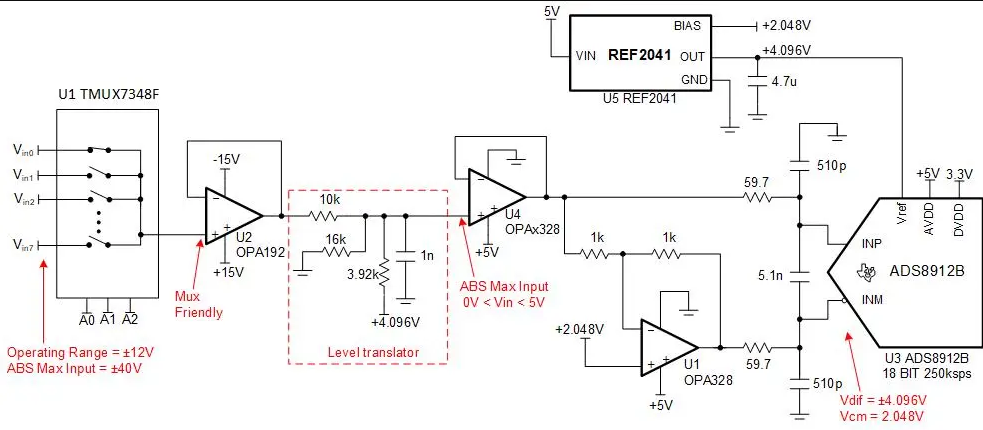
Figure 2: Precision Analog Front-End- Maintains linearity in the converter.
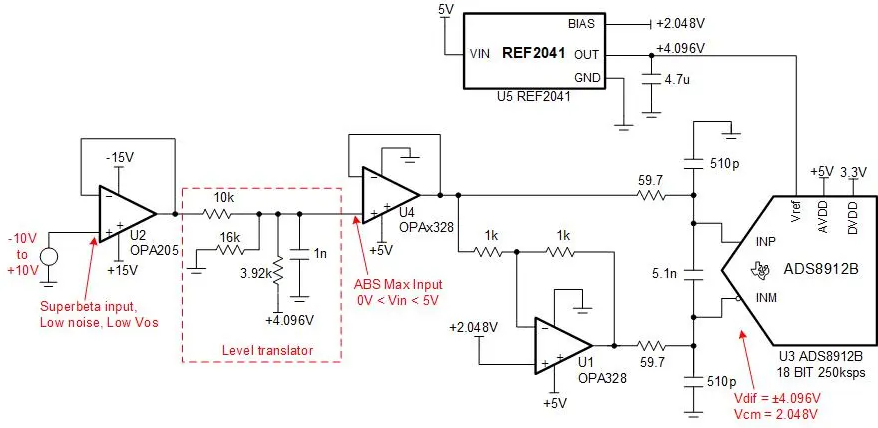
Figure 3: Noise Contributions- Analyzes the impact of amplifiers, voltage reference, and data converter.
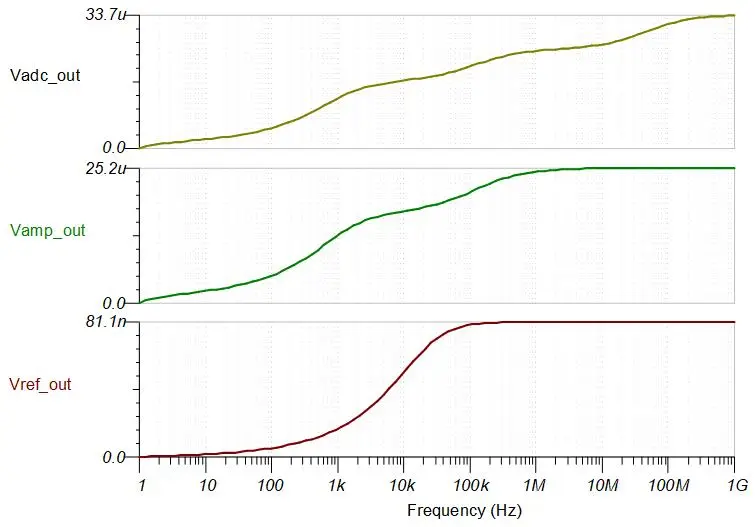
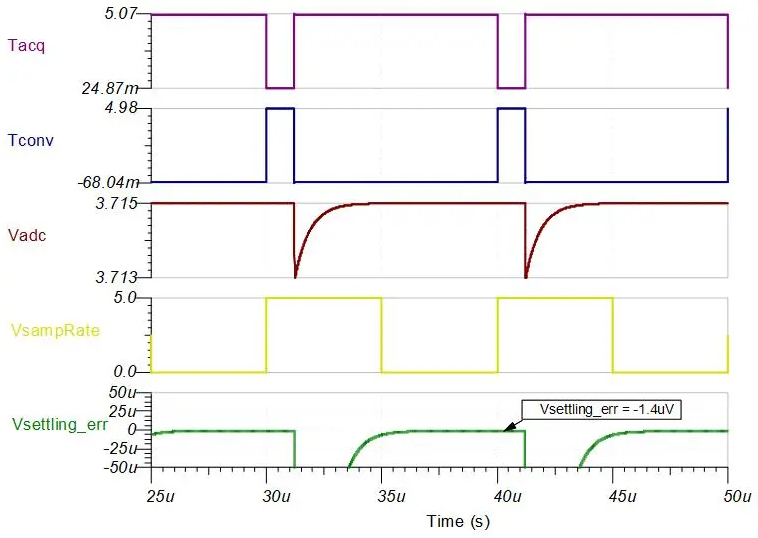
Figure 4: Settling Time: Critical for accurate digitization, calculated as LSB = (4.096 × 2)/2^18, yielding 31.25 mV. Multiplying by 0.5 gives 15.625 mV, representing half an LSB.
Optimization Considerations
The choice of components will depend on whether the goal is to optimize for settling time or noise performance. A bipolar op amp with integrated overvoltage protection can enhance efficiency without sacrificing settling time. In multiplexed systems, multiplexer-friendly op amps are essential to avoid performance issues.
By carefully selecting and configuring the appropriate components, you can achieve an optimal balance between DC and AC parameters, maximizing the performance of analog input modules in PLCs.
Story Credit: Texas Instruments

