HomeIndustryAutomotiveRare-Earth-Free EV Motors: How India Could Reduce Dependence on Critical Magnet Materials

Rare-Earth-Free EV Motors: How India Could Reduce Dependence on Critical Magnet Materials

India is exploring new electric-motor technologies that may help the electric vehicle (EV) industry reduce reliance on rare-earth permanent magnets. During the recent New Delhi deep-tech showcase, Indian innovators introduced a rare-earth-free electric powertrain, reflecting the country’s growing focus on developing alternative motor technologies free of rare-earth materials.

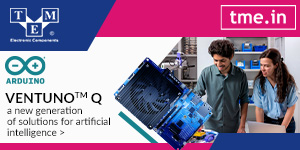
Chara Technologies, which is based in Bengaluru, was among the companies showcased. The company has built rare-earth-free synchronous reluctance motors and controllers for electric mobility. It uses materials that are indigenously sourceable materials and does not require rare-earth permanent magnets, which are commonly used in many high-performance electric motors. Chara’s motor platform covers 8 kW-30 kW, and the products are ARAI- and ICAT-certified.

Why Rare-Earth-Free Motors Matter for EVs

India currently imports all of its downstream sintered NdFeB rare-earth permanent magnet demand. These high-efficiency magnets are preferred in electric vehicle motors due to their high magnetic properties, which support compact and high-power density motor designs. Although India has some large deposits of rare-earth minerals, as with many other processing countries, India is not yet equipped with industrial-scale midstream facilities to convert rare-earth oxides into metals, alloys, and magnets and is therefore reliant on imports of sintered NdFeB magnets.

India’s Push for Alternative EV Motor Technology

India’s EV manufacturers could reduce reliance on imported rare-earth magnet supply chains by adopting rare-earth-free motors, which can enable greater use of locally sourceable materials and manufacturing capabilities. However, these motors will be commercially successful only if they offer comparable or better efficiency, power density, cost, thermal performance, reliability and scalability.

ELE Times Research Desk
ELE Times Research Deskhttps://www.eletimes.ai
ELE Times provides extensive global coverage of Electronics, Technology and the Market. In addition to providing in-depth articles, ELE Times attracts the industry’s largest, qualified and highly engaged audiences, who appreciate our timely, relevant content and popular formats. ELE Times helps you build experience, drive traffic, communicate your contributions to the right audience, generate leads and market your products favourably.

Related News

Must Read

Emerson Extends RF Test Capabilities to New Multiport and MIMO Test Applications

Global automation leader Emerson today announced new radio frequency...

Top 10 AI Agent Frameworks for Developers in 2026

​AI is no longer just creating chatbots; now it...

Advancing Cyber Posture, Governance and Skill Development in India and Beyond

Rapid technological acceleration and shifting regulatory landscapes warrant robust...

Infineon introduces 27 kW three-phase PSU solution for next- generation AI server power architectures

Artificial intelligence workloads are redefining the power requirements of...

PRAMA Showcases Intelligent and Indigenous Transport Security Solutions at Traffic Infratech Expo

India’s premier indigenous video security brand, PRAMA displayed its...

The Evolution of Automotive Safety and the Sensors Driving It

Automotive safety has grown up in layers. Passive safety,...

AI Agents Explained: How Planning, Memory, Tools and Reasoning Work

AI is transitioning from answer-providing computer programs to the...

DigiKey Webinar Shows How My Lists Tool Simplifies Parts Management and Quoting

DigiKey, the global distribution leader of electronic components and...