

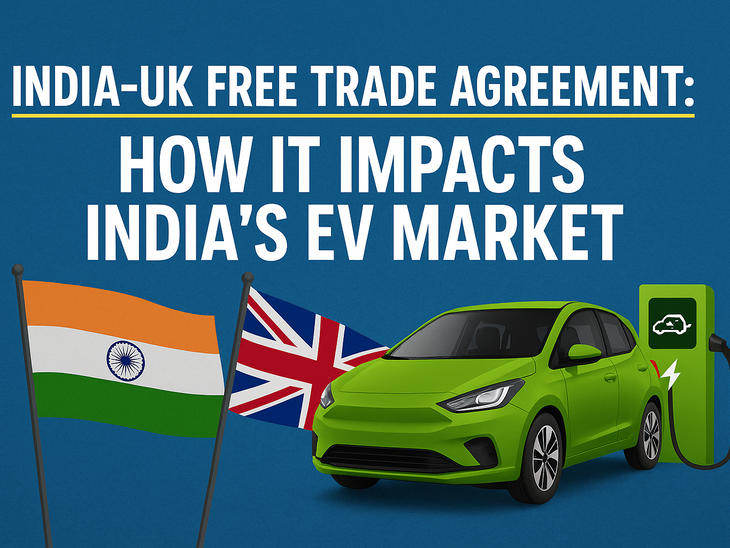
The effective implementation of India-UK Comprehensive Economic and Trade Agreement (CETA) on July 15, 2026, highlights a significant growth for India’s automotive and electric vehicle (EV) sector. This agreement is a landmark free trade that eliminates custom duties on thousands of products, significantly boosting exports and foreign-investment by encouraging UK companies to invest in India through supply chains and manufacturing facilities. It was introduced by Indian Prime Minister Narendra Modi and UK Prime Minister Sir Keir Stamer, officially signed in July 2025 by both nations with the primary objective of expanding bilateral trade and investment.
The CETA establishes a comprehensive framework for creating new opportunities for Indian EV manufacturers, component suppliers, and battery companies by reducing traffic barriers and improving market access. Indian automakers like Tata Motors, Mahindra, and Maruti Suzuki can export up to 88,000 vehicles to the UK completely duty-free and scale their domestic manufacturing by integrating domestic MSME suppliers deeper into the UK and global EV supply chains.



The UK gains benefits by this agreement through deepened cooperation with India’s expanding clean energy and technology sector. The CETA provides UK businesses with improved access to India’s rapidly growing market and creating opportunities for greater trade and investment. This agreement improves the UK economy by granting tariff cuts on 90% of UK exports to India, lowering costs for UK consumers, and improving market access for British products.
The agreement is fully active and remain operational to its provisions on implementation. The future goal is to double bilateral trade to $100-120 billion by 2030. The current status of this agreement is that it operates alongside the Double Contribution Convention (DCC), a social security pact that saves Indian companies up to $600 million annually by exempting Indian professionals working temporarily in the UK from paying social security contributions in both countries simultaneously.

