

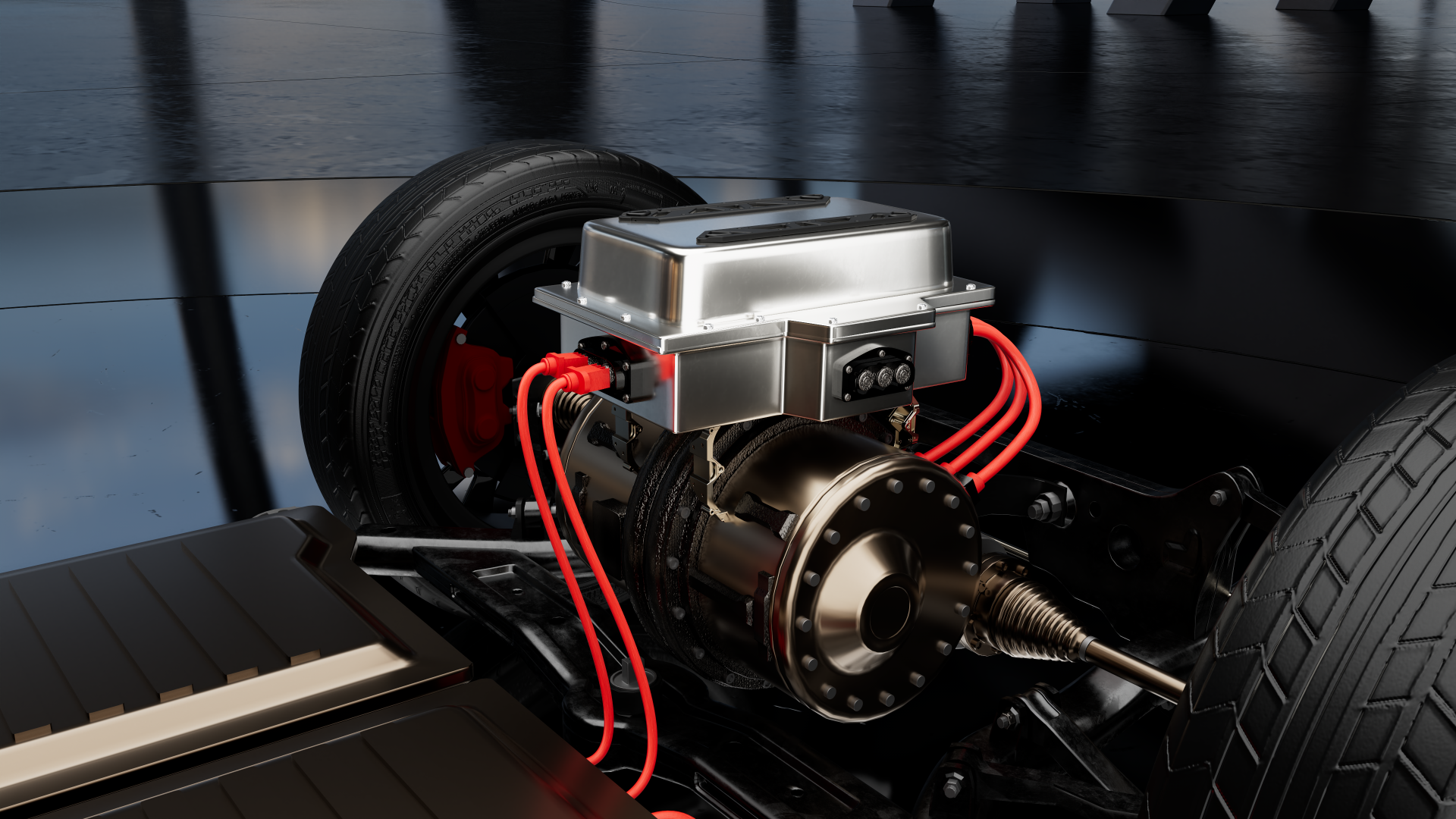
Texas Instruments (TI) today introduced the industry’s first multiaxial coreless Hall-effect current sensor designed for all hybrid electric vehicle and electric vehicle (HEV/EV) traction inverter applications. The TMCS2100-Q1 sensor offers a first-of-its-kind approach to current sensing through the combination of multiaxial measurement and a proprietary algorithm, eliminating the trade-off between precision and system size in traction inverter designs.
While existing coreless solutions are limited to single-axis measurements, the TMCS2100-Q1 sensor is the first to measure magnetic fields in both horizontal and vertical directions. This multiaxial measurement is 20 times more accurate than single-axis alternatives, achieving displacement error of less than 1% at 0.4mm movement and as low as 0.25% at 0.1mm. This level- of precision improves the EV powertrain torque control loop, maximizing efficiency and power delivery across varying load and thermal conditions.



“For the first time, engineers have a Hall-effect current sensor that breaks through the limitations of existing solutions, which is especially critical as 800V architectures raise the bar for traction inverter accuracy,” said Jason Cole, vice president and general manager, Sensing Products at TI. “Leveraging advanced research from TI’s Kilby Labs – our advanced R&D engine – the TMCS2100-Q1 was developed to give automakers a tool to build HEVs and EVs where tighter current measurement translates directly into longer range, smoother ride quality and more efficient motor control.”
Why does it matter?
Automakers are continuously looking to make traction inverters lighter and more efficient to extend driving range and enhance vehicle performance. Traditional measurement approaches present designers with a fundamental trade-off:
- Solutions with a magnetic core – or C-core implementations – deliver accuracy but add size and weight.
- Coreless alternatives are smaller but compromise precision due to displacement error and magnetic crosstalk.
TI’s current sensing technology addresses this trade-off by:
- Measuring both axes simultaneously: vibration during vehicle operation creates movement between the sensor and conductor, causing single-axis, differential coreless sensors to lose accuracy. The TMCS2100-Q1 sensor significantly reduces vibration-induced error by measuring magnetic fields in both horizontal and vertical axes at once.
- Maintaining accuracy: reducing error and maintaining accurate current measurement minimizes magnetic crosstalk influence and torque ripple, a cause of jerky acceleration, motor noise and inefficient operation that reduces range.
By eliminating the magnetic core without sacrificing precision, the TMCS2100-Q1 sensor enables smaller, more power-dense traction inverter designs, helping automakers build EVs that are more efficient, longer-range and more enjoyable to drive. This device is the latest innovation in TI’s automotive portfolio, demonstrating our continued investment in addressing customer challenges throughout the entire vehicle.

