

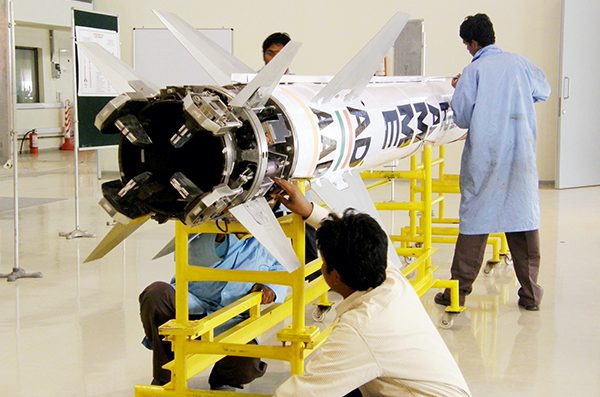
The Indian Ballistic Missile Defence (BMD) Programme introduced by Atal Bihari Vajpayee government following the Kargil War was developed by Defence Research and Development Organization (DRDO). It is designed to destroy both high-altitude and low- altitude incoming enemy missiles by employing a two-tier, multi-layered missile defence architecture. The objective of this system is to provide more than one opportunity to destroy an incoming missile before it reaches its target using multiple layers of detection, tracking, command-and-control, and interceptor missiles (or Anti-Ballistic Missiles).
India has successfully enhanced its indigenous missile defence capabilities after DRDO successfully demonstrated a series of flight tests conducted on June 10 and 11, 2026, which reinforce the ability of Ballistic Missile Defence (BMD) system to counter evolving long- range ballistic missile threats. The test comprised three consecutive flight trials of the Phase-2 BMD system in which interceptor missiles successfully detected, tracked, and neutralized the enemy missile attack for testing purposes. The trial also included the maiden flight test of the Naval Anti-Ship Missile Medium Range (NASM-MR), showcasing DRDO’s progress in both air and maritime defence systems.



India’s indigenous BMD architecture is designed for a multi-layered interception strategy where it can destroy enemy hostile missiles by operating at two distinct interception layers — outside the earth’s atmosphere and within Earth’s atmosphere. India is updating its defence system that can handle more complex threats such as hypersonic missiles and Intercontinental Ballistic Missiles (ICBs). The BMD system uses AD-1 and AD-2 which are advanced, high-speed interceptor missiles used to destroy long range threats travelling at extremely high speed and in different weather conditions.
Through these trial tests BMS introduced new defence advance technologies such as latest interceptor designed to address complex flight trajectories, advanced tracking radars to destroy enemy missiles, capabilities of AD-1 interceptor, and improvement in target tracking. As missile technologies continue to evolve, future BMD systems are expected to incorporate artificial intelligence, machine learning, and more capable interceptor technologies.

