
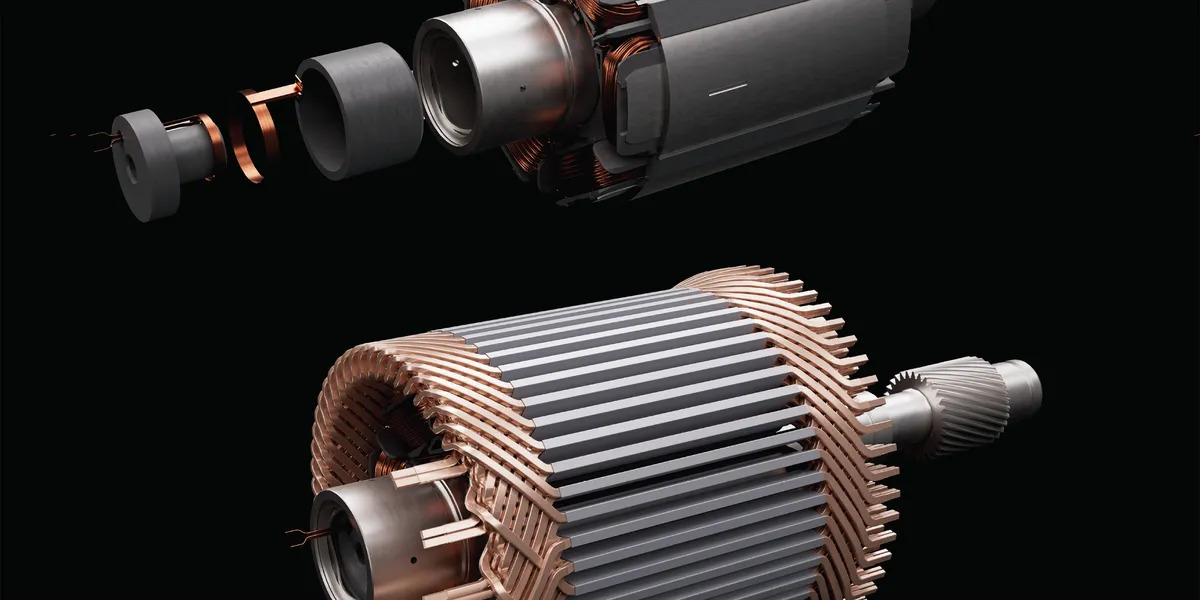
India is exploring new electric-motor technologies that may help the electric vehicle (EV) industry reduce reliance on rare-earth permanent magnets. During the recent New Delhi deep-tech showcase, Indian innovators introduced a rare-earth-free electric powertrain, reflecting the country’s growing focus on developing alternative motor technologies free of rare-earth materials.
Chara Technologies, which is based in Bengaluru, was among the companies showcased. The company has built rare-earth-free synchronous reluctance motors and controllers for electric mobility. It uses materials that are indigenously sourceable materials and does not require rare-earth permanent magnets, which are commonly used in many high-performance electric motors. Chara’s motor platform covers 8 kW-30 kW, and the products are ARAI- and ICAT-certified.



Why Rare-Earth-Free Motors Matter for EVs
India currently imports all of its downstream sintered NdFeB rare-earth permanent magnet demand. These high-efficiency magnets are preferred in electric vehicle motors due to their high magnetic properties, which support compact and high-power density motor designs. Although India has some large deposits of rare-earth minerals, as with many other processing countries, India is not yet equipped with industrial-scale midstream facilities to convert rare-earth oxides into metals, alloys, and magnets and is therefore reliant on imports of sintered NdFeB magnets.
India’s Push for Alternative EV Motor Technology
India’s EV manufacturers could reduce reliance on imported rare-earth magnet supply chains by adopting rare-earth-free motors, which can enable greater use of locally sourceable materials and manufacturing capabilities. However, these motors will be commercially successful only if they offer comparable or better efficiency, power density, cost, thermal performance, reliability and scalability.

