
“India presents a significant opportunity to develop globally competitive solutions that shape the future of intelligent transportation.”
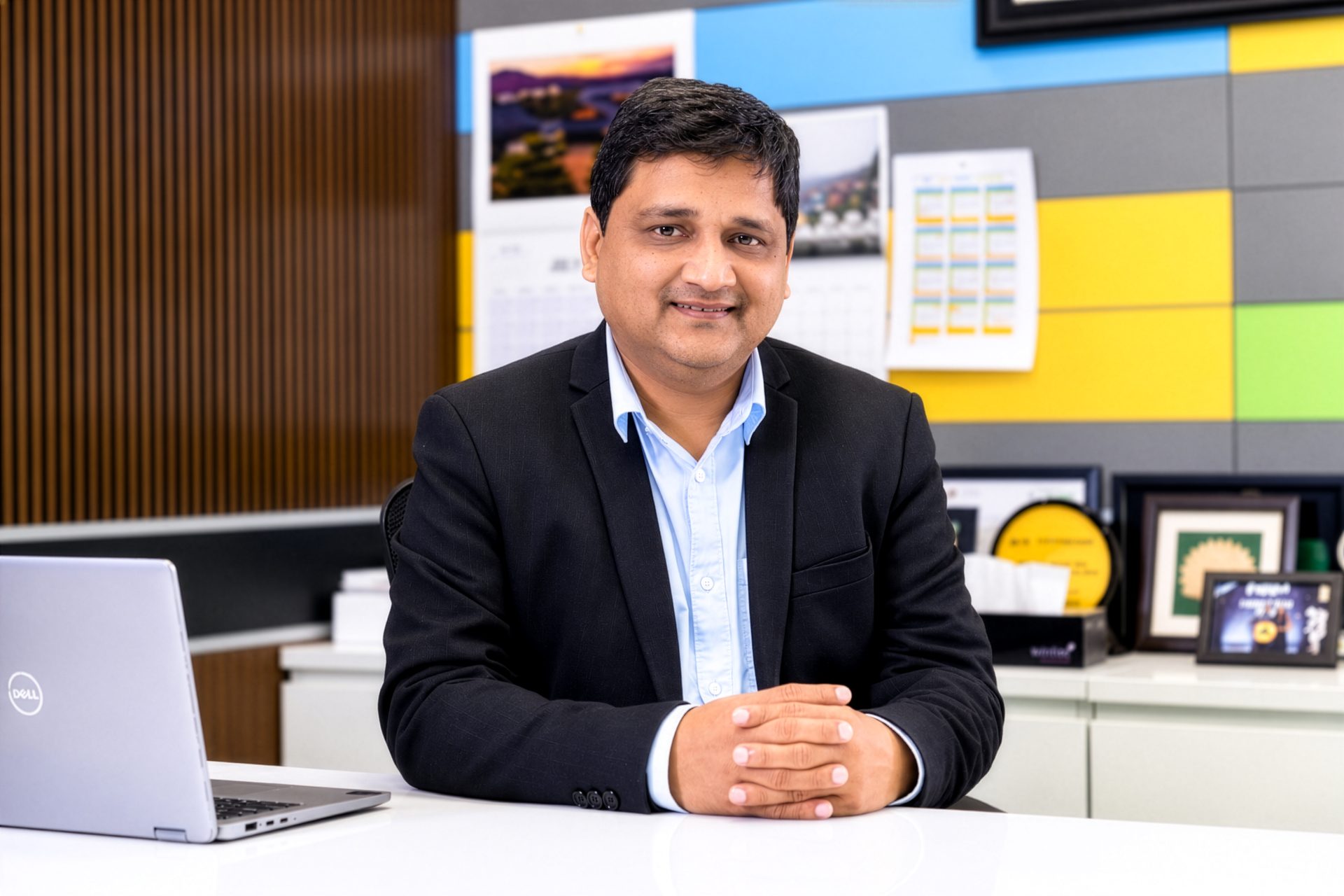
The automotive industry is making a seamless transition to Software Defined Vehicle (SDV) architectures and technology providers are gearing up for exciting times ahead! In an exclusive interaction with Anwesh Koley of ELE Times, Hitesh Garg, Vice President & India Managing Director, NXP Semiconductors, shared his views on SDVs and their evolution in the automotive landscape. Excerpts from the interview:
ELE Times: With car buyers becoming more concerned with comfort, connectivity, and safety than horsepower and acceleration, how does this impact the design of technological architectures in SDVs?




Hitesh Garg: Traditional automotive engineering focused on mechanical performance, but today’s buyers increasingly evaluate vehicles based on their digital experience. About 95% of Indian consumers are willing to pay for Software-Defined Vehicle capabilities, with safety, security, and continuous vehicle-health reporting emerging as key purchase considerations. As a result, vehicles are evolving into intelligent, software-driven platforms where features can be continuously enhanced throughout their lifecycle.
NXP is powering this transition through its portfolio of automotive processors, secure connectivity, edge AI, radar, and vehicle networking solutions that help OEMs build scalable, software-defined vehicle architectures.
ELE Times: With vehicles becoming increasingly software-defined, share your thoughts on NXP’s advancements in zonal networking solutions.
Hitesh Garg: At NXP, we view zonal networking as one of the foundational building blocks for scalable SDVs. Our S32 portfolio, including the S32G vehicle network processors and S32J family of Ethernet switches, is designed to deliver the secure, deterministic, and high-bandwidth communication required for next-generation architectures.
More recently, we introduced the SAF8444 multi-gigabit Automotive Ethernet switch, enabling higher network bandwidth and lower latency to support data-intensive applications such as advanced driver assistance systems (ADAS), autonomous driving, and immersive in-vehicle experiences. Combined with Automotive Ethernet, Time-Sensitive Networking (TSN), and intelligent gateway capabilities, these solutions enable seamless communication between sensors, actuators, and centralised compute systems.
ELE Times: India is increasingly positioning itself as a design-led electronics ecosystem. In this scenario, please elaborate on NXP’s current initiatives in the development and adoption of Software Defined Vehicles.
Hitesh Garg: India plays a critical role in NXP’s global automotive R&D ecosystem. With more than 2500 employees across our centres, the recent acquisition of Kinara further strengthens NXP’s edge AI capabilities, enabling high-performance neural processing directly within the vehicle for applications such as advanced driver assistance, driver monitoring, and intelligent in-cabin experiences.
Coupled with India’s growing semiconductor ecosystem and supportive government initiatives, we see significant opportunities to collaborate with OEMs and ecosystem partners to accelerate the development of globally competitive SDV solutions.
ELE Times: Software Defined Vehicles require a fundamentally different approach to vehicle architecture. How is the industry poised to address this challenge?
Hitesh Garg: The industry is adopting standardised software platforms, service-oriented architectures, Automotive Ethernet, zonal and centralised processing to simplify integration and improve scalability. Equally important is the growing collaboration between semiconductor companies, OEMs, Tier-1 suppliers, cloud providers, and software developers to reduce development complexity and accelerate time-to-market.
ELE Times: What’s different in the current approach to designing an SDV than 3-to-5 years ago?
Hitesh Garg: Over the last few years, the industry has moved from viewing software as an enhancement to recognising it as the primary driver of vehicle innovation. Three to five years ago, software largely supported individual vehicle functions through isolated ECUs. Today, manufacturers are designing vehicles around centralised computing platforms where software defines functionality, user experience, and feature evolution throughout the vehicle’s lifecycle.
NXP is enabling this shift with our automotive processors, radar solutions, secure connectivity technologies, and vehicle networking platforms designed to support this evolution by enabling scalable compute, real-time intelligence, and continuous software innovation while meeting the stringent safety and cybersecurity requirements of modern vehicles.
ELE Times: Software seems to be enabling more variations. Are there any engineering challenges in managing and implementing this?
Hitesh Garg: The increasing software content in vehicles brings tremendous flexibility, but it also introduces new engineering challenges around functional safety, cybersecurity, software integration, and lifecycle management. As vehicle architecture becomes more centralised and software-driven, ensuring that hardware and software operate reliably, securely, and in compliance with automotive safety standards becomes critical.
ELE Times: What can automotive engineers do to balance the need for more circuitry with the requirement to limit weight, particularly in EVs?
Hitesh Garg: One of the most effective ways to achieve this is by transitioning from distributed ECU architectures to centralised and zonal architectures. Instead of connecting every sensor and actuator through long wiring harnesses, zonal architectures group components based on their physical location within the vehicle and connect them through high-speed Automotive Ethernet. This significantly reduces cable length, lowers vehicle weight, simplifies manufacturing, and improves serviceability while supporting future software-defined capabilities.
Equally important is semiconductor integration. By consolidating multiple functions into high-performance processors and highly integrated system-on-chip (SoC) solutions, OEMs can reduce component count, optimise power consumption, and improve thermal efficiency.
ELE Times: What are the barriers to SDV adoption, and what can OEMs and technology providers do to address these concerns?
Hitesh Garg: Infrastructure is an important enabler for SDVs. The deployment of reliable infrastructure, high-speed connectivity, and intelligent transport systems will also be essential to unlock the full potential of SDVs. Addressing these challenges requires close collaboration across the automotive ecosystem. Semiconductor companies, OEMs, Tier-1 suppliers, software developers, and standards bodies must work together to build interoperable platforms based on open architectures and common software frameworks.
ELE Times: How do you perceive the future of connected car technology and what innovations can we expect in the foreseeable future?
Hitesh Garg: We at NXP are enabling this future through our broad automotive portfolio spanning secure connectivity, V2X, UWB, radar, edge AI, and high-performance automotive processing. As vehicles become more software-defined and connected, our focus remains on delivering secure, scalable technologies that enable automakers to accelerate innovation while ensuring functional safety, cybersecurity, and reliability. For India, where connected mobility is gaining momentum alongside the growth of electric and software-defined vehicles, this presents a significant opportunity to develop globally competitive solutions that shape the future of intelligent transportation.
ELE Times: What are your views on the India Semiconductor Mission 2.0?
Hitesh Garg: Government initiatives such as ‘ISM 2.0’ are a defining milestone in India’s journey toward global semiconductor leadership. By expanding support across the entire value chain from manufacturing and advanced packaging to critical materials and design, this initiative builds a foundation for long-term competitiveness.
India’s world-class engineering talent is a proven asset, and sustained R&D investments will further elevate its position in the global supply chain. At NXP, we are fully committed to this vision. We continue to advance cutting-edge R&D locally and nurture future-ready talent. We believe that collaborative ecosystem innovation is the key, and we look forward to partnering with industry, academia, and policymakers to drive India’s emergence as a global semiconductor hub.

