

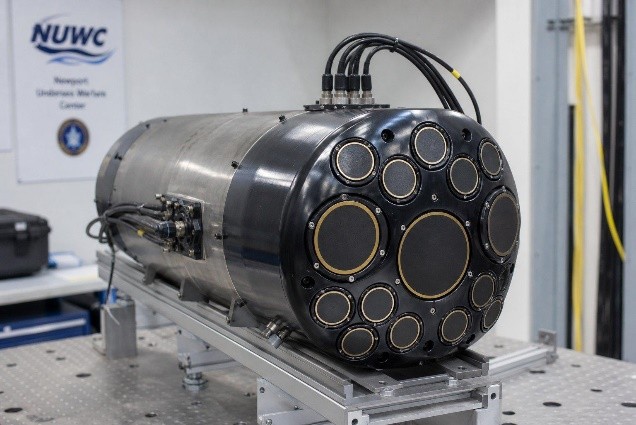
The United Kingdom will lead the next stage of developing three advanced sensor and mission payloads for uncrewed underwater vehicles (UUVs) under the AUKUS security partnership between Australia, the UK and the United States.
Announced after the Maritime Big Play exercise in San Diego, the programme is intended to improve underwater surveillance and strengthen cooperation between allied uncrewed maritime systems.



The payloads are a synthetic aperture sonar, a deployable anti-submarine warfare sensor, and a deployable non-kinetic effecter. Synthetic aperture sonar can return higher-resolution images of the bottom and objects below the water. The third payload is working to generate non-kinetic effects, deploying anti-submarine warfare sensors in order to detect and classify underwater threats.
Together, these skills might allow surveillance of whole swaths of the oceans to uncover dangers or damage to essential subsea assets like communication cables or other critical infrastructure.
This programme is included in AUKUS Pillar II, the pillar dedicated to collaboration on advanced defence technologies. The partners are working towards greater interoperability to enable uncrewed systems that each country develops to work better with those developed by other nations.
According to the UK Ministry of Defence, the payloads are set to become part of the three nations’ uncrewed underwater vehicle fleet from 2027. This is a target, not a statement of fact that all three products are already operational.
The research also underscores the idea of a hybrid navy, with crewed ships and submarines working side by side with autonomous vehicles. The systems could increase the range of surveillance and reduce the need for personnel to travel into dangerous underwater scenarios.

