

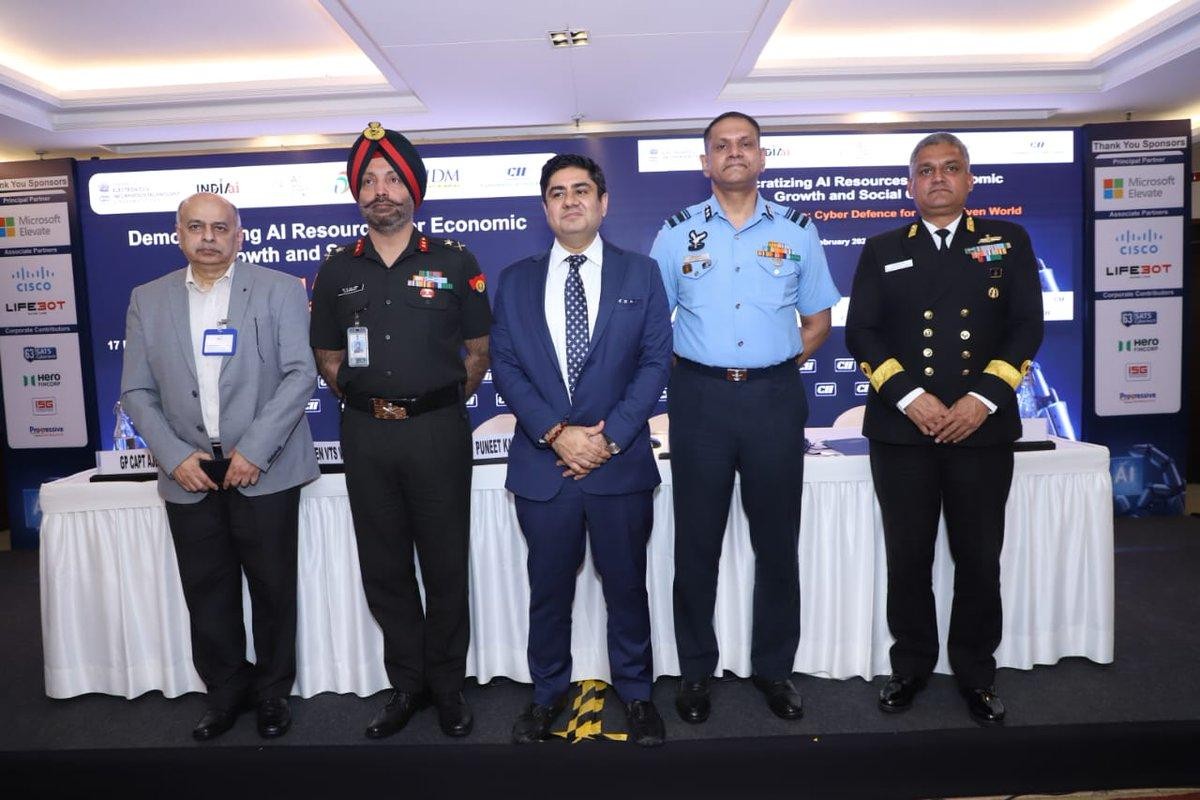
India is also increasing its efforts on sovereign defence AI via a five-year MoU between HQ Integrated Defence Staff (IDS) and the Bengaluru-headquartered AI firm Sarvam.
The pact lays down a policy and framework for the use of AI applications across the Indian Army, Navy, and Air Force. It covers research, knowledge management, training, and decision support to develop AI skills aligned with the needs of the armed forces.



As per the print report, work will be overseen by Sarvam’s national-security department, called Chanakya. Possible emphasis areas may include target acquisition, data fusion, and decision support for the military’s sensor-to-shooter process-the whole chain from the collection of information by sensors through to the systems used to counter the threat.
AI can assist armed forces with processing and analysing the vast amount of data collected by sensors like radars, satellites, and drones. Cross-referencing between platforms can help, for instance, the armed forces to detect patterns, filter critical data from less important data, and provide assessments faster.
Indigenous development would also help the country to gain control over critical data, as well as model deployment, and future improvements. The MoU does not form a reference to that which has already been produced or deployed in the field, but provides a generic basis for that cooperation.
The partnership is also in the context of defence forces elsewhere in the world ramping up investments in AI-supported intelligence, logistics, surveillance, and planning. In defence uses in particular, reliability, cyber security, data integrity, and human controls continue to be critical where AI output may impact decisions.
The deal is yet another indication of how India is trying to strengthen home-grown AI capacity for national security purposes, rather than dependence on foreign players, yet again.

