
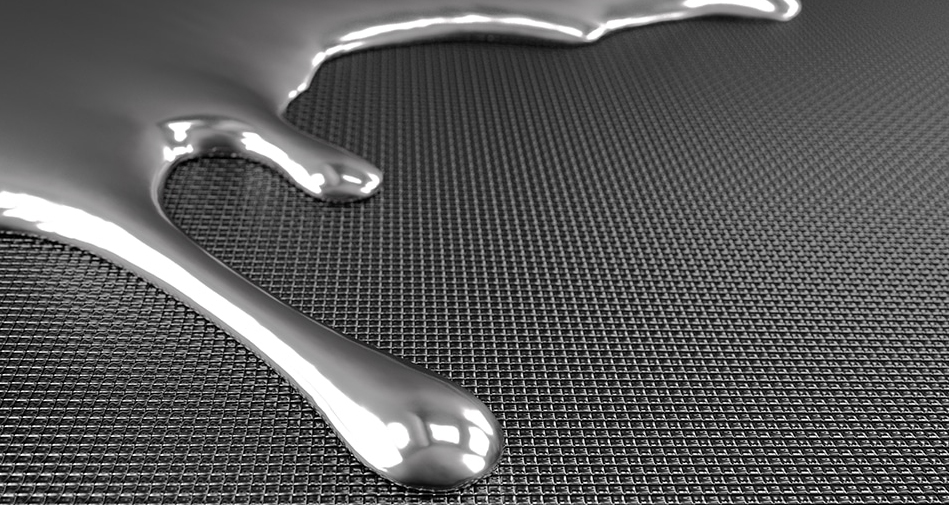
Advancements in electronics can be made through flexible and dynamically reconfigurable soft circuit systems. This involves taking electronics beyond the confines of solid state circuits, according to Australian researchers.
The electronics of today, such as mobile devices and computers, are based on technologies which use solid state components. These devices are made with fixed metallic tracks to house semiconducting devices. This leads to rigid structures. However, one area that is receiving interest is the field of flexible electronics.




The goal of Australia’s RMIT University is to create “elastic” electronic components. These are a type of soft circuit system which would function is a way analogous to biological cells. That is electronic circuits that can move independently but also interact with each other to construct new circuits.
To achieve this liquid metals are required. Promising candidates are alloys of gallium. Gallium is a chemical element and it has similarities to aluminum, indium, and thallium. Gallium is commonly used to make alloys with low melting points and it is predominantly used in electronics. For example, gallium arsenide is used in microwave circuits.
The reason alloys of gallium appear useful is because it is very malleable. With this, any droplet of liquid metal contains a highly-conductive metallic core and an atomically thin semiconducting oxide skin. These are key parameters for developing flexible electronic circuits.
The ability of gallium for future electronics was demonstrated in a recent RMIT study. With this, the researchers immersed liquid metal droplets in water. Due to ionic interactions the metal was able to move freely in three dimensions. Thus, the key to developing a suitable material in understanding the influence of the surrounding fluid on the metal. The researchers showed how adjustments made to concentrations of acid, base and salt components in the water were influential. Getting this right should open the door to creating moving objects, switches and pumps: each necessary for flexible electronic devices.

