
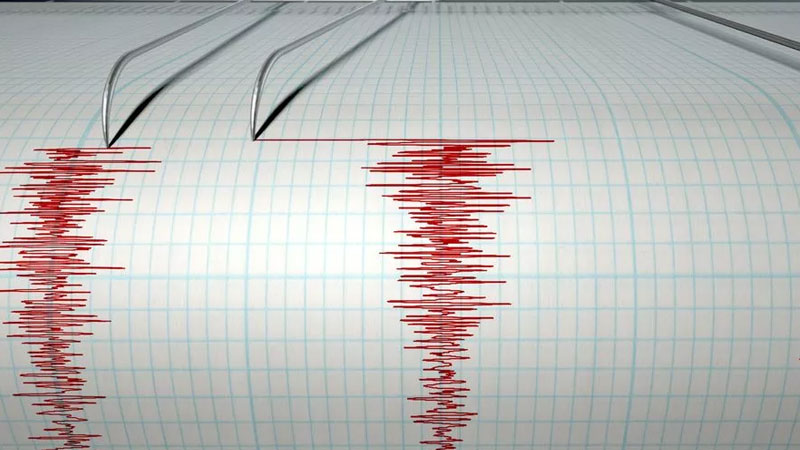
Artificial Intelligence has numerous applications but now it is helpful for natural disasters and potential save lives. With help of Machine learning earthquake can be predicted to analyse acoustic signals.
The study, published in the journal Geophysical Review Letters, identified a hidden signal leading up to earthquakes, and used this ‘fingerprint’ to train a machine learning algorithm to predict future earthquakes. Researchers from University of Cambridge in the UK and Boston University in the US studied the interactions among earthquakes, precursor quakes and faults, with the hope of developing a method to predict earthquakes. Using a lab-based system that mimics real earthquakes, they used machine learning techniques to analyse the acoustic signals coming from the ‘fault’ as it moved and search for patterns.




Researchers used steel blocks to closely mimic the physical forces at work in a real earthquake, and also records the seismic signals and sounds that are emitted. Machine learning was then used to find the relationship between the acoustic signal coming from the fault and how close it is to failing. The machine learning algorithm was able to identify a particular pattern in the sound, previously thought to be nothing more than noise, which occurs long before an earthquake, researchers said.
The characteristics of this sound pattern can be used to give a precise estimate of the stress on the fault and to estimate the time remaining before failure, which gets more and more precise as failure approaches, they said. “This is the first time that machine learning has been used to analyse acoustic data to predict when an earthquake will occur, long before it does, so that plenty of warning time can be given – it is incredible what machine learning can do,” said Colin Humphreys of Cambridge University. Machine learning enables the analysis of data sets too large to handle manually and looks at data in an unbiased way that enables discoveries to be made, researchers said.

