
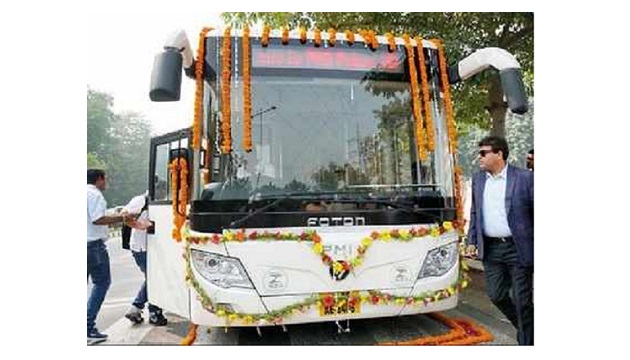
As part of its effort to induct electric buses in its public transport fleet, the Delhi government started a trial run on Friday. The government plans to induct 1,000 electric buses in the cluster programme and tenders are expected to be floated in the next few months.
The bus has safety features such as four CCTV cameras with panic button and a DC fast-charging facility capable of fully charging the vehicle in 30 minutes. The trial run of a low-floor, air conditioned electric bus was flagged off on Friday morning by Transport Minister Kailash Gahlot and Transport Commissioner Varsha Joshi.




The transport department has already started constructing electric bus depots, which are expected to be completed on or before next June while the first batch of electric buses are likely to be deployed by July.
The 33-seater, manufactured by PMI Electro Mobility Solution Pvt Ltd in collaboration with Foton, China, will run on route number 522 between Inderpuri and Ambedkar Nagar. Gahlot said it would be deployed on other routes, too, so that maximum number of commuters can experience the facility. The bus has safety features such as four CCTV cameras with panic button and a DC fast-charging facility capable of fully charging the vehicle in 30 minutes.
The trial run is part of the detailed technical feasibility assessment study being carried out by Delhi Integrated Multi-Modal Transit System (DIMTS), appointed by the government as the project consultant in July. According to a government statement, DIMTS has already met several global manufacturers and studied models of operation of electric buses in major cities around the world.
In October, senior officials from the transport department and DIMTS visited Beijing and Shenzhen in China to study how these cities have successfully deployed electric buses at a large scale.
“The trial run will be instrumental in understanding how modern, pure electric buses adapt to the road conditions of Delhi, how efficient their batteries are and how quickly they can be deployed in Delhi,” Gahlot said. “We expect a few other manufacturers to provide their latest models for trial run as well,” he added.
The energy consumption of the current bus amounts to around 1.2 kWh/km, estimated at Rs 7 per kilometre approximately. With a single charge, the bus can run up to 220kms a day. It will be charged at the Kushak Nullah depot.

