
HomeNewsIndia NewsNew chip for waking up wireless devices could extend battery life

    New chip for waking up wireless devices could extend battery life

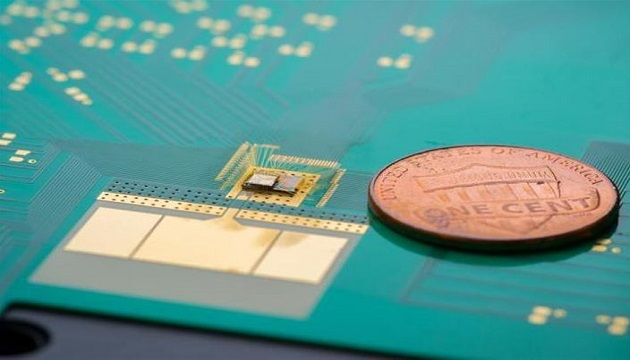
    A new power saving chip could significantly reduce or eliminate the need to replace batteries in Internet of Things (IoT) devices and wearables.

    The ‘wake-up receiver’ awakens a device only when it needs to communicate and perform its function. That means the device can stay dormant the rest of the time, which reduces power use.


    The technology was developed by engineers at the University of California San Diego, who say that it is useful for applications that do not always need to be transmitting data.

    Examples of such devices include IoT devices that consumers use to reorder household items, or wearable health monitors that take readings a handful of times a day.

    “The problem now is that these devices do not know exactly when to synchronise with the network, so they periodically wake up to do this even when there’s nothing to communicate. This ends up costing a lot of power,” said Patrick Mercier, a professor of electrical and computer engineering at UC San Diego.

    “By adding a wake-up receiver, we could improve the battery life of small IoT devices from months to years.”

    The wake-up receiver is an ultra-low power chip that continuously looks out for a specific radio signal, called a wake-up signature that tells it when to wake up the main device. It needs only a very small amount of power to stay on and do this.

    A key part of this receiver’s design is that it targets higher frequency radio signals than other wake-up receivers. The signals are in the frequency of 9 gigahertz, which is in the realm of satellite communication, air traffic control and vehicle speed detection.

    Targeting a higher frequency allowed researchers to shrink everything, including the antenna, transformer and other off-chip components down into a much smaller package–at least 20 times smaller than prior nanowatt-level work.

    The team was led by Mercier and UC San Diego electrical and computer engineering professors Drew Hall and Gabriel Rebeiz.

    ELE Times Research Desk
    ELE Times Research Deskhttps://www.eletimes.ai
    ELE Times provides a comprehensive global coverage of Electronics, Technology and the Market. In addition to providing in depth articles, ELE Times attracts the industry’s largest, qualified and highly engaged audiences, who appreciate our timely, relevant content and popular formats. ELE Times helps you build awareness, drive traffic, communicate your offerings to right audience, generate leads and sell your products better.

    Related News

    Must Read

    ROHM and Suchi Semicon Establish a Strategic Semicon Manufacturing Partnership in India

    ROHM and Suchi Semicon have announced the establishment of...

    Keysight to Demonstrate NR-NTN devices Mobility Testing at MWC 2026 in Collaboration with Samsung

    Keysight Technologies, Inc. will demonstrate lab-based validation of new...

    ROHM Strengthens Supply Capability for GaN Power Devices

    Combining TSMC’s Process Technology to Build an End-to-End, In-Group...

    element14 Community launches smart security and surveillance design challenge

    element14, an Avnet Community, in collaboration with ADI, has...

    R & S and LITEON demonstrate high‑throughput 5G femtocell testing with the PVT360A

    Rohde & Schwarz and LITEON collaborate to showcase a...

    Infineon presents MCU and sensor solutions for the future of AI, IoT, mobility, and robotics

    Next-generation embedded systems are essential for applications in the...

    R&S advances AI-RAN testing using digital twins in collaboration with NVIDIA

    Rohde & Schwarz will showcase a new milestone in...

    Top Seven Tech Trends in the semiconductor sector for 2026

    By: STMicroelectronics In 2026, a new class of intelligent machines...

