
Early screening can mean the difference between life and death in cancer and disease diagnosis. That’s why the University of Central Florida researchers are working to develop a new screening technique that’s more than 300 times as effective at detecting a biomarker for diseases like cancer than current methods using Nanotech.
The technique uses Nanotech particles with nickel-rich cores and platinum-rich shells to increase the sensitivity of an Enzyme-Linked Immunosorbent Assay (ELISA).




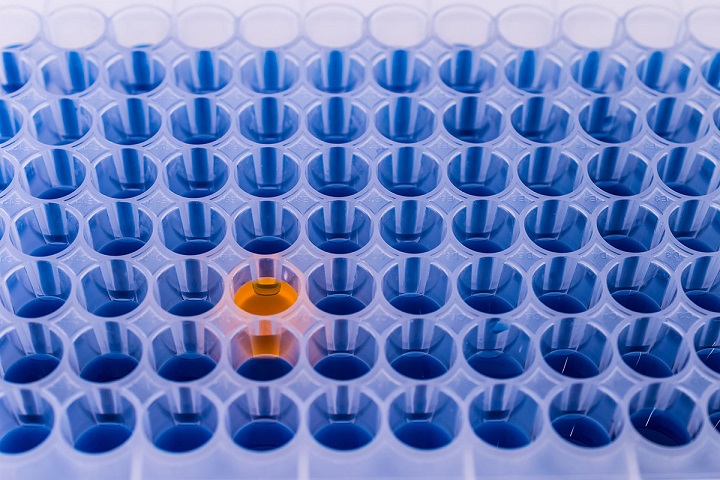
ELISA is a test that measures samples for biochemicals, such as antibodies and proteins, which can indicate the presence of cancer, HIV, pregnancy and more. When a biochemical is detected, the test generates a colour output that can be used to quantify its concentration. The stronger the colour is, the stronger the concentration. The tests must be sensitive to prevent false negatives that could delay treatment or interventions.
In the study, the researchers found that when the Nanotech particles were used in place of the conventional enzyme used in an ELISA—peroxidase—that the test was 300 times more sensitive at detecting carcinoembryonic antigen, a biomarker sometimes used to detect colorectal cancers.
And while a biomarker for colorectal cancer was used in the study, the technique could be used to detect biomarkers for other types of cancers and diseases, says Xiaohu Xia, an assistant professor in UCF’s Department of Chemistry and study co-author.
Colorectal cancer is the third leading cause of cancer-related deaths in the U.S., not counting some kinds of skin cancer, and early detection helps improve treatment outcomes, according to the U.S. Centers for Disease Control and Prevention.
The increase in sensitivity comes from nickel-platinum nanoparticle “mimics” that greatly increase the reaction efficiency of the test, which increases its colour output, and thus its detection ability, Xia says.
Peroxidases found in the horseradish root have been widely used to generate colour in diagnostic tests for decades. However, they have limited reaction efficiency and thus colour output, which has inhibited the development of sensitive diagnostic tests, Xia says.
Nanoparticle “mimics” of peroxidase have been extensively developed over the past 10 years, but none have achieved the reaction efficiency of the nanoparticles developed by Xia and his team.
“This work sets the record for the catalytic efficiency of peroxidase mimic,” Xia says. “It breaks through the limitation of the catalytic efficiency of peroxidase mimics, which is a long-standing challenge in the field.”
“Such a breakthrough enables highly sensitive detection of cancer biomarkers with the ultimate goal of saving lives through earlier detection of cancers,” he says.
Xia says the next steps for the research are to continue to refine the technology and apply it to clinical samples of human patients to study its performance.
“We hope the technology can be eventually used in clinical diagnostic laboratories in the near future,” Xia says.

