
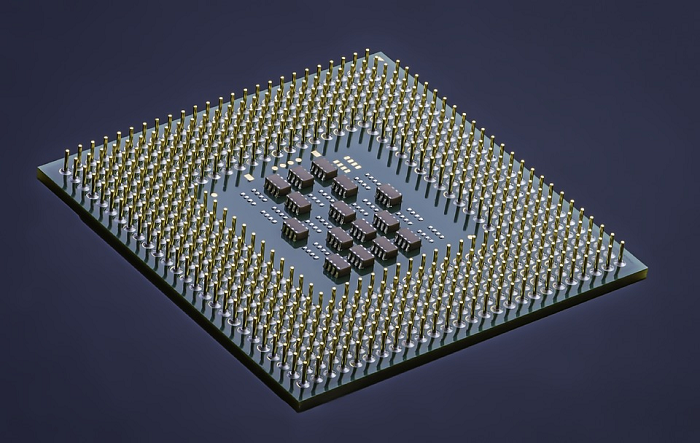
The global chip shortage is affecting all kinds of industries. After all, semiconductor chips are used in millions of products, including cars, smartphones, washing machines, and even electric toothbrushes.
Chips are used in computer numerical control machinery too. That means CNC machine dealers are also feeling the effects of the chip shortage.




How CNC Machining Is Being Affected by the Chip Shortage
CNC machining produces numerous parts used in dozens of industries, including the medical, aerospace, and military industries, to name just a few.
Due to the computers and machines used in CNC manufacturing, intricate and precise designs can be produced in a wide variety of materials, more than can be achieved by other production methods.
CNC machining is a crucial element of many of today’s manufacturing processes. Seeing as CNC machines use chips, the chip shortage has heavily affected the CNC manufacturing industry throughout the world.
Not only are products that contain chips being delayed. Products that use parts manufactured with CNC machines are also being delayed.
How CNC Machine Dealers Are Being Affected by the Chip Shortage
The shortage has affected CNC machine dealers in two ways.
Firstly, the production of new CNC machinery is much slower due to the unavailability of chips. That means dealers of new CNC equipment are often unable to keep up with demand.
Secondly, due to the effect that the chip shortage has had on making new CNC machines, the second-hand CNC machinery market is thriving. Dealers selling used but fully-working CNC machines are selling equipment much quicker than before.
If your company is located in the United States and you are looking for an excellent CNC machine dealer company, you will find a fantastic range of options at Revelation Machinery in the USA.
What is causing the chip shortage?
While problems associated with the pandemic and lockdowns have had a major impact on the chip shortage since 2020, the shortage situation has actually been developing for years.
Manufacturers have been faced with the pressures of increased demand for some time, due to numerous factors. For one thing, the rise of 5G massively increased the demand for semiconductor chips.
And in the United States in 2018, there was a restriction on importing semiconductor chips made in China, due to the trade war between China and the Trump administration. China’s Semiconductor Manufacturing International Corporation alone supplies around 11% of the global chip market.
The ban on importing chips in the United States resulted in many manufacturers going with chip manufacturers in Taiwan and South Korea, but those manufacturers were already working at full capacity.
Another factor that further complicated the availability of chips was a shortage of water in Taiwan. Semiconductor fabrication methods need lots of ultra-clean water to clean production parts at crucial stages to ensure no impurities are left.
In Taiwan, the monsoon never came in 2021, as it should have. That meant the country’s water reserves fell by a whopping 70%.
Furthermore, the drought-affected power supplies, which had a knock-on effect within the manufacturing industry.
The fact that the monsoon never came is due to global warming. So, water shortage issues are not likely to be solved in the immediate future.
Since 2020, the measures brought in to control the Covid-19 pandemic have had a major effect on the availability of semiconductor chips.
For example, with the lockdowns imposed around the world, everyone started working from home or being schooled at home. In turn, there was a huge demand for new devices like laptops, tablets, phones, and routers.
It is estimated that the demand in that market grew more than 26% in 2020, compared to the previous year. That increased global demand for electronic devices significantly contributed to the chip shortage.
Other less obvious complexities have contributed to the shortage too, but the above reasons alone are enough to have caused such global supply problems.
Final Thoughts
With production problems and an increase in demand, the chip shortage continues to be a problem around the world. The shortage has affected CNC machine dealers and numerous industries.
While the shortage of semiconductor chips will undoubtedly improve over time, unfortunately, experts are predicting that the shortage will continue for at least another two years. Only time will tell if they are right.

