
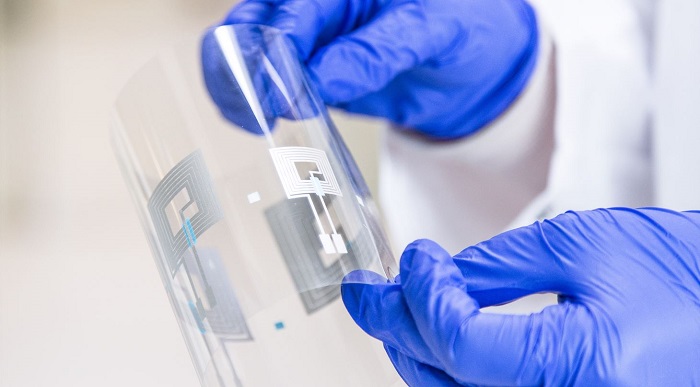
Next-gen electronics are envisioned to be non-rigid, component-free, flexible, bendable, and easily integrable with different objects. Direct-write printing techniques provide a unique opportunity to enable this vision through the use of nanomaterial so-called functional inks, that can be tailored to add desired functionalities on various flexible substrates, such as textiles or plastic. The technology, known as Printed Electronics (PE), has been known for decades but has recently gained considerable attention due to innovation in material inks, process technology, and design revolution.
To keep the research community abreast with the latest technological advancements in the area of droplet-based PE techniques for next-gen devices, researchers from Aarhus University have now published a comprehensive review of the technology in the prestigious scientific journal Advanced Materials.




Through this paper, the researchers have tried to fill the existing void in the literature by discussing techniques, material inks, ink properties, post-processing, substrates, and application to provide a complete guide. PE is an industry-relevant technology and the gateway to future portable electronics, where advanced printers can print complex circuits on any material.
PE is already being used for many different applications today. It is an attractive method to impart electrical functionality on any surface and the major advantage of PE is that it is inexpensive and readily scalable.
PE offers a wide range of advantages over conventional lithography-based technologies. It provides much more production flexibility, it is cheaper and far simpler. More importantly, it opens up a plethora of new possibilities to print flexible electrical circuits directly onto a wide range of substrates such as plastics, papers, clothes, and quite literally any other planar and non-planar surfaces. The research area is moving forwards fast, and this publication provides an overview of how far we have progressed today.
Even though PE is being used in more and more industries, and is considered very important in the electronics of the future, the technology is still in its infancy.
PE is the way towards biodegradable electronics, and with this technology, we can address the huge societal problem that electronics already present, and which will only get more pressing in the future. The world is not only suffering from a huge amount of plastic pollution; it is also burdened by enormous pollution from electronics in all the devices we discard rapidly. In the review article, we have also discussed the emerging field of biodegradable substrates that will have a huge environmental impact.

