
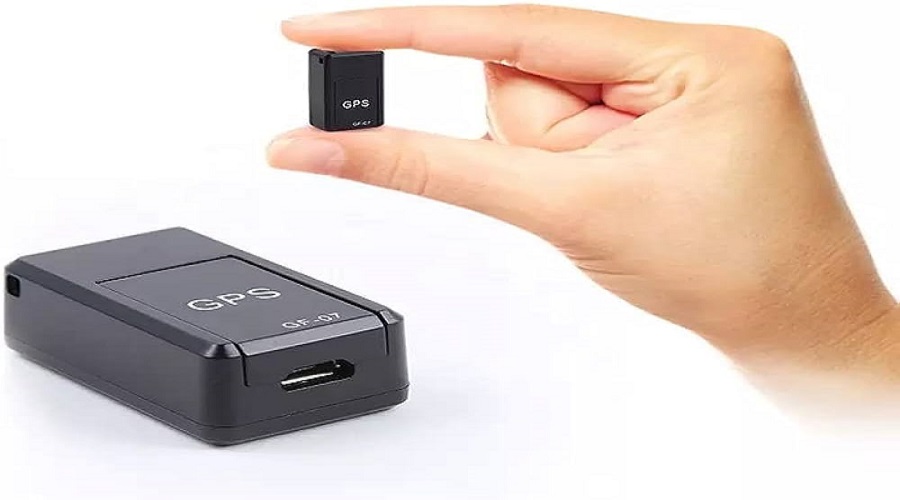
In today’s fast-paced world, navigating from point A to point B has become remarkably simple, thanks to GPS devices. These nifty gadgets have revolutionized the way we travel, offering accuracy, convenience, and a plethora of applications. Let’s delve into what GPS devices are, how they work, their applications, and what the future holds for these indispensable tools.
What is a GPS Device?




GPS, or Global Positioning System, is a network of satellites orbiting the Earth, continuously transmitting signals to ground receivers. A GPS device, often found in smartphones, car navigation systems, smartwatches, and standalone units, utilizes these signals to determine its precise location anywhere on the planet.
How Does a GPS Device Work?
At its core, a GPS device relies on a process called trilateration. This involves calculating the distance between the device and multiple satellites in orbit. The device can pinpoint its exact latitude, longitude, and altitude by receiving at least four satellites simultaneously. This information is then overlaid onto digital maps to provide real-time navigation guidance.
GPS Device Applications
The applications of GPS devices are diverse and far-reaching:
- Navigation: Whether you’re driving through unfamiliar streets or hiking in the wilderness, GPS devices provide turn-by-turn directions to your destination, ensuring you reach your desired location with ease.
- Fleet Management: GPS tracking systems are extensively used by businesses to monitor their vehicles’ whereabouts, optimize routes, and improve overall fleet efficiency.
- Fitness and Health: Smartwatches and fitness trackers equipped with GPS capabilities enable users to track their outdoor activities, such as running, cycling, and hiking, by accurately measuring distance, speed, and elevation.
- Emergency Response: GPS devices play a crucial role in emergencies, allowing authorities to locate individuals in distress accurately. This is particularly valuable in search and rescue operations and for ensuring swift medical assistance during emergencies.
- Geocaching: GPS devices have popularized the recreational activity of geocaching, where participants use GPS coordinates to locate hidden containers, or “caches,” in various outdoor locations worldwide.
Future of GPS Devices
The future of GPS devices looks promising, with ongoing advancements aimed at enhancing accuracy, efficiency, and functionality:
- Improved Accuracy: Future iterations of GPS technology are expected to offer even greater accuracy, with the potential for centimetre-level precision. This will open up new possibilities in agriculture, surveying, and autonomous vehicle navigation.
- Integration with Emerging Technologies: GPS devices will likely be integrated with other emerging technologies, such as augmented reality (AR) and artificial intelligence (AI), to provide more immersive and personalized navigation experiences.
- Expanded Applications: As GPS technology continues to evolve, we can anticipate an expansion of its applications beyond traditional navigation. This could include enhanced location-based services, personalized recommendations based on geographical data, and innovative solutions in urban planning and environmental conservation.
- Miniaturization and Connectivity: GPS devices are expected to become increasingly compact and power-efficient, making them more accessible and ubiquitous across various devices and industries. Additionally, advancements in connectivity, such as 5G networks, will facilitate seamless communication between GPS devices and other IoT (Internet of Things) devices.
In conclusion, GPS devices have fundamentally transformed how we navigate and interact with the world around us. From providing accurate directions to enabling innovative applications across diverse sectors, these devices have become indispensable in our daily lives. With ongoing technological advancements, the future of GPS devices holds immense potential for further innovation and enhancement, promising to redefine our relationship with spatial awareness and navigation.

