

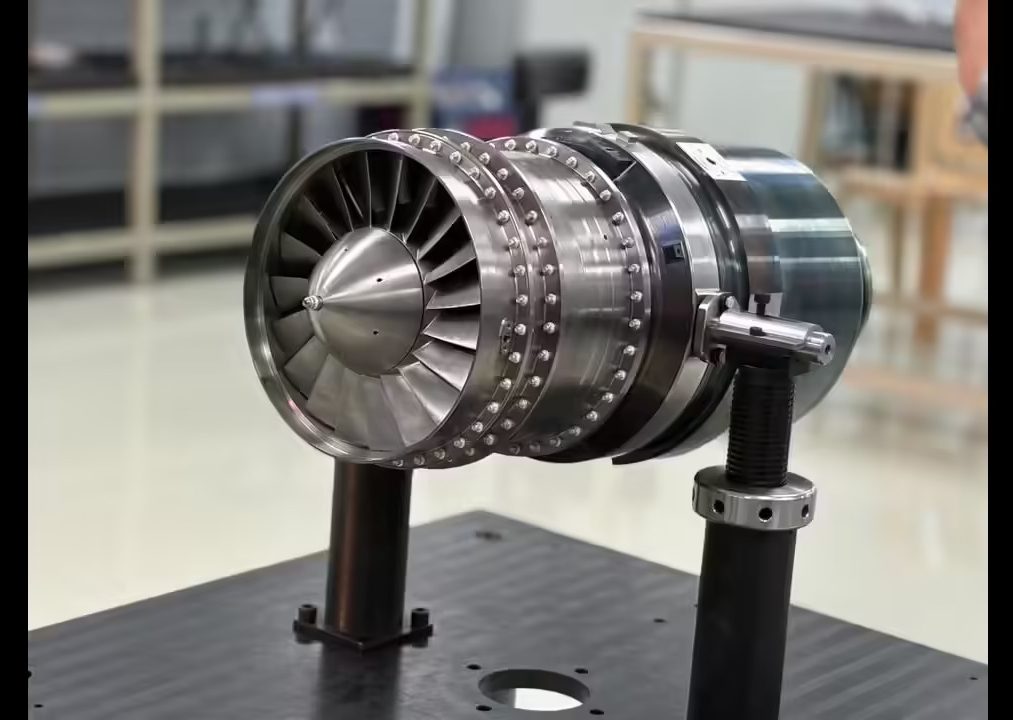
In a breakthrough that will power the nation’s aspirations in aerospace propulsion, the first Indian expendable turbojet engine in the 350-kg thrust class was successfully demonstrated and marks an important step towards India’s capabilities in developing advanced propulsion technology. Developed by the Gas Turbine Research Establishment (GTRE) of the Defence Research and Development Organisation (DRDO), the engine will pave the way for increased self-reliance on high-end propulsion technology for upcoming aerial platforms and other defence applications.
Hyderabad-based Azad Engineering that was chosen by GTRE as the industry partner for its manufacturing and assembly, delivered the engine to GTRE on July 22, 2026. This also marks the coming together of the Indian defence research infrastructure and the private sector for building the aircraft. While DRDO lends its in-house design expertise and research in this field, Azad Engineering provides the cutting edge in precision manufacturing, modern engineering, and tooling facilities to make this possible.



The newly developed 350-kgf-thrust-class expendable turbojet engine is expected to power future air-breathing platforms, including selected missile systems and unmanned aerial vehicles (UAVs) that require compact, lightweight, and high-performance propulsion systems. As a turbojet is an air-breathing engine, it uses atmospheric air as part of the combustion process to generate thrust. The development represents an important advancement in India’s indigenous aerospace and propulsion capabilities, as the design and manufacture of jet engines require advanced materials, precision engineering, highly accurate manufacturing processes, and stringent quality-control measures. The technology could strengthen India’s domestic propulsion ecosystem and support the development of future high-speed aerial platforms.
The successful development highlights the growing contribution of India’s private defence industry to major propulsion programmes. Through its role in the indigenous manufacturing and assembly of the engine, Azad Engineering demonstrates how precision-engineering companies are increasingly participating in the development of complex aerospace and defence systems. The 350-kgf-thrust-class expendable turbojet engine was manufactured and assembled in India by Azad Engineering based on the design and technology developed by the Gas Turbine Research Establishment (GTRE), a laboratory of the Defence Research and Development Organisation (DRDO). This collaboration reflects the increasing role of private-sector companies in supporting India’s efforts to develop advanced indigenous propulsion technologies.

