

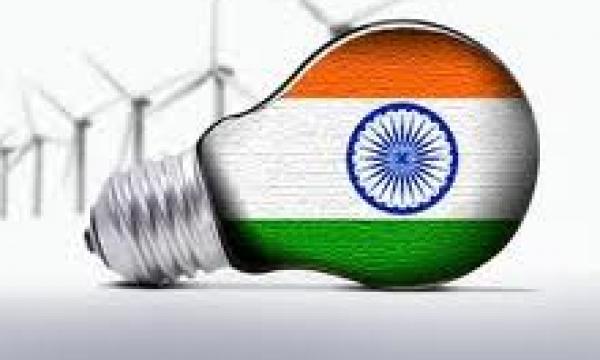
In order to address the biggest challenge of integrated large-scale Renewable Energy resources, India should heavily rely on Battery Storage, Green Hydrogen, and Coal-Fired Power Generation. Battery storage will likely play an important role in India achieving its renewable energy capacity target of 450GW by 2030. India already has 93GW of on-grid variable renewable energy and is targeting annual additions of 20-40GW.
Battery storage can provide a solution to help the grid manage massive amounts of intermittent wind and solar, provide dispatchable power during peak demand periods, and other essential grid services. And battery cost deflation is now making utility-scale battery storage projects possible for India. The transition to low-cost, variable renewable energy generation requires a flexible grid that can respond rapidly to changes in power demand dynamics.



Solar power, being the cheapest source of new Indian electricity capacity has recorded low tariffs of Rs1.99-2/kWh (US$~27/MWh) it is now below the marginal fuel cost of coal-fired power plants. Today, India has the potential to become a world leader in battery storage, predicting that it could add 140-200 gigawatts (GW) of battery capacity by 2040 – the largest of any country and more than 100 times as much as the amount installed in the U.S. The Central Electricity Authority (CEA) projects that solar and wind will form 51% of India’s total installed capacity, or 420GW, by 2030, with biomass and small hydro adding another 30GW, while the IEA’s India Energy Outlook 2021 says that India could add 900GW of renewable capacity by 2040.
Green hydrogen, produced through water electrolysis using renewable energy, has a wide range of potential applications in transport, industrial production of ammonia, methanol, steel, and electricity storage, and is an opportunity that India cannot afford to miss.
Coal is likely to remain an important source of Indian electricity generation for some time to come and proposes that flexing its generation to cater to the majority of grid variability requirements should be an important focus area. Flexible coal-fired plants would require retrofitting, operational and regulatory amendments. This would incur capital costs as well as additional operational expenditure depending upon the size, age, and combustion technology of the plant, but this could be rewarded with a higher time-of-day price.
The experiences of leaders in integrating large-scale renewables, such as Germany and the states of South Australia and California in the context of the Indian electricity market are also being analyzed. Indian market benefits from its strongly connected national electricity grid, it has its own set of challenges and market structure dynamics in dealing with large-scale variable renewable energy.
Billions of dollars of capital commitments across the globe are building a critical mass in the green hydrogen space. So India will have the benefit of leveraging these learning-by-doing pilots that are underway in developed economies. India’s strategy should be to plan in advance and be prepared to ride the energy storage wave when it arrives.

