
HomeManufacturingIndigenisation In Defence Manufacturing

    Indigenisation In Defence Manufacturing

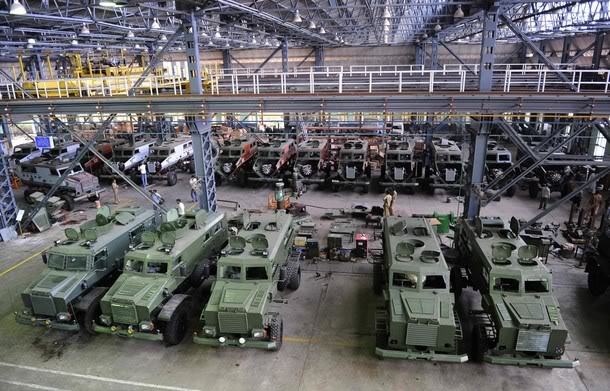
    The Government has taken several policy initiatives in the past few years under ‘Make in India’ program and brought in reforms to encourage indigenous design, development and manufacturing of defence equipment in the country, thereby reducing the import of defence equipment. These initiatives, inter-alia, include according priority to procurement of capital items from domestic sources under Defence Acquisition Procedure (DAP)-2020;  Announcement of 18 major defence platforms for industry led design & development; Notification of  two ‘Positive Indigenisation Lists’ of total 209 items of Services and  two ‘Positive Indigenisation List’ of total 2851 items and 107 Line Replaceable Units (LRUs) of Defence Public Sector Undertakings (DPSUs), for which there would be an embargo on the import beyond the timelines indicated against them; Simplification of Industrial licensing process with longer validity period; Liberalisation of Foreign Direct Investment (FDI) policy allowing 74% FDI under automatic route; Simplification of Make Procedure; Launch of Innovations for Defence Excellence (iDEX) scheme involving start-ups & Micro, Small and Medium Enterprises (MSMEs); Implementation of Public Procurement (Preference to Make in India) Order 2017; Launch of an indigenization portal namely SRIJAN to facilitate indigenisation by Indian Industry including MSMEs; Reforms in Offset policy with thrust on attracting investment and Transfer of Technology for Defence manufacturing by assigning higher multipliers; and Establishment of two Defence Industrial Corridors, one each in Uttar Pradesh and Tamil Nadu.

    With these actions of the Government, the expenditure on defence procurement from foreign sources has reduced from 46% to 36%, thereby reducing the import burden in the last 3 (three) years i.e., 2018-19 to 2020-21.

    ELE Times Bureau
    ELE Times Bureauhttps://www.eletimes.ai/
    ELE Times provides a comprehensive global coverage of Electronics, Technology and the Market. In addition to providing in depth articles, ELE Times attracts the industry’s largest, qualified and highly engaged audiences, who appreciate our timely, relevant content and popular formats. ELE Times helps you build awareness, drive traffic, communicate your offerings to right audience, generate leads and sell your products better.

    Related News

    Must Read

    Optimized analog front-end design for edge AI

    Courtesy: Avnet Key Takeaways: 01.   AI models see data differently: what...

    Introducing Wi-Fi 8: The Next Boost for the Wireless AI Edge

    Courtesy: Broadcom Wi-Fi 8 has officially arrived—and it marks a...

    Vehicle to Grid (V2G) Charging in EVs: Understanding the Basics

    Much of the research around emerging technologies in Electric...

    Asia-Pacific Takes the Lead in AI Adoption Across Manufacturing

    Courtesy: Rockwell Automation Manufacturing around the world has undergone a...

    STMicroelectronics streamlines smart-home device integration with industry-first Matter NFC chip

    STMicroelectronics has unveiled a secure NFC chip designed to...

    Mitsubishi Electric India to Showcase Breakthrough Power Semiconductor Technologies at PCIM India 2025

    Mitsubishi Electric India, is set to introduce its flagship...

    ASMPT Wins New Orders for Nineteen Chip-to-Substrate TCB Tools to Serve AI Chip Market

    ASMPT announced it had won new orders for 19...

    Microchip Halves the Power Required to Measure How Much Power Portable Devices Consume

    Battery-operated devices and energy-restricted applications must track and monitor...



