
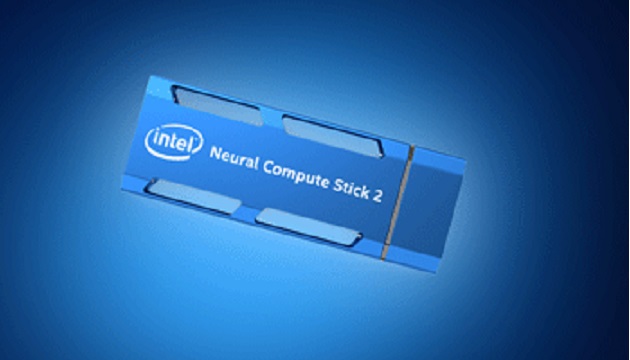
Mouser Electronics, Inc., the authorized global distributor with the newest semiconductors and electronic components, is now stocking the Intel Neural Compute Stick 2 (Intel NCS 2), the next-generation artificial intelligence (AI) inference development platform for creating smarter algorithms and prototyping computer vision products for the Internet of Things (IoT) and edge computing devices. Featuring enhanced hardware processing capabilities, the Intel NCS 2 provides increased performance over previous generations and supports a range of possible AI innovation areas from health care to retail to robotics.
The Intel Neural Compute Stick 2, available from Mouser Electronics, is based on the Intel Movidius Myriad X vision processing unit (VPU), which features the Neural Compute Engine, a dedicated built-in hardware-based accelerator for deep neural network (DNN) inferences. The Intel Movidius Myriad X VPU offers industry-leading compute efficiency to accelerate DNN applications by leveraging a combination of its built-in DNN hardware accelerator, 16 programmable SIMD VLIW processor cores, and an efficient on-chip memory.



The Intel NCS 2 uses a USB 3.0 form factor to deliver plug-and-play simplicity and deep-learning prototyping for any x86 platform with a USB port. Designed to allow for rapid development and prototyping of computer vision and AI edge devices, the Intel NCS 2 supports common frameworks and includes out-of-the-box sample applications.
The Intel Neural Compute Stick 2 is supported by the Intel Distribution of OpenVINO toolkit, making it easier and faster to develop software emulating vision. The Intel Distribution of OpenVINO toolkit features an intermediate representation format that allows engineers to develop and test a neural network on one type of processor such as a CPU, and deploy the same model on a range of processing units such as Intel VPUs, FPGAs, or integrated graphics. The modular toolkit includes pre-trained models, optimized computer vision algorithms, and sample code to save precious development time, while its common API makes it easy to deploy solutions across a variety of platforms and accelerators.
For more information, log on https://www.mouser.in

