
Researchers at Florida State University’s Center for Advanced Power Systems (CAPS), in collaboration with Colorado-based Advanced Conductor Technologies, have demonstrated a new, ready-to-use superconducting cable system—an improvement to superconductor technology that drives the development of technologies such as all-electric ships or airplanes.
the researchers demonstrated a system that uses helium gas for crucial cooling. Superconducting cables can move electrical current with no resistance, but they need very cold temperatures to function.




“We want to make these cables smaller, with lower weight and lower volume,” Sastry Pamidi said, a FAMU-FSU College of Engineering professor and CAPS associate director. “These are very efficient power cables, and this research is focused on improving efficiency and practicality needed to achieve the promise of next-generation superconductor technology.”
Previous work showed that the body of superconducting cables could be cooled with helium gas, but the cable ends needed another medium for cooling, such as liquid nitrogen. Researchers overcame that obstacle and were able to cool an entire cable system with helium gas.
The work gives engineers more design flexibility because helium remains a gas in a wider range of temperatures than other mediums. Liquid nitrogen, for example, isn’t a suitable cooling medium for some applications, and this research moves superconducting technology closer to practical solutions for those scenarios.
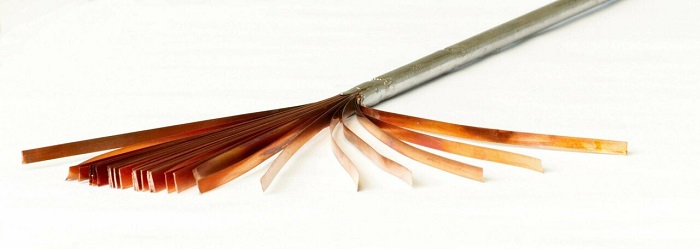
The paper is the latest outcome of the partnership between researchers at CAPS and Advanced Conductor Technologies (ACT). Previous teamwork has led to other publications and to the development of Conductor on Round Core (CORC) cables that were the subject of this research.
“Removing the need for liquid nitrogen to pre-cool the current leads of the superconducting cable and instead of using the same helium gas that cools the cable allowed us to make a highly compact superconducting power cable that can be operated in a continuous mode,” said Danko van der Laan, ACT’s founder. “It, therefore, has become an elegant system that’s small and lightweight and it allows much easier integration into electric ships and aircraft.”

