
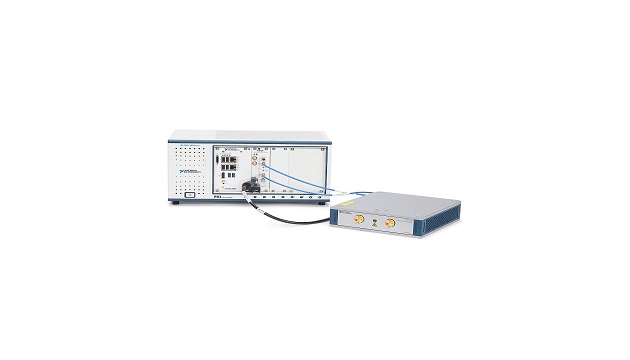
NI, the provider of a software-defined platform that helps accelerate the development and performance of automated test and automated measurement systems, announced the release of its 4 GHz Vehicle Radar Test System (VRTS).
In 2010, the U.N. General Assembly declared 2011–2020 as the Decade of Action for Road Safety. This announcement by the Assembly reflected a goal of saving millions of lives; it also triggered a revolution in the automotive industry, spanning from policy to technology. As this decade comes to a close, the gap between assisted driving and autonomy is proving to be one of the most critical challenges and areas of consumer uncertainty.




Automotive radar is essential to vehicle safety for current advanced driver assistance systems (ADAS) and future autonomous driving. It’s one of the most widely used sensing technologies because it’s robust and readily available. The massive automotive industry shift towards 79 GHz radar has reduced the cost of radar-based safety features like autonomous emergency braking (AEB) and rear cross-traffic alert (RCTA).
The main advantage of 79 GHz radar sensors is the 4 GHz bandwidth, which significantly improves resolution and accuracy for both range and velocity. A tradeoff, however, is a larger set of test challenges, as the additional bandwidth means more data. This requires additional processing capabilities and an increase in test scenarios as more objects are discernible. With the simulation capabilities of the VRTS, engineers can work to improve their test to more confidently address these challenges.
“4 GHz is more than just larger bandwidth and extra scenarios,” said Oliver Poos, Radar Test Engineer at Noffz Technologies. “It provides added room for error on the test, so reliability and repeatability are increasingly important to guarantee safety.”
NI’s new VRTS is capable of simulating two objects per angle with a highly repeatable radar cross section (RCS). The RCS makes the simulated obstacle appropriate for both validation and production test. As a product in the NI platform, the VRTS continues the long-standing flexibility, scalability and cost-effectiveness of the company’s software-defined systems, helping the user create more precise test scenarios and achieve lower test setup times. Finally, the VRTS is both cost- and space-optimized for large production deployments.
For more information, visit: www.ni.com

