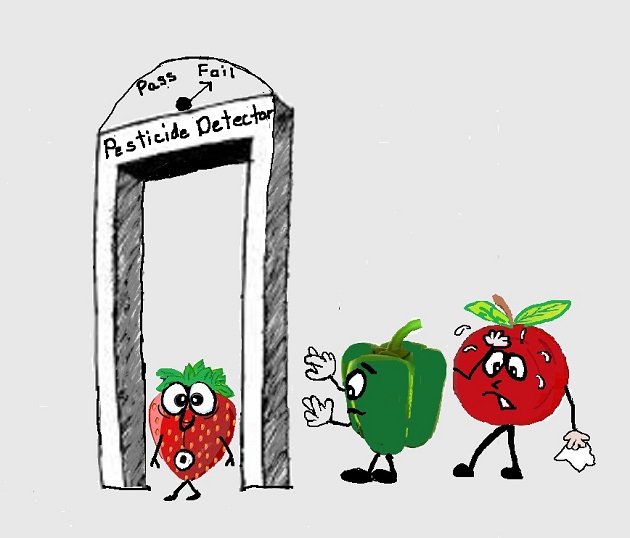
Very often, people wonder about the purity and freshness of Fruits and Vegetables. Considering the changing climate and increasing health concerns, people do find it very difficult to screen, identify and then buy edibles for their daily consumption.
The Fruits and Vegetables consumed nowadays looks very fresh and charming from the outside, which makes individuals apprehensive and also confused about its exact quality. Contamination has turned out to be a major procedure considering the increasing demand. Chemicals like Endosulfan have proved out to be a really tragic incident in the near past.



How do we keep a record of this? Can Technology be an impetus? The answer precisely is yes. PhD Students from ITMO University are up with a solution to this screening process. They have developed a sensing film based on silver nanoparticles which are used to detect and analyse the presence of pesticide residue in agricultural products in a short span of time.
To process these sensors, scientists combined melamine and a small quantity of silver nitrate with agar gel. Silver Nitrate, well known in the medical field is a good antibacterial agent used in photographic engineering relatively cheap and accessible too.
The film’s operating principle is simple. A piece of it is applied to fruit and wetted with alcohol in order to gather pesticide molecules on the film’s surface and is then put into a spectrometer. The change in the optical response, the form and character of spectra in the graphs, indicates whether there is pesticide on the product surface or not.
These innovations pave the way for a better and healthy atmosphere decreasing health problems and leading to an energetic society. Incentives and appreciations should be equally given for such initiatives so as to develop the confidence to solve the problems of humanity. After these tremendous innovations, these students are developing the process to identify the concentration of pesticides too.
By Mannu Mathew | Sub Editor | ELE Times