
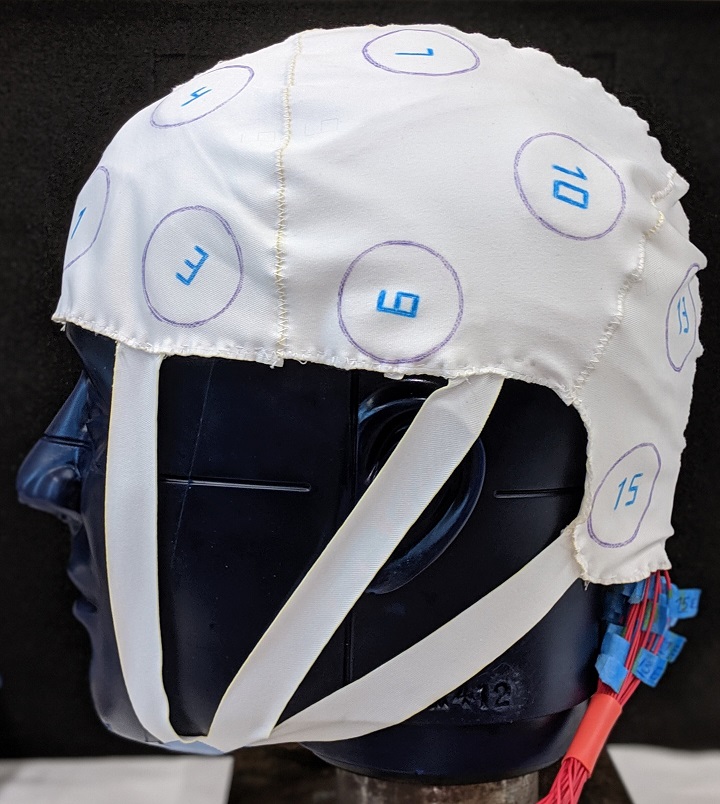
Many athletes, from football players to equestrians, rely on helmets to protect their heads from impacts or falls. However, a loose or improperly fitted helmet could leave them vulnerable to Traumatic Brain Injuries (TBIs), a leading cause of death or disability in the U.S. Now, researchers have developed a highly sensitive Pressure Sensor cap that, when worn under a helmet, could help reveal whether the headgear is a perfect fit.
According to the U.S. Centers for Disease Control and Prevention, 1.6 to 3.8 million sports- and recreation-related TBIs occur each year in the U.S. Field data suggest that loose or improperly fitted helmets can contribute to TBIs, but no devices currently exist that can provide information about how well a helmet conforms to an individual player’s head.



To help observe and better understand helmet fit, Simin Masihi, Massood Atashbar and colleagues wanted to develop highly sensitive, fabric-based sensors that could map pressure in real-time.
The researchers made their sensors by placing Porous PolydiMethylSiloxane (PDMS) layer between two fabric-based, conductive electrodes. They created uniform pores in the PDMS layer by mixing and heating PDMS, sodium bicarbonate (also known as baking soda) and nitric acid, which released bubbles of carbon dioxide gas.
When the team applied pressure to the sensor, the porous material compressed, causing a capacitance change as the space between the two electrodes decreased. To demonstrate a wearable helmet fit system, the researchers added 16 pressure sensors to different locations on a cap.
Three volunteers wore the cap under a football helmet, and the sensors correctly revealed that the person with the largest head measurements felt the most pressure around his head, particularly in the front.
The fit cap could help athletes select the proper off-the-shelf helmet for their head and allow manufacturers to develop custom helmets to reduce the severity of sports-related head injuries, the researchers say.

