
HomeNewsIndia NewsAll new power architecture MCU supports industrial and automotive engine management

All new power architecture MCU supports industrial and automotive engine management

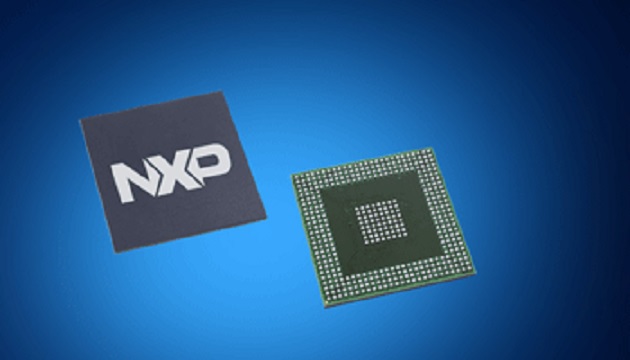
Mouser Electronics, Inc., the authorized global distributor with the newest semiconductors and electronic components, is now stocking MPC5777C Power Architecture microcontroller from NXP Semiconductors. Boasting three dual-issue, 32-bit CPU core complexes, the high-performance microcontroller supports demanding automotive and industrial engine management applications such as electric DC motor control, aerospace engines, and Ethernet and CAN FD connectivity, plus automotive applications that require compliance with SIL-1 and ASIL-D functional safety requirements.

The NXP MPC5777C Power Architecture microcontroller, available from Mouser Electronics, features two independent Power Architecture z7 cores offering up to 300 MHz operation, as well as a single z7 core operating in lockstep with one of the main computational cores. The two main cores offer signal processing extension instruction support for digital signal processing, as well as 16 Kbytes of I-cache and 16 Kbytes of D-cache. The microcontroller offers 8 Mbytes of on-chip flash memory, in addition to 512 Kbytes of on-chip general purpose RAM (including 64 Kbytes of standby RAM).


The device’s two enhanced queued analog-to-digital converter (eQADC) modules provide support for 70 analog input pins, which can be expanded to 182 inputs using off-chip mutiplexers. The highly secure MPC5777C microcontroller includes on-chip security encryption protection using a tamper detection module and cryptographic services engine for tamper-proofing.

The NXP MPC5777C Power Architecture microcontroller is supported by the MPC5777C-DEVB development board, which enables the development of both hardware and software for applications such as battery management systems, traction motor control, and internal combustion engines and transmissions. The versatile development board includes an MPC5777C microcontroller together with MC33FS6520LAE System Basis Chip (SBC) and the TJA1100 and TJA1145T/FD Ethernet and CAN FD PHY transceivers.

Click here for more information

ELE Times Research Desk
ELE Times Research Deskhttps://www.eletimes.ai
ELE Times provides a comprehensive global coverage of Electronics, Technology and the Market. In addition to providing in depth articles, ELE Times attracts the industry’s largest, qualified and highly engaged audiences, who appreciate our timely, relevant content and popular formats. ELE Times helps you build awareness, drive traffic, communicate your offerings to right audience, generate leads and sell your products better.

Related News

Must Read

India to Get its First Public Drone Park in Odisha

India's leading UAV manufacturing startup, BonV Aero, is set...

Keysight and Siemens Collaborate on AI-Driven Test Automation

Keysight Technologies, Inc. joins the Siemens Digital Industries Software...

Keysight Introduces RF Signal Analyzers

New analyzers help engineers capture more signal behavior with...

Murata Brings 3D EM and Thermal Simulation Models to Ansys

Murata Manufacturing Co., Ltd. announces a new collaboration with...

Microchip’s Nantes Facility Achieves QML Class Y Certification

Microchip Technology announces that its Nantes facility in France expands...

Vishay Intertechnology Releases New 1 A, 2 A, and 3 A Gen 7 1200 V FRED Pt Hyperfast Rectifiers in SMPC HV Package

Reducing Switching Losses and Increasing Efficiency, Devices Combine Low...

Rohde  and Schwarz Leads GCF 3GPP NR-NTN Validation with Record Test Cases

Rohde & Schwarz is driving the commercialization of 5G-based...

ROHM Launches AG16xFNxx Series MOSFETs for Automotive 48V Power Supply Systems

ROHM develops the “AG16xFNxx Series,” a lineup of 80V...

STMicroelectronics High-Performance Vibration Sensor offers an alternative to Piezosensors

Industrial-grade vibration sensor delivers the latest wide-bandwidth and...

Bosch Accelerates Automation and Robotics Drive

Advance robotics and the dynamic growth of humanoid systems...

