

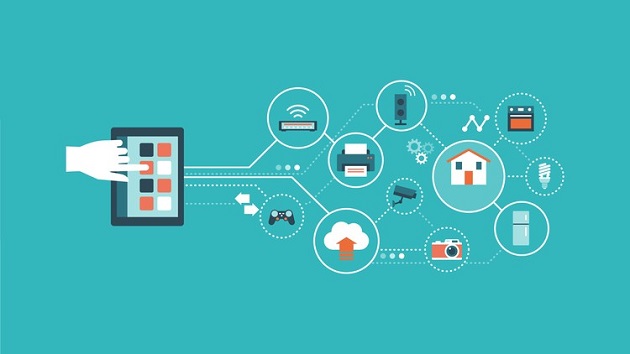
According to scientists, everyday objects like frying pans, coffee cups, pill bottles and countless other household objects will soon be converted into a network of Internet of Things that make homes smarter.
A system called IDAct has been developed by the researchers of University of Michigan in the US. IDAct is built to bridge the gap between the estimated 14.2 billion smart electronic devices which are presently a part of Internet of Things and the hundreds of billions of everyday objects.




“Imagine a world where your pill bottle keeps track of your medication intake and a water glass monitors your hydration level,” said Alanson Sample, associate professor at University of Michigan.
“Even your yoga mat is aware of your exercises and could adjust lighting, temperature and background music accordingly,” Sample said.
The new technology could have applications for elder care, where it could be used unobtrusively to monitor daily activities, medications, and help seniors stay independent longer without the need for expensive and invasive live-in care.
IDAct has an ability to sense the presence and movement of people in a room and detect the object movement with enough detail, like you have moved a coffee mug or ate an apple. Using RFID readers and battery-free tags, IDAct can perform such tasks.
The tags can be attached to nearly any object in the form of a sticker, and RFID readers can be integrated into everyday objects like light bulbs.
“Given the ubiquity of these objects, there are significant opportunities in enhancing their sensing capabilities and creating interactive applications around them,” said Hanchuan Li, a former graduate researcher at the University of Washington.
IDAct provides nuanced reading of the signal from the RFID tags.
Even the minute fluctuations in the signal coming back from tags, could be detected by IDAct like when an object moves or a person touching it. It could also detect change of electromagnetic field in a room like when a human is present.
“Every object causes electromagnetic interference in a specific way,” Sample said.
“We can use that information, along with information from RFID tags, to get a very detailed picture of what’s going on in a given space,” he said.
These improved signals are then analysed by a machine learning algorithm run by an onsite computer to infer what’s happening in a room.

