
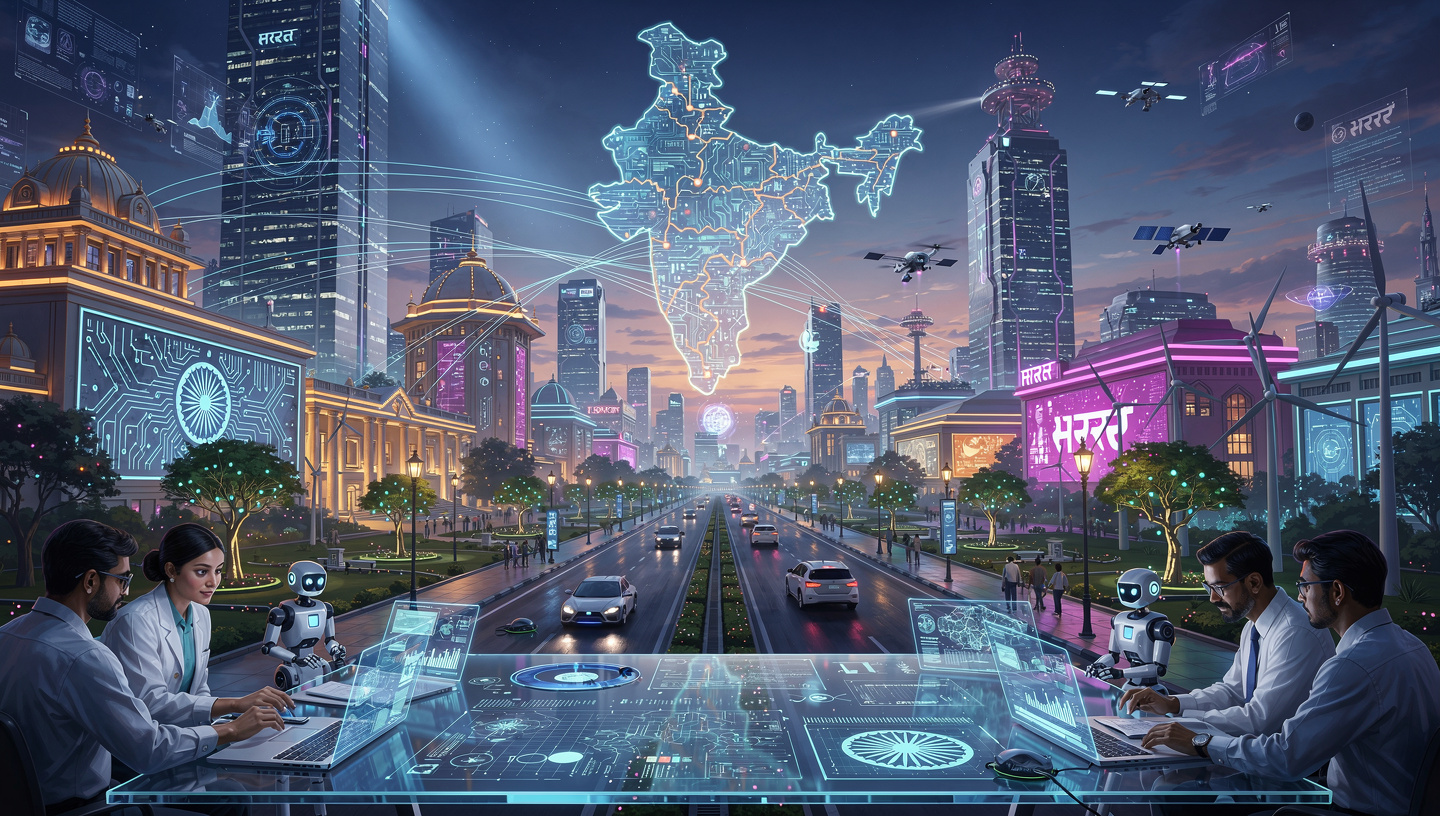
India is hosting the AI Impact Summit 2026 under the Ministry of Electronics and Information Technology, this month from February 16-20. The Summit has received a phenomenal response from across the world, and is shaping up to be the biggest such event so far globally, said Union Minister Ashwini Vaishnaw.
The summit week will feature around 500 curated events across Bharat Mandapam and Sushma Swaraj Bhawan. The AI Impact Expo will host over 840 exhibitors, including country pavilions, Ministries, State governments, industry, start-ups, and research institutions, showcasing AI solutions with proven real-world impact.




The conference has confirmed the participation of 15 Heads of State Government, more than 40 Ministers, over 100 leading CEOs and CXOs, and more than 100 eminent academics. Industry partners, including Jio, Qualcomm, OpenAI, Nvidia, Google, Microsoft, Adobe, and the Gates Foundation, are expected to participate in the event.
The Minister also informed that leading IT companies had developed over 200 focused and sector-specific AI models, expected to be launched during the upcoming summit. With investments worth nearly $70 billion already flowing into the AI infrastructure layer, the potential to double it by the conclusion of the event is exponential, he added. The AI talent pool is expected to be scaled up by extending infrastructure and industry-finalised curricula to 500 universities.
Budget Highlights for the AI Sector
Additionally, the government has proposed to focus on developing the AI landscape in India with specific provisions in the Union Budget 2026-27. As the focus shifts to building the digital infrastructure, the government has proposed an additional investment of USD 90 billion, specifically for the AI Data Centres and further encouraged long-term investments by proposing a tax holiday till 2047 for foreign companies providing cloud services to customers globally using data centre services from India. Such companies will provide services to Indian customers through an Indian reseller entity. Simultaneously, a safe harbour of 15 per cent on cost has also been proposed where the data centre service provider in India is a related entity.
The government has proposed several domains for AI integration in the Indian landscape: –
- Governance: Serving as a force multiplier for improved public service delivery.
- Supporting new technologies: Adopting new technologies in various sectors through the AI Mission and National Quantum Mission.
- Labour market analysis: Assessing the impact of emerging tech such as AI on job roles and skill requirements.
- Bharat-VISTAAR: A new multilingual AI tool designed for broader linguistic accessibility.
- Agriculture: Integration with AgriStack portals and ICAR agricultural practice packages.
- Healthcare & accessibility: R&D and integration into assistive devices for People with Disabilities manufactured by Artificial Limbs Manufacturing Corporation of India (ALIMCO).
- Customs & security: Expanding non-intrusive scanning and advanced imaging for risk assessment.
- Education: Embedding AI modules directly into the national education curriculum from school level onwards and for teacher training.
- Professional development: Upskilling and reskilling programs for engineers and tech professionals.
- Employment matching: AI-enabled platforms to connect workers with jobs and training opportunities.
India’s AI Landscape
Since 2020, the Artificial Intelligence (AI) start-up ecosystem in India has experienced rapid growth, with over 150 native AI start-ups having raised over $1.5 billion in funding as of September 2025.
As of early 2026, there are over 1,900 total AI companies in India, with 555 being funded. AI start-ups have touched several industries to provide a technically advanced perspective to the workings in the industry, from healthcare, agriculture, Aerospace & Defence, navigation, to education, manufacturing, banking, and E-commerce. Some notable start-ups include Sarvam AI, Krutrim, Observe.AI, Avaamo, Nanonets, and Atomicwork in the sector.
Global giants like IBM, Google, Microsoft, OpenAI, and Nvidia have established or expanded their R&D centres, engineering hubs, and regional offices in India to leverage the country’s vast tech talent pool and rapidly expanding digital economy. Domestic players like Perplexity has partners with telecom giants like Airtel to expand their reach. Simultaneously, Anthropic, the AI start-up backed by Google and Amazon, plans to open its first Indian office in Bengaluru in early 2026, focusing on AI tools and tapping into the local developer ecosystem.
Future of AI in India
The AI market is projected to reach $126 billion by 2030, with a long-term contribution of $1.7 trillion to India’s GDP by 2035.
These developments, coupled with the government’s initiative to boost the sector and focus on “Sovereign AI” to reduce dependency on foreign technology and build custom chips within 3-5 years, can position India as a formidable force in the sector of Artificial Intelligence globally, while the country already ranks third globally in AI competitiveness.
By: Shreya Bansal, Sub-Editor

