
Courtesy: Cadence
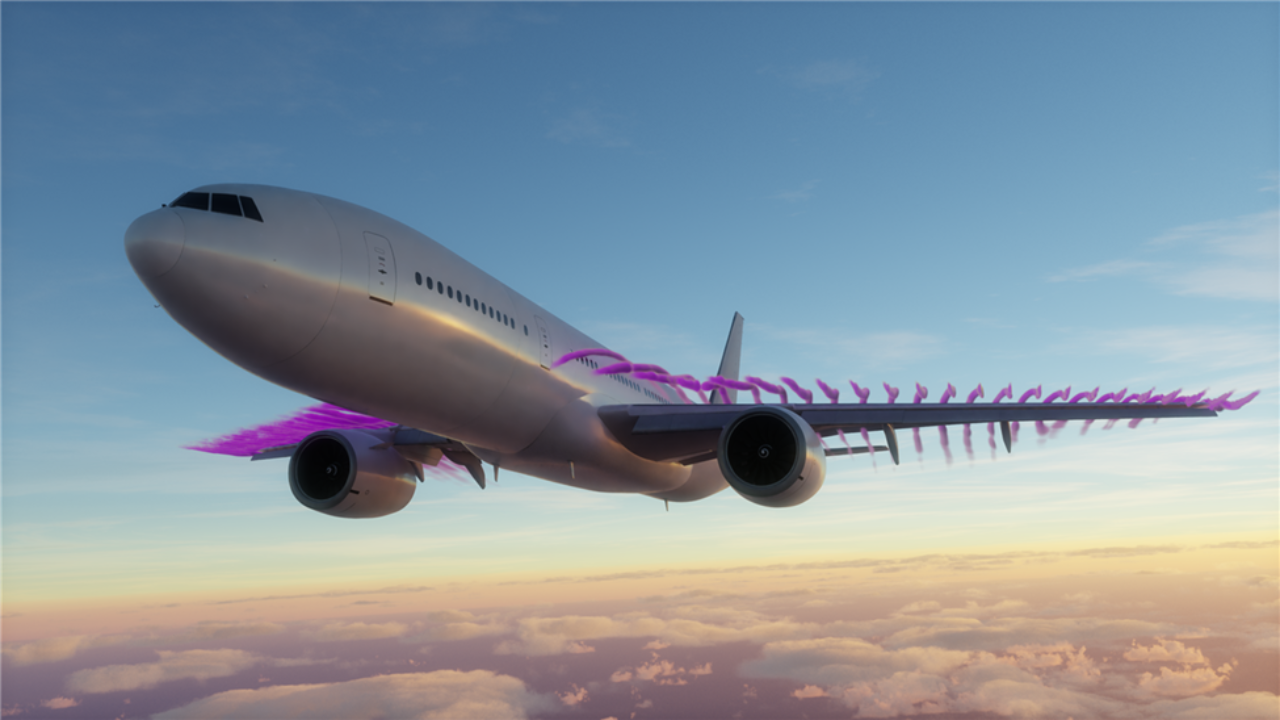
The rising demand for AI infrastructure is driving faster innovation and smarter resource utilization throughout the design lifecycle. Accelerated computing shortens design and simulation cycles, streamlines workflows, and amplifies human creativity through data-driven insights. Together, AI and accelerated computing empower engineers to explore ideas in real time and bring their visions to life. Cadence, with its GPU-accelerated Cadence Fidelity CFD Software, collaborated with NVIDIA to generate high-fidelity simulation data for airframe simulations, generating thousands of simulations in the span of weeks using NVIDIA GB200, available through the Cadence Millennium M2000 AI Supercomputer. This was followed by using NVIDIA PhysicsNeMo, an AI physics framework, to train a physics-accurate AI surrogate model for a digital twin that provides interactive what-if design changes and analyses for aircraft design.




This breakthrough in real-time simulation is a powerful example of the Cadence strategy for innovation, “The Three Layer Cake,” in action. This strategic framework unifies Cadence’s technology stack and drives our solutions. At the foundation is accelerated compute, exemplified by the Millennium M2000 AI Supercomputer, built with NVIDIA Blackwell systems. In the middle is Cadence’s Fidelity CFD Software, enabling high-fidelity, physics-based modeling of the system under design. At the top sits AI, where frameworks like NVIDIA PhysicsNeMo and Cadence’s AI-driven design intelligence transform simulation data into interactive, predictive digital twins. Combined, these layers form a cohesive platform that empowers engineers to design, simulate, and optimize complex systems faster and more intelligently than ever before. A demonstration of the technology shows real-time airframe performance simulation while varying the design configuration. Other applications, including automotive aerodynamics or aeroacoustics, 3D-IC thermal and electromagnetic analysis, and data center thermal analysis, are possible.
How AI for Physics Is Transforming Engineering Design?
Computational fluid dynamics (CFD) is a cornerstone of modern engineering. It allows designers to simulate the flow of fluids—like air over a plane’s wings or fuel through an engine—to predict performance, identify issues, and optimize designs. However, traditional CFD methods are incredibly resource-intensive. Historically, running a single high-fidelity simulation on conventional computing systems can take days or even weeks, limiting the number of design iterations engineers can perform. Applying AI technology speeds the calculations and turnaround time, making real-time what-if design analysis practical.
High-quality results from AI are dependent on accurate and representative training data, in sufficient quantities. The availability of such data for computational engineering purposes is relatively limited in comparison to typical data used to train foundational AI models. In this example, the Cadence Fidelity CFD Software, accelerated on the Millennium M2000 AI Supercomputer, produced the high-quality dataset for the NVIDIA PhysicsNeMo framework. Thousands of detailed, time-dependent simulations were computed in a matter of weeks, with each simulation comprising hundreds of millions of degrees of freedom. This volume of high-quality data, generated from the design itself, is critical to being able to trust the AI’s predictions.
The collaboration between NVIDIA and Cadence addresses these challenges head-on. By leveraging GPU acceleration and AI, this integrated solution fundamentally changes the speed and scale of engineering simulation.
Cadence and NVIDIA Transform Aerospace and Automotive Design with AI Physics
NVIDIA is unveiling ground-breaking advancements in AI-powered simulation, transforming aerospace and automotive design with up to 500X faster engineering workflows. Cadence is at the forefront of this transformation, leveraging its Fidelity CFD Software with the Millennium M2000 AI Supercomputer built on NVIDIA Blackwell to empower aerospace leaders. By combining high-fidelity Multiphysics simulations with modern accelerated computing, Cadence enables rapid design iteration, enhanced efficiency, and optimized performance for next-generation systems. Together, Cadence and NVIDIA are accelerating innovation and redefining the future of computational engineering.
Shaping the Future of AI Infrastructure
NVIDIA has unveiled the NVIDIA AI Factory Research Center in Virginia, designed to leverage the NVIDIA Vera Rubin platform and NVIDIA DSX blueprint to enable gigawatt-scale AI factory design and development.
To ensure design precision and operational excellence, Cadence is developing a high-fidelity digital twin of the facility through its Reality DC Platform. This platform, integrated with NVIDIA Omniverse libraries, provides a physics-based simulation environment that allows engineers to model thermal, energy, and airflow dynamics across the entire infrastructure—from chip to chiller. By combining computational fluid dynamics (CFD) and Multiphysics analysis, the Cadence Reality DC Platform empowers teams to explore design configurations, predict failure scenarios, and optimize performance before physical implementation.
Together, these innovations pave the way for smarter, more sustainable data center designs—accelerating the journey toward the next generation of AI-powered infrastructure.

