
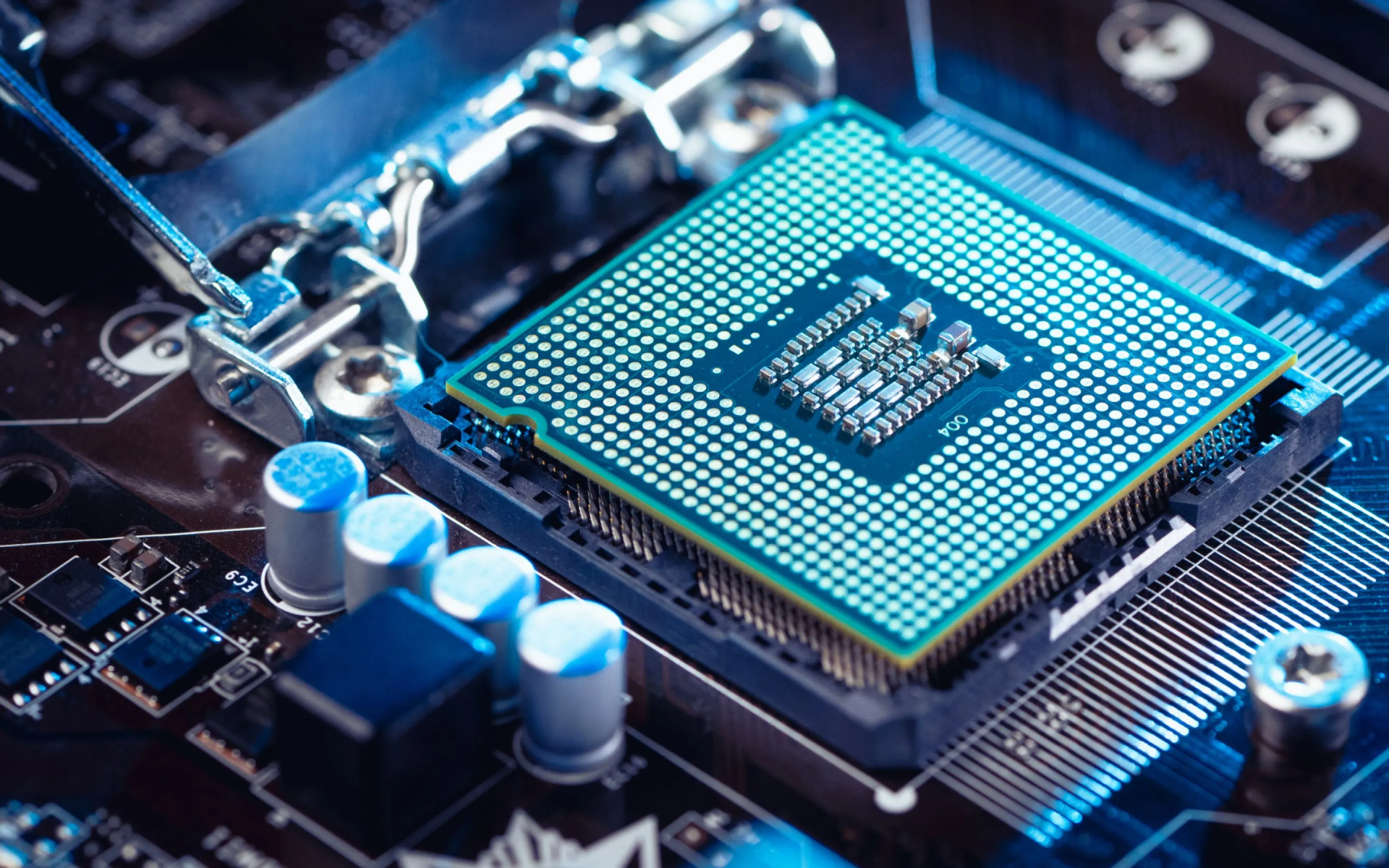
The Union Budget 2026-27 outlines the continuation of India’s deep commitment to the domestic semiconductor ecosystem, aiming to promote it to new heights. Union Finance Minister Smt Nirmala Sitharaman, in the Union Budget 2026-27, announces the launch of India Semiconductor Mission 2.0 (ISM 2.0). It will be a continuation of the earlier ISM 1.0 with a realigned goal to produce equipment and materials, design full-stack India IP, and solidify supply chains, a milestone for the technology sector. ‘This time the mission carries a broad mandate to enable the next level of India’s electronic stride into products and more IPs, precisely.
“ISM 1.0 expanded India’s semiconductor sector capabilities. Building on this, we will launch ISM 2.0 to produce equipment and materials, design full‑stack Indian IP, and fortify supply chains. We will also focus on industry‑led research and training centres to develop technology and a skilled workforce,” she said.




Upgrading India’s Semiconductor Ecosystem
Shri Ashwini Vaishnaw, Union Minister of Railways, Electronics and Information Technology, said that the Budget has announced the launch of India Semiconductor Mission (ISM) 2.0, building upon the strong foundation created under ISM 1.0, which established a completely new and foundational semiconductor industry in India.
ISM 2.0 will focus on designing and manufacturing semiconductor equipment in India, manufacturing of materials used in semiconductor production, creation of a large design ecosystem, and further strengthening of talent development initiatives. A provision of Rs. 1,000 crore has been made for ISM 2.0 for FY 2026-27.
Support for Fabless Startups
The mission launch finds mention in the Budget 2026-27 with a fresh outlay of ₹1,000 crore allocation in the BE fiscal 2027. Vaishnaw said recently that the government plans to support at least 50 fabless chip companies in ISM 2.0 by scaling up the Design Linked Incentive Scheme, with the long-term goal of producing “one AMD” and “one Qualcomm” from India.
“The Union Budget 2026–27 charts a decisive course for India’s evolution into a global technology leader. The enhanced capital outlay of ₹12.2 lakh crore and the launch of the India Semiconductor Mission 2.0 reaffirm the government’s commitment to deep-tech indigenization,” says Mr. Meenu Singhal, Regional Managing Director, Socomec Innovative Power Solutions.
Talking about the budget Mr Pankaj Mohindroo, Chairman, ICEA, says, “Budget 2026–27 reinforces the government’s commitment to manufacturing-led growth, particularly in electronics and semiconductors, through continuity, scale, and targeted reforms. Measures such as the expansion of ECMS, support for ISM 2.0, and long-term incentives for cloud and data infrastructure send a strong signal of strategic intent and policy stability.

