
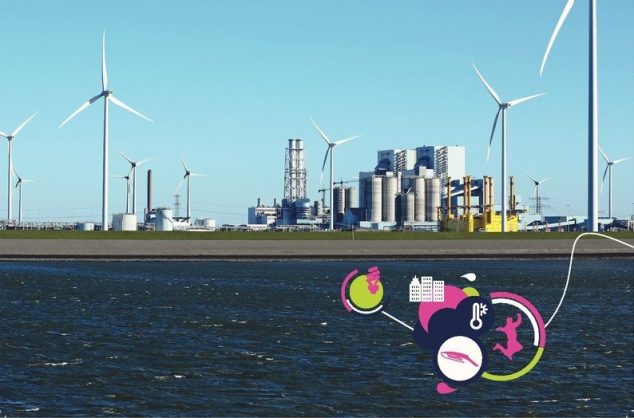
“Smart Industry” isn’t a random label one can just throw around, but the current industrial revolution brought upon by a sophisticated and precise set of technologies that are changing man’s relation to manufacturing.




Living the Smart Industry Revolution Today
Industry 4.0, which we will use interchangeably with “Smart Industry,” was coined in early 2010 as the German government tried to make factories smarter by bringing connected technologies and manufacturing together. Hence, the Working Group on Industry 4.0, which offers recommendations to German leaders on how to bring this new industrial age, has formalized the framework of this new step in the evolution of manufacturing.
The name “Industry 4.0” shows it’s the fourth Industrial Revolution. The first one took place between 1760 and 1840 with the advent of mechanization, as well as the use of chemical manufacturing, water power, and steam. Then came batch production between 1870 and 1914, which is was the second Industrial Revolution. During that time, assembly lines and the use of electricity completely changed how plants operated. Finally, the third revolution took place during the 20th century, when computing systems and automation replaced manpower.
In their paper entitled Design Principles for Industrie 4.0 Scenarios, German scholars Hermann, Pentek, and Otto define the four pillars of the smart industry: Technical assistance, information transparency, interconnection, and decentralized decisions.
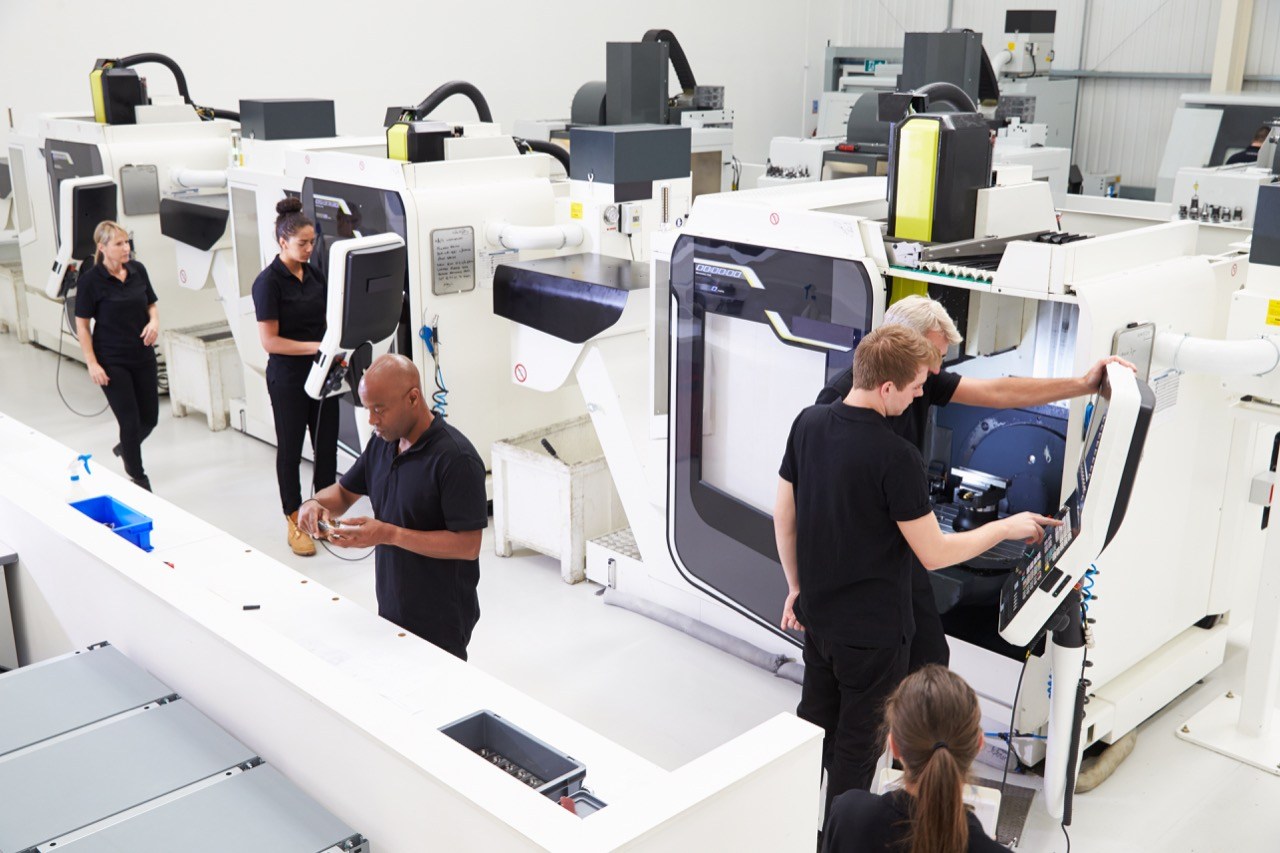 Smart Industry: Technical Assistance and Information Transparency
Here’s a quick overview of these four foundational concepts:
- Technical assistance means workers are no longer just operators but use machines to make critical decisions. For instance, mobile devices carry information that shape judgment calls and new systems make all tasks safer. Information visualization is a significant component of this principle, and ST offers multiple development tools to help engineers build the apps they need to make technical assistance a reality.
- Information transparency is the ability to bring all the elements of a smart plant together to substantially increase efficiency, thanks to the use of new models. It’s basically where the virtual and the physical world meet. The consequence of this increase in efficiency is an augmentation in productivity and a decrease in energy costs. On top of enabling information transparency, ST makes it possible to compound those energy savings through low-power solutions, such as better motor-control systems or SiC components, among others.
Smart Industry: Interconnection and Decentralized Decisions
- Interconnection is what most people mean when they talk about IIoT (Industrial Internet of Things) or Smart Industry. However, as we’ve seen, the Industry 4.0 is so much more than that. This principle signifies that all the sensors, devices, machines, and people are able to interact with one another by using secure and ubiquitous communication protocols that facilitate the exchange of information. ST has a crucial role in this domain because it offers fantastic software libraries to take advantage of powerful transceivers, and it is a major partner in most of the consortiums that define those protocols’ specifications.
- Decentralized decisions are the eye-catching aspects of this revolution because this principle moves the intelligence of the plant out of a centralized system to peripheral nodes. Thanks to low-power microcontrollers (MCU) offering new levels of horsepower, like the STM32 and STM8, more devices can make critical decisions, monitor activities and function autonomously. This increases efficiency and ensures the consequences of a failure are not as problematic since the rest of the plant is less affected, if at all.

