

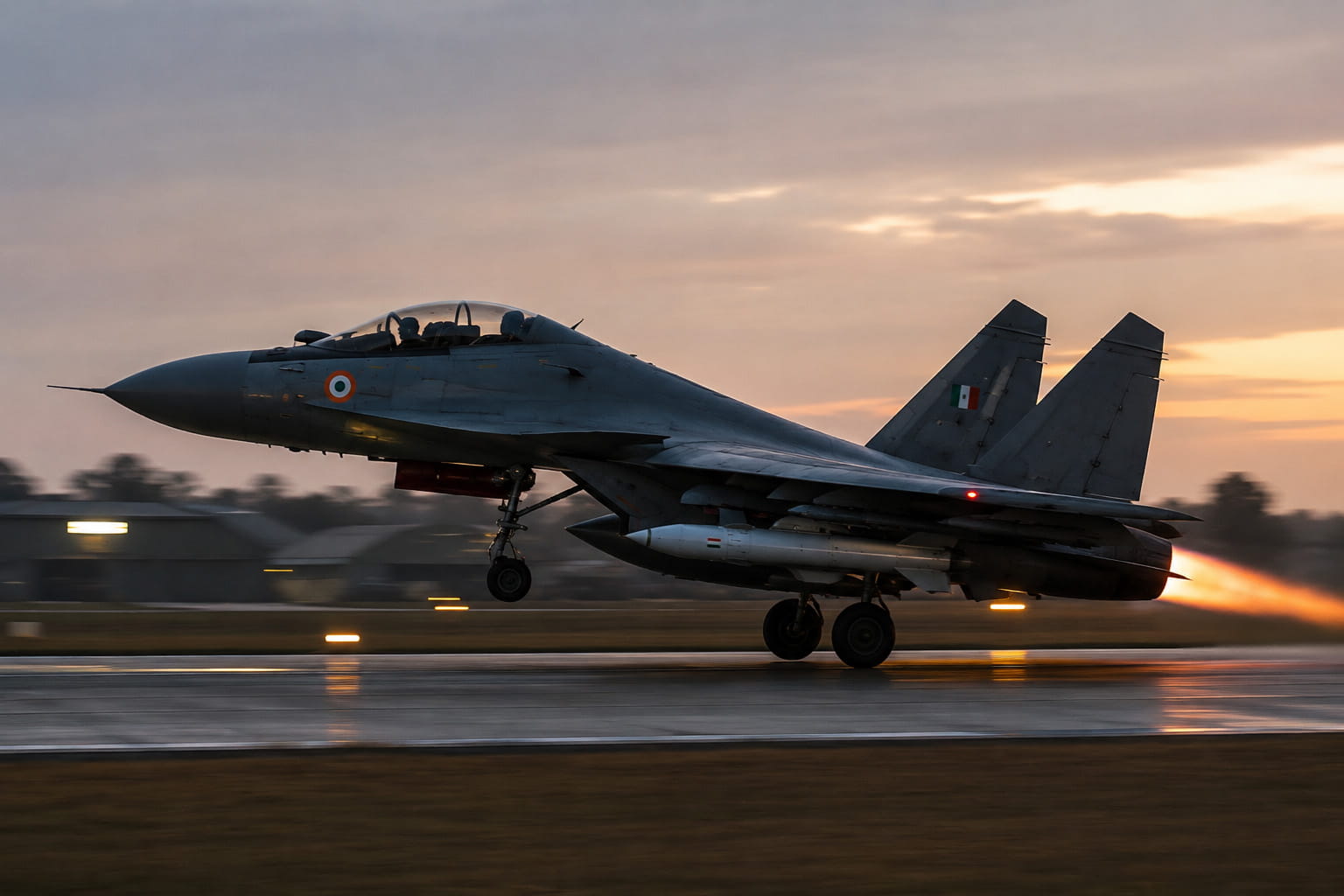
The study lays out six levers to help the sector ease execution bottlenecks, which improve delivery capacity and unlock transformation at scale.
India’s aerospace and defence (A&D) sector is entering a high-growth phase. Still, execution constraints emerge as the biggest risk to sustaining momentum, according to a new PwC India study titled ‘Accelerating aerospace and defence manufacturing through operational excellence and supply chain resilience’.
The A&D sector is ready to play a catalytic role in India’s economic transformation, helping drive the nearly 16-fold expansion in manufacturing needed to realise the country’s ambition of a $30 trillion economy by 2047. While strong demand, rising exports, and policy support have firmly positioned A&D manufacturing as a key pillar of India’s economic growth, the study highlights that large order backlogs—potentially taking up to a decade to clear—could test the sector’s ability to deliver at scale.



“For India’s aerospace and defence sector, the next phase of growth will be shaped not just by demand, but by the ability to execute with consistency, speed, and precision with scale. Companies that strengthen planning, modernise operations, and build resilient, digitally connected supply chains will be best placed to convert today’s order pipeline into timely, high-quality output at scale,” says Captain Vishal Kanwar, Aerospace Defence and Space Leader, PwC India.
Execution is the real challenge, not the demand
India’s A&D sector is at a turning point. Demand is strong. Exports are rising. But the next phase will be defined by one thing: execution at scale. India now exports defence products to nearly 100 countries. Domestic defence production reached a record ₹1.54 lakh crore in FY25. Yet, large order books are creating pressure on delivery capacity.
For major manufacturers, order backlogs are already significant:
- 1.71x to 6.88x order book-to-revenue multiples
- 2–7 years of execution backlog
- In some segments, up to 5–10 years to clear existing orders
This points to a clear structural challenge. As Dinesh Arora, Partner and Leader, Advisory, PwC India, notes: “The real test for India’s aerospace and defence sector is no longer whether demand exists, but whether the ecosystem can execute with speed, precision, and resilience. As order books expand, companies will need to move beyond incremental capacity addition and fundamentally strengthen planning, shopfloor productivity, supplier coordination, and digital integration. Those that build these capabilities early will be better positioned to convert growth momentum into reliable, globally competitive delivery. Put simply, India has the opportunity. Now it must build the execution engine to match it.”
The blueprint to convert backlog into output
To address the widening gap between order books and execution capacity, the study outlines six priority transformation areas:
- Supply chain efficiency
- Operational excellence
- Planning and governance
- R&D acceleration
- Workforce productivity
- Digital integration (digital thread)
These transformation levers will help the sector move from backlog-led growth to execution-led scale—from stronger operations and shopfloor discipline to digital integration, fostering indigenous vendor ecosystems and supply chain resilience, and smarter use of advanced technologies. These shifts collectively enhance productivity, minimise rework, and provide manufacturers with the necessary tools to execute operations faster, more reliably, and in line with global competitive standards.

