

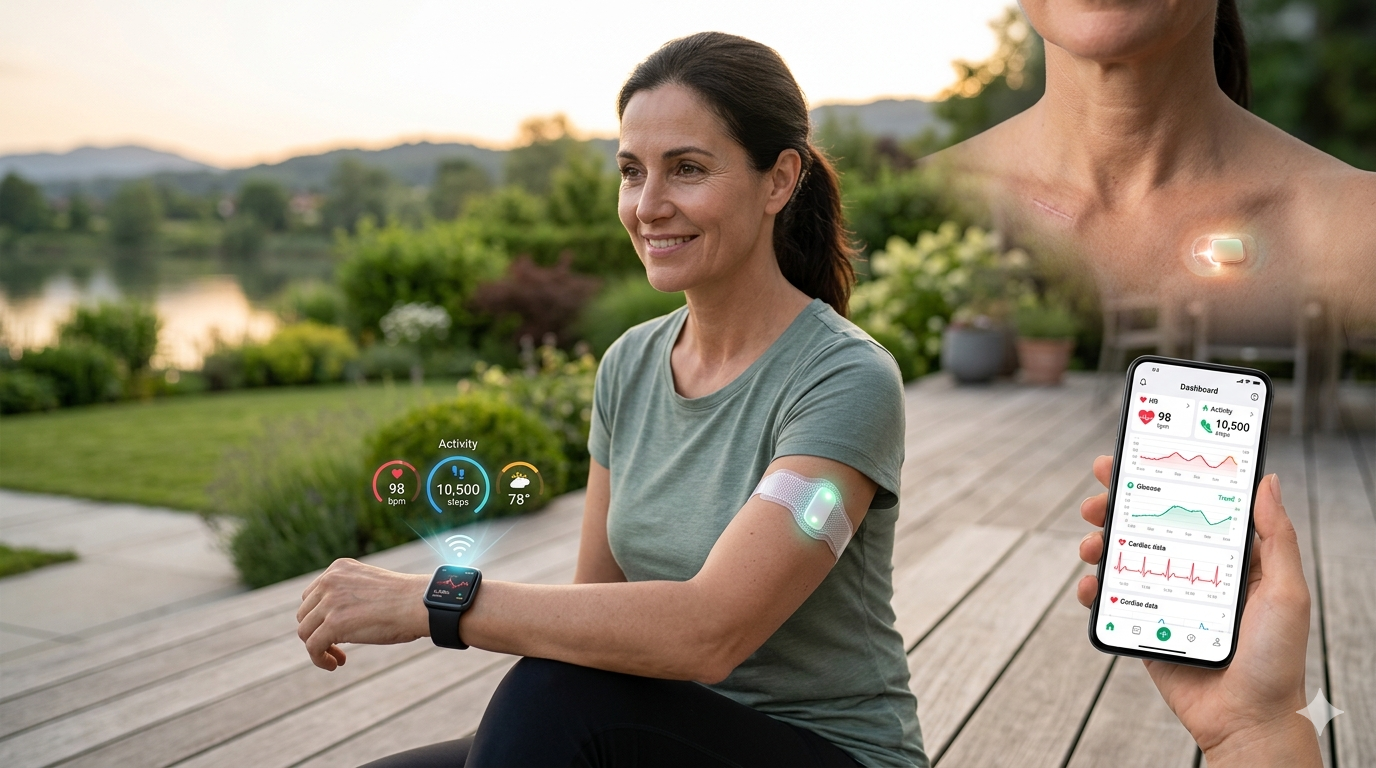
Continuous health monitoring is transforming modern medicine. Instead of relying only on occasional hospital visits and laboratory tests, doctors and patients can now access real-time physiological data through advanced sensors. These technologies are broadly divided into two categories: implantable sensors placed inside the body and non-invasive wearable sensors used externally. Together, they are reshaping healthcare by enabling early disease detection, personalized treatment, and remote patient monitoring.
The Rise of Continuous Health Monitoring



Traditional healthcare systems often depend on periodic measurements such as blood pressure checks or glucose testing. However, many medical conditions change continuously throughout the day. Diseases like diabetes, heart disorders, hypertension, and respiratory illnesses require constant observation to prevent complications.
Continuous health sensors solve this problem by collecting data 24/7. Modern devices can monitor heart rate, blood glucose, oxygen saturation, body temperature, movement, respiration, and even biochemical markers in sweat or interstitial fluid. Advances in microelectronics, wireless communication, artificial intelligence (AI), and biosensor engineering have accelerated the development of these smart healthcare systems.
Implantable Health Sensors
Implantable sensors are devices inserted under the skin or within organs to monitor biological signals directly from the body. These sensors provide highly accurate and continuous data because they interact closely with tissues and body fluids.
Examples of Implantable Sensors
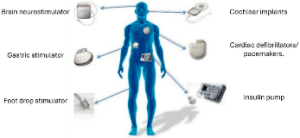
One of the most successful implantable technologies is the continuous glucose monitor (CGM) used for diabetes management. Devices such as implantable glucose sensors can remain under the skin for months and transmit blood sugar readings to smartphones in real time. Recent FDA-cleared systems can operate for up to one year before replacement.
Another major application is implantable cardiac monitors. These miniature devices continuously track heart rhythms and help physicians detect arrhythmias or irregular heartbeats. Modern systems are tiny, minimally invasive, and capable of remote data transmission to healthcare providers.
Researchers are also developing advanced implantable biosensors capable of measuring oxygen levels, tissue health, metabolic activity, and even neurological signals. Some experimental devices are battery-free and powered wirelessly through magnetic or inductive coupling technologies.
Illustration: Implantable Biosensor Technology
Advantages of Implantable Sensors
Implantable sensors offer several important advantages:
- High measurement accuracy due to direct contact with internal tissues
- Continuous long-term monitoring without user intervention
- Early detection of medical emergencies
- Improved disease management and personalized treatment
- Reduced hospital visits through remote monitoring
These devices are especially useful for chronic diseases that require precise data over long periods.
Challenges and Risks
Despite their advantages, implantable devices face technical and ethical challenges. Biocompatibility is critical because the body may react negatively to foreign materials. Power supply and wireless communication remain engineering challenges, particularly for miniaturized implants.
Cybersecurity is another concern. Since implantable devices transmit sensitive health data wirelessly, they may become targets for hacking or unauthorized access. Researchers are therefore developing secure communication protocols for medical implants.
Non-Invasive Wearable Sensors
Non-invasive sensors are external devices worn on the body. These include smartwatches, fitness bands, adhesive patches, smart clothing, and portable biosensors. Wearables have become extremely popular because they are convenient, affordable, and easy to use.
Modern wearable devices can measure heart rate, electrocardiograms (ECG), sleep patterns, stress levels, physical activity, oxygen saturation, and body temperature. Some advanced systems also estimate blood pressure and glucose levels using optical or electrochemical techniques.
Illustration: Wearable Health Monitoring Devices
Wearable Biosensors in Healthcare
Wearable biosensors are increasingly used in hospitals and home healthcare environments. Chest-worn biosensors can continuously monitor ECG, respiration, temperature, and motion while transmitting data to cloud platforms for medical analysis.
Smartwatches now include AI-driven health features capable of detecting irregular heart rhythms and providing health alerts. During the COVID-19 pandemic, wearable monitoring gained importance because patients could be observed remotely without frequent hospital visits.
Flexible and epidermal sensors are another exciting innovation. These ultra-thin electronic patches attach directly to the skin and can monitor sweat composition, hydration, muscle activity, and biochemical signals with minimal discomfort.
Role of Artificial Intelligence and Big Data
Artificial intelligence is becoming a central component of continuous health monitoring systems. AI algorithms analyze sensor data to identify abnormalities, predict disease risks, and provide personalized recommendations.
For example, AI can detect early signs of atrial fibrillation from smartwatch ECG data or predict dangerous glucose fluctuations before symptoms occur. Cloud computing and Internet of Things (IoT) technologies allow healthcare providers to monitor thousands of patients remotely and respond quickly during emergencies.
The integration of AI with biosensors is expected to create predictive healthcare systems where diseases are identified before they become severe.
Future Research and Innovations
The future of health sensors lies in miniaturization, flexibility, and multi-parameter monitoring. Researchers are developing implantable biosensors that can simultaneously measure multiple biochemical markers using advanced nanotechnology and microelectromechanical systems (MEMS).
Future devices may include:
- Battery-free implantable sensors
- Smart tattoos for biochemical monitoring
- Flexible electronic skin
- AI-powered diagnostic wearables
- Wireless neural implants
- Real-time personalized drug delivery systems
As technology advances, healthcare may shift from reactive treatment to proactive prevention.
Conclusion
Implantable and non-invasive continuous health sensors represent one of the most important technological revolutions in modern medicine. Implantable devices provide accurate internal monitoring, while wearable sensors offer convenient and affordable health tracking for everyday use. Together with AI, wireless communication, and biosensor research, these technologies are enabling a future of personalized, preventive, and data-driven healthcare.
Although challenges related to safety, cybersecurity, cost, and regulatory approval remain, continuous health sensors are expected to play a major role in improving global healthcare systems and patient quality of life in the coming decades.

