

Let’s consider several scenarios in which wireless capability was added to enhance the effectiveness of a system and mission-critical reliability of connectivity:
Smart Factory: Production Process Control for Industry 4.0 Connected devices are attractive in the manufacturing arena due to the potential improvements in overall yield. To achieve this, it is often necessary to gain remote control of various devices in the production chain to implement adjustments. An example is a control valve for a boiler operating in a chemical production process. Immediate and autonomous control of this valve can make real-time adjustments based on feedback from other stages in the process, leading to more optimized overall efficiency.




Smart Healthcare: Vital Signs Monitoring Hospitals and care centers are looking to wireless connectivity to monitor patient vital signs. Clunky wired solutions can be replaced with wireless sensor patches connected through a local gateway. Such systems enable more effective patient monitoring while reducing the burden on healthcare staff.
Smart City: Event Sensing for Emergency Response With advanced image and acoustic sensing and processing methods, systems mounted in public spaces (for example, on lampposts) can detect events like vehicle accidents and criminal activity with a high degree of confidence. This information can be relayed via wireless communications to the appropriate agency or unit, along with the location information, thus quickening the emergency response.
Challenges in Building Reliable Wireless Connectivity in Complex Environments
RF Obstacles Cause Missed Packets Each of the examples mentioned above is subject to distinct environmental challenges that can negatively affect wireless communication. For example, the steel construction and thick walls of factories create large obstacles that may degrade the power of an RF signal to the point where it cannot be received by the target device. The sensitivity of the radio receiver used in the target device will determine the tolerance level of signal degradation. A change in sensitivity that is as low as 2 dB could be the difference between successful or unsuccessful reception of a signal. Communication-system designers must pay close attention to receiver sensitivity when selecting a radio.
Crowded Frequency Bands Cause Missed Packets Connected devices will typically operate in the relevant industrial-scientific-medical (ISM) band for a given region. ISM bands are license-free and can be used for a wide range of applications that require wireless connectivity. The 2.4-GHz band is standardized globally and extensively used by Wi-Fi and Bluetooth devices. ISM spectrum is also available in sub-1-GHz bands—a common destination for IoT applications. The sub-1-GHz band is centered at 868 MHz in Europe and 915 MHz in the U.S.
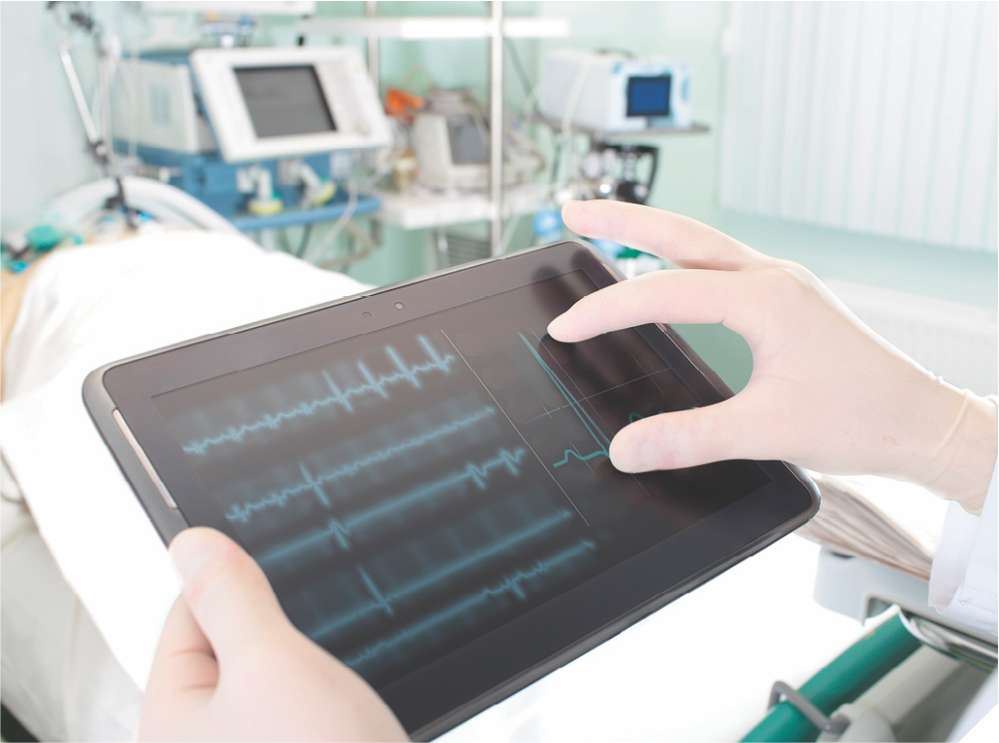
A challenge arises when multiple devices located in close proximity share the same ISM band. Transmitting devices can interfere with nearby receiving devices, such as in public hospitals that have multiple machines within the same ISM band. A radio’s ability to function properly in the presence of such interferers is measured by the blocking specification.
However, the challenge extends beyond devices operating within the ISM band. Without sufficient blocking capability, mobile phones or tablets operating nearby could cause a loss of communication in the system. In military and aerospace applications, very costly components are incorporated to mitigate the effect of interferers. Radios being used for mission-critical data, such as the applications mentioned, must achieve similar performance to military and aerospace without incurring the high cost of additional external components. Such radios will continue to receive messages with multiple interferers operating nearby.
Environmental Effects Degrade Performance Radio transceivers are built on processes prone to performance variations that depend on their surrounding environment. Such variations include temperature changes, voltage-supply reductions as batteries discharge, and silicon manufacturing variations across devices. These real-life events can cause changes in the device’s operating stability.

