

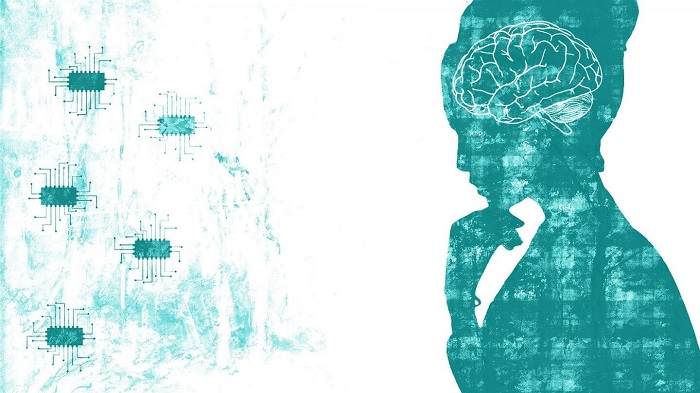
We all like to think that we know ourselves best, but given that our brain activity is largely governed by our subconscious mind, it is probably our brain that knows us better. While this is only a hypothesis, researchers from Japan have already proposed a content recommendation system that assumes this to be true. Essentially, such a system makes use of its user’s brain signals (acquired using, say, an MRI scan) when exposed to a particular content and eventually, by exploring various users and contents, builds up a general model of brain activity.
“Once we obtain the ‘ultimate’ brain model, we should be able to perfectly estimate the brain activity of a person exposed to a specific content,” says Prof. Ryoichi Shinkuma from Shibaura Institute of Technology, Japan, who was a part of the team that came up with the idea. “This could provide powerful solutions in the commercial field, such as reduce the costs of targeted advertising.”




However, a major drawback presents itself at the outset: Acquiring MRI scans is expensive. A typical brain scan would involve deployment and maintenance costs of an MRI, the labor costs of specialists, and the recruitment costs of a large number of participants. Faced with this challenge, Prof. Shinkuma and his team has come up with an ingenious solution: Using profile information of people to infer their brain model.
In a new study, Man, and Cybernetics: Systems, the team proposes a scheme that attempts to mitigate the trade-off between the performance associated with inferring the brain model from profile information and the cost of acquiring that information. “Our scheme utilizes machine learning (ML) to create a brain model based on inference of profile model,” explains Prof. Shinkuma. “To reduce the cost of information collection, we make use of the feature selection capability of machine learning (ML) to narrow down the number of questionnaire items by estimating the extent to which each item contributes to the inference performance.”
Specifically, the feature selection process quantified the contribution of a questionnaire item by attributing to it an “importance score” and then retained only those with top importance scores for the inference. This allowed the team to maintain a high inference performance while limiting the information cost at the same time.
To validate the effectiveness of their scheme, the team evaluated its performance accuracy using a brain model obtained experimentally and a profile model based on real profile information. They found that the scheme achieved nearly the same level of inference accuracy of the brain model as the case employing 209 questionnaires by using only 15-20 topmost items. This suggested that only the top 10% questionnaire items were enough for inferring the brain model.
“An important next step will be to determine the best combination of ML and feature selection method for optimizing the performance of our scheme,” says an excited Prof. Shinkuma, contemplating future research directions of their work. “At the same time, we will need to reduce the total computation cost for real-world applications involving large number of users.”
Looks like in a not too distant future, our knowledge of who we are might come from the outside.

