
Courtesy: Synopsys
The 1977 Oldsmobile Toronado was ahead of its time.




Featuring an electronic spark timing system that improved fuel economy, it was the first vehicle equipped with a microprocessor and embedded software. But it certainly wasn’t the last.
While the Toronado had a single electronic control unit (ECU) and thousands of lines of code (LOC), modern vehicles have many ECUs and 300 million LOC. What’s more, the pace and scale of innovation continue to accelerate at an exponential, almost unfathomable rate.
It took half a century for cars to reach 300 million LOC.
We predict the amount of software in vehicles will double in the next 12 months alone, reaching 600 million LOC or more by 2027.
The fusion of automotive hardware and software
Automotive design has historically been focused on structural and mechanical platforms — the chassis and engine. Discrete electronic and software components were introduced over time, first to replace existing functions (like manual window cranks) and later to add new features (like GPS navigation).
For decades, these electronics and the software that define them were designed and developed separately from the core vehicle architecture — standalone components added in the latter stages of manufacturing and assembly.
This approach is no longer viable.
Not with the increasing complexity and interdependence of automotive electronics. Not with the criticality of those electronics for vehicle operation, as well as driver and passenger safety. And not with a growing set of software-defined platforms — from advanced driver assistance (ADAS) and surround view camera systems to self-driving capabilities and even onboard agentic AI — poised to double the amount of LOC in vehicles over the next year.
From the chassis down to the code, tomorrow’s vehicles must be designed, developed, and tested as a single, tightly integrated, highly sophisticated system.
Shifting automotive business models
The rapid expansion of vehicular software isn’t just a technology trend — it’s rewriting the economics of the automotive industry. For more than a century, automakers competed on horsepower, handling, and mechanical innovation. Now, the battleground is shifting to software features, connectivity, and continuous improvement.
Instead of selling a static product, OEMs are adopting new, more dynamic business models where vehicles evolve long after they leave the showroom. Over-the-air updates can deliver new capabilities, performance enhancements, and safety improvements without a single trip to the dealer. And features that used to be locked behind trim levels can be offered as on-demand upgrades or subscription services.
This transition is already underway.
Some automakers are experimenting with monthly fees for heated seats or performance boosts. Others are building proprietary operating systems to replace third-party platforms, giving them control over the user experience — as well as the revenue stream. By the end of the decade, software subscriptions will become as common as extended warranties, generating billions in recurring revenue and fundamentally changing how consumers think about car ownership.
The engineering challenge behind OEM transformation
Delivering on the promise of software-defined vehicles (SDVs) that continuously evolve isn’t as simple as adding more code. It requires a fundamental rethinking of how cars are designed, engineered, and validated.
Hundreds of millions of lines of code must push data seamlessly across a variety of electronic components and systems. And those systems — responsible for sensing, safety, communication, and other functions — must work in concert with millisecond precision.
For years, vehicle architectures relied on dozens of discrete ECUs, each dedicated to a specific function. But as software complexity grows, automakers are shifting toward fewer, more powerful centralised compute platforms that can handle much larger workloads. This means more code is running on less hardware, with more functionality consolidated onto a handful of high-performance processors. As a result, the development challenge is shifting from traditional ECU integration — where each supplier delivered a boxed solution — to true software integration across a unified compute platform.
As such, hardware and software development practices can no longer be separate tracks that converge late in the process. They must be designed together and tailored for one another — well before any physical platform exists.
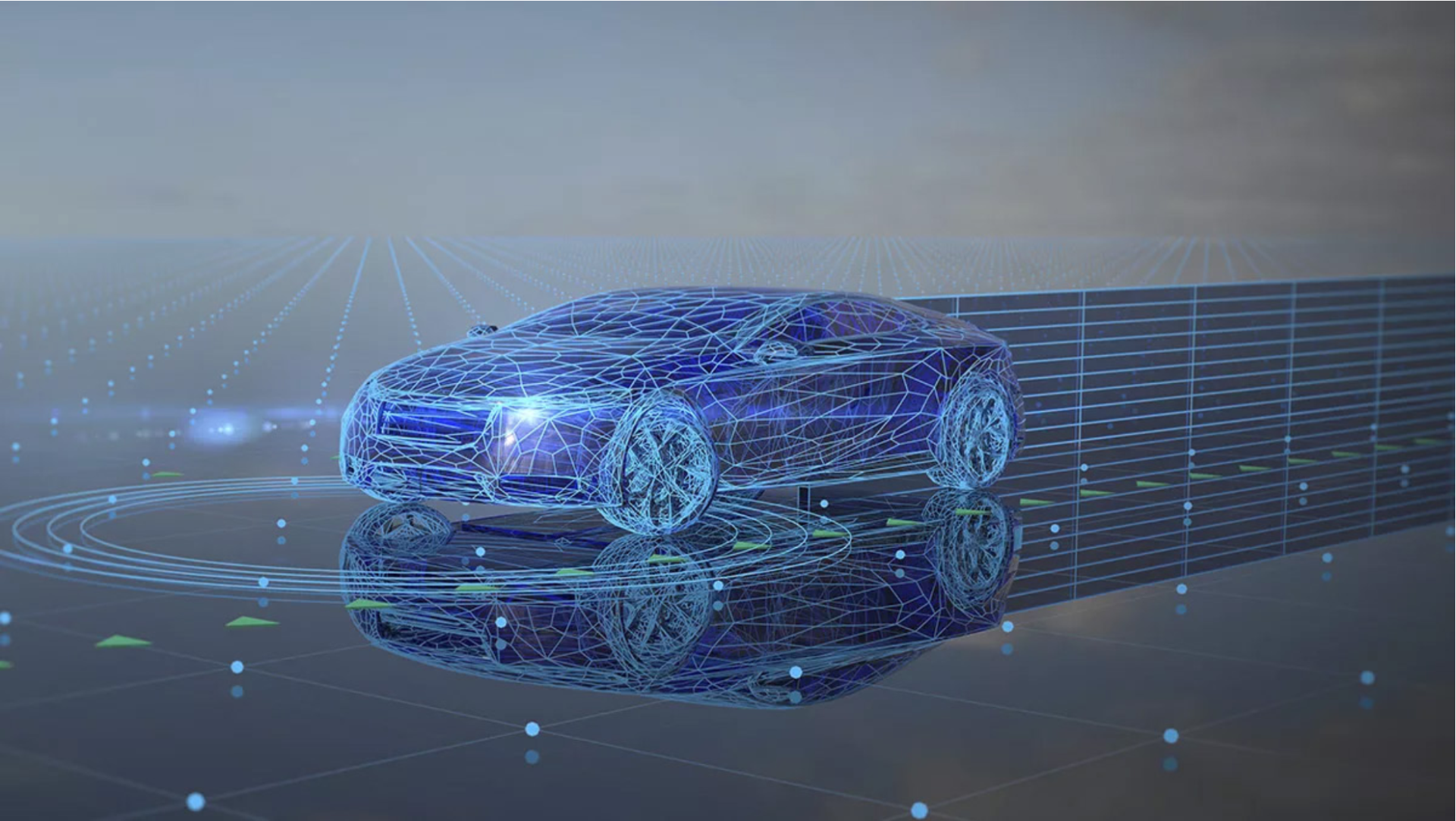
This is where electronics digital twins (eDTs) are becoming indispensable. By creating functionally accurate virtual models of vehicle electronics and systems, design teams can shift from late-stage integration to a model where software and hardware are co-developed from day one.
eDTs and virtual prototypes do more than enable earlier software development at the component level — they allow engineers to simulate, validate, and optimise the entire vehicle electronics. This means teams can see how data flows across subsystems, how critical components interact under real-world scenarios, and how emerging features might impact overall safety and performance. With eDTs, automakers can test billions — even trillions — of operating conditions and edge cases, many of which would be too costly, too time-consuming, or otherwise infeasible with physical prototypes.
By embracing eDTs, the industry is not just keeping pace with escalating complexity — it is re-engineering longstanding engineering processes, accelerating innovation, and improving the quality and safety of tomorrow’s vehicles.
The road ahead
Our prediction of cars containing 600 million lines of code by 2027 isn’t just a number. It signals a turning point for an industry that has operated in largely the same manner for more than a century.
Many automakers are reimagining their identity.
No longer just manufacturers, they’re becoming technology companies with business models that resemble those of cloud providers and app developers. They’re adopting agile, iterative practices, where updates roll out continuously rather than in multi-year product refreshes. And they’re learning how to design, develop, test, and evolve their products as a unified system — from chassis and engine to silicon and software — rather than a collection of pieces that are assembled on a production line.
Unlike the 1977 Oldsmobile Toronado, the car you buy in 2027 won’t be the same car you drive in 2030 — and that’s by design.

