
HomeNewsIndia NewsNeed Efficiency and transparency: Organic Solar Cell are coming

    Need Efficiency and transparency: Organic Solar Cell are coming

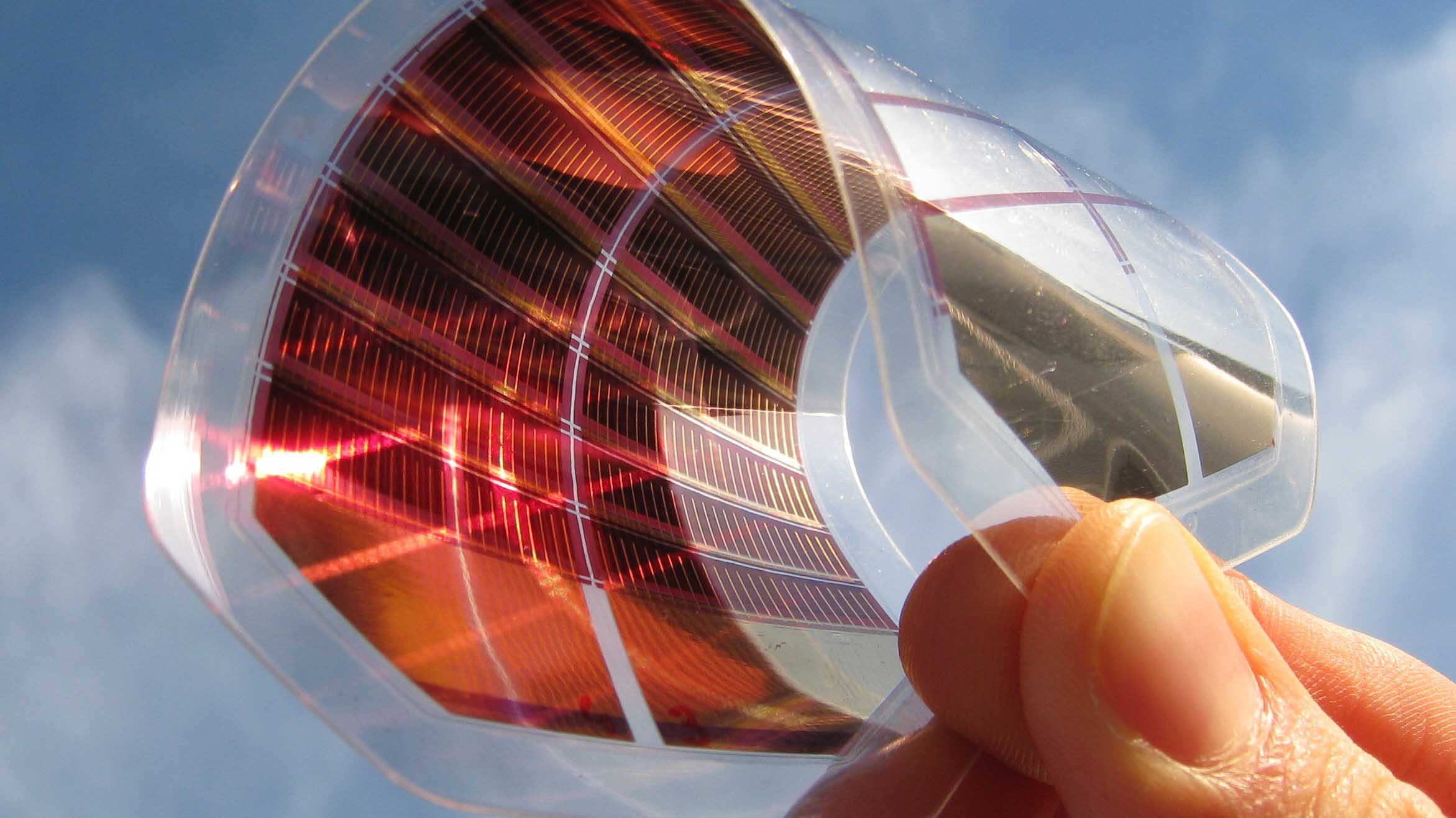
    According to recent study, Researchers in the Science and Technology of Advanced Materials (STAM) developed a semi-transparent organic solar cell that  is more efficient and transparent than existing ones.

    Semi-transparent organic solar cells (OSCs) have potential for providing low-cost, large-area energy conversion devices for various applications such as windows, roof covers and greenhouses. However, it is challenging to achieve semi-transparent OSCs with high power conversion efficiency (PCE) and high transparency at the same time. Usually, the active materials of OSCs consist of a binary blend of a visibly absorbing donor polymer and a fullerene acceptor. The average visible transmittance (AVT) of the cell can be increased by decreasing the binary film thickness; however, this goes at the expense of the PCE because less sunlight is absorbed by a thinner layer.


    In a STAM study, a team led by Mohammed Makha from the Swiss Federal Institute for Materials Science and Technology bypassed this tradeoff between transparency and efficiency of OSCs by using a ternary mixture. In addition, they used a flexible and transparent top electrode that was applied via a lamination step. As an advantage, the lamination process is simple and compatible with roll-to-roll systems for OSC production from solution.

    The team added to a visibly absorbing binary polymer-fullerene blend a dye as a third minority component. The dye absorbs light exclusively in the near-infrared (NIR) wavelength region and therefore does not reduce the visible transparency of the OSC. Due to the additional current generated via NIR absorption, the polymer content could be reduced without compromising the cell performance. Semitransparent OSCs with a uniform AVT or 51% and a PCE of 3% were demonstrated.

    The researchers say that the concept of ternary OSCs with multiple acceptor or donor materials has been recognized before as a strategy to overcome specific limitations of binary blends. However, not many successful ternary systems have been found so far, because the developing film morphology is difficult to control. The team believes that their ternary blend performs so well because of a specific intermixed phase between the NIR dye and the fullerene; therefore, the system could successfully work with other polymers. 
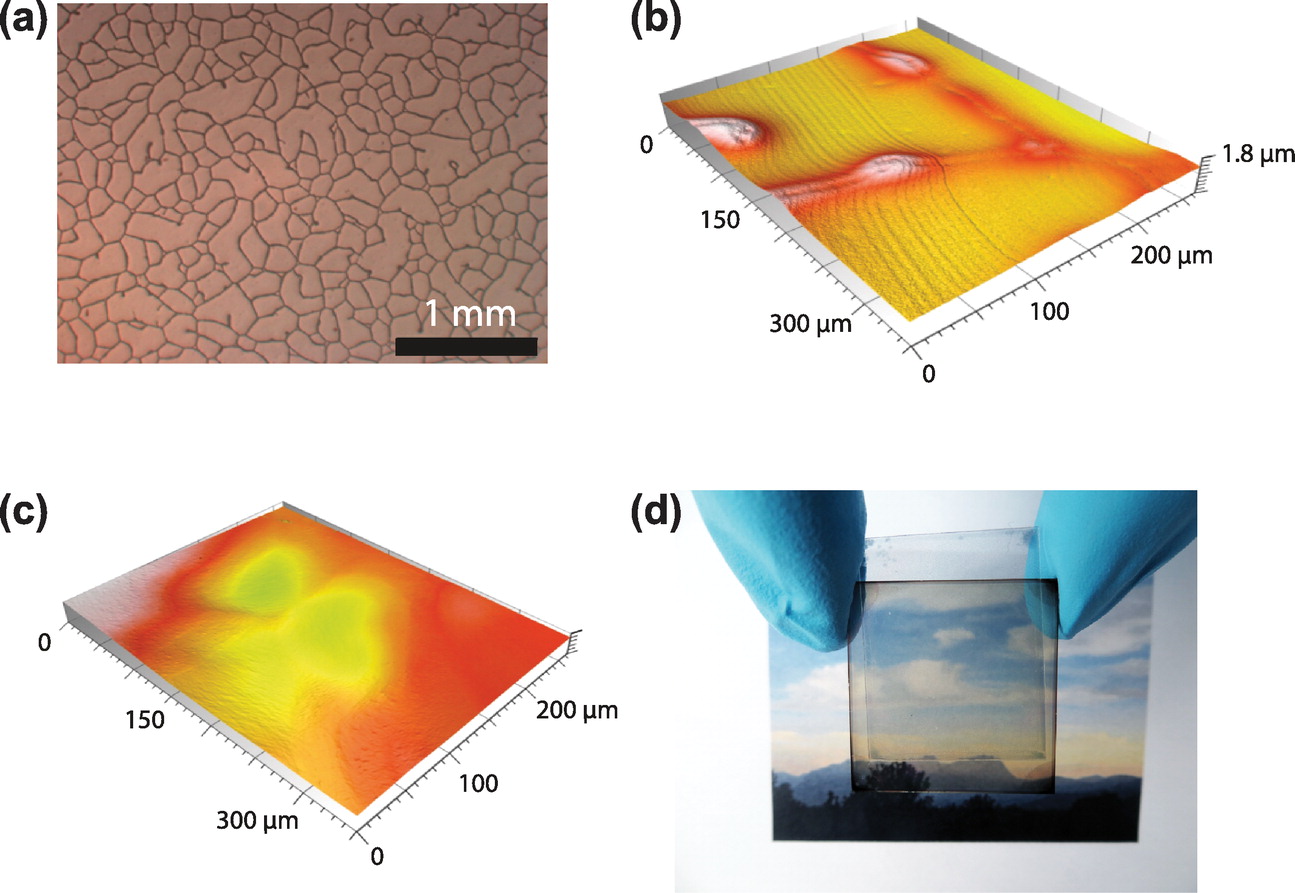
    (a) Optical microscopy image of the commercial substrate that consists of a random mesh-like silver network on PET. Optical confocal microscopy images of the laminate electrode when coating with a ~450 nm thick (b) and ~1.3 um thick (c) PEDOT:PSS:sorbitol film. For small film thicknesses (b), the metal network is not fully covered. (d) Photograph of the semitransparent, laminated cell. 
    ELE Times Bureau
    ELE Times Bureauhttps://www.eletimes.ai/
    ELE Times provides a comprehensive global coverage of Electronics, Technology and the Market. In addition to providing in depth articles, ELE Times attracts the industry’s largest, qualified and highly engaged audiences, who appreciate our timely, relevant content and popular formats. ELE Times helps you build awareness, drive traffic, communicate your offerings to right audience, generate leads and sell your products better.

    Related News

    Must Read

    New LX4580 – Highly Integrated 24‑Channel Mixed‑Signal IC for Aviation & Defence Actuation Systems

    Microchip Technology announces the LX4580, a 24‑channel mixed‑signal IC designed...

    TI redoubles advancement of next-gen physical AI with NVIDIA

    Texas Instruments announced accelerating the safe deployment of humanoid...

    Everspin Advances High-Reliability xSPI MRAM Portfolio With Complete Production Qualification for 64Mb MRAM

    Everspin Technologies, the world’s leading developer and manufacturer of...

    R&S acquires SRS, specialists in SDR communications solutions

    Rohde & Schwarz acquired Software Radio Systems (SRS), a...

    Differentiating Between LPDDR6, LPDDR5, and LPDDR5X

    Courtesy: Synopsys Advances in memory standards are driving faster and...

    Arrow Electronics and Infineon introduce 240W USB-C PD 3.2 reference design for battery-powered motor control applications

    Arrow Electronics and Infineon Technologies AG have announced REF_ARIF240GaN, a...

    Robotics Engineering: The Architectural Evolution Behind IT–OT Convergence

    Factories today operate as dense mechanical ecosystems, whether in...

    How AI Is Transforming Network Protocol Testing in Software-Defined Networks?

    As enterprises accelerate toward cloud-native infrastructure, edge computing, and...

    What is Fashion Tech? Providing New Product Value and Customer Experiences with Technology

    Courtesy: Murata Electronics What is fashion tech? - diverse technologies...
