
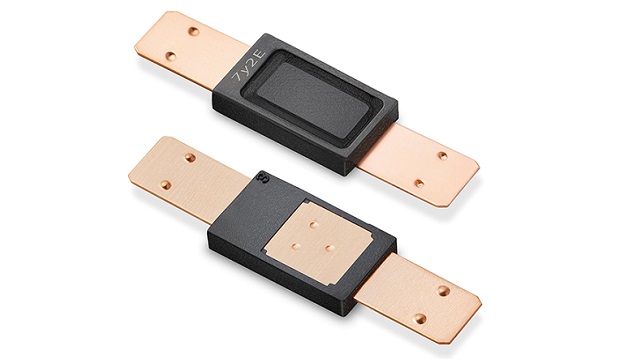
Littelfuse, Inc., introduced MHP–TAC (Metal Hybrid PPTC – Thermal Activated Compact) Series Resettable Over-temperature Protection Devices, the latest addition to its line of battery mini-breakers. These devices connect a PPTC (Polymeric Positive Temperature Coefficient) device in parallel with a bimetal protector (a resettable thermal cut-off device) to protect the high-capacity lithium-ion polymer (LiP) and prismatic battery cells used in mobile devices and consumer electronics from damage caused by overheating and overcurrents.
MHP-TAC Series Resettable Over-temperature Protection Devices




In normal operation, current passes through the bimetal contact because of its low contact resistance. During an abnormal event, the device reacts to the rise in cell temperature, causing the bimetal contact to open at the specified temperature and its contact resistance to increase. At this point, the current shunts to the lower resistance PPTC, which acts as a heater and helps keep the bimetal protector open and in a latched position until the fault is removed.
Typical applications for MHP-TAC Series Resettable Over-temperature Protection Devices include LiP and prismatic battery cells intended for use in battery-powered devices such as notebook PCs, ultra-books, tablets, smart phones and e-cigarettes
“At just 4.75mm x 2.80mm x 0.80mm, the MHP-TAC Series is the smallest overtemperature protection device available for lithium-ion battery cells used in today’s mobile devices and consumer electronics,” said Amy Chu, Product Manager, Electronics Business Unit at Littelfuse. “Not only can it help our battery manufacturer customers save valuable design space and weight, but it helps their products meet today’s heightened battery safety requirements,” he added.
MHP-TAC Series Resettable Over-temperature Protection Devices offer these key benefits:
- High voltage and high current ratings and low resistance ensures the MHP-TAC Series is capable of handling the battery voltages and battery charge/discharge currents common in high-capacity lithium-ion polymer and prismatic cells.
- The thin, compact form factor saves space, simplifying circuit protection in ultra-thin battery pack designs.
- Welding extension leads can be customized, which can facilitate matching them to the battery design.

