
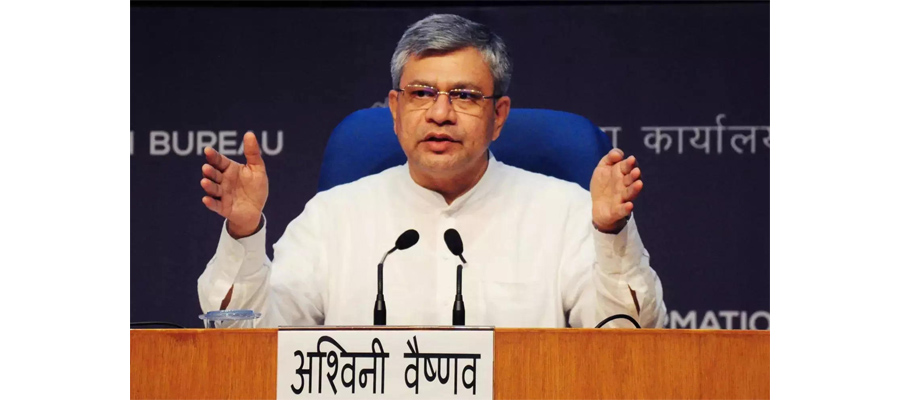
The Indian government, under the leadership of Prime Minister Narendra Modi, has given its approval for the Production Linked Incentive (PLI) Scheme 2.0 for the IT hardware sector. The scheme has a budgetary outlay of Rs 17,000 crore and will be implemented over a period of six years. Union Electronics Minister Ashwini Vaishnaw has stated that the expected investment in the program is Rs 2,430 crore, but there is a possibility that the actual investment could be higher.
Over the past eight years, the electronics manufacturing industry in India has experienced steady growth, with a compound annual growth rate of 17%. This year, it has surpassed a significant milestone by producing goods worth USD 105 billion (approximately Rs 9 lakh crore). The PLI Scheme 2.0 for IT hardware will encompass various products such as laptops, tablets, all-in-one PCs, servers, and ultra-small form factor devices.




The scheme aims to bolster domestic manufacturing capabilities in the IT hardware sector and attract substantial investments. It is projected to result in incremental production worth Rs 3.35 lakh crore and create direct employment opportunities for 75,000 individuals throughout the duration of the scheme.
This new scheme comes as a follow-up to the PLI scheme for IT hardware approved by the government in February 2021, which had a budget of Rs 7,350 crore. However, industry players had requested an increase in the budgetary allocation for this segment. Taking cues from the success of the PLI scheme in the mobile phone manufacturing sector, the government has introduced the PLI 2.0 scheme for IT hardware to further promote the growth of domestic manufacturing and attract large-scale investments.
Minister Ashwini Vaishnaw highlighted the achievements of the Indian electronics manufacturing industry, stating that in the fiscal year 2023, India’s production reached a value of $105 billion, with over $10 billion worth of mobile phones being exported.
Overall, the PLI Scheme 2.0 for IT hardware is a strategic move by the Indian government to strengthen the country’s position in the global IT hardware market, encourage local manufacturing, and create employment opportunities in the sector.

