

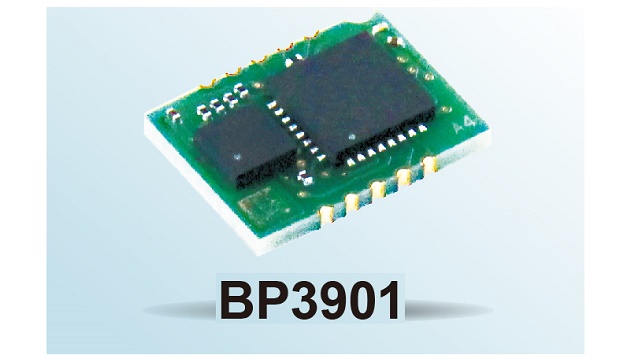
ROHM announces the availability of an ultra-compact high accuracy seismic detection sensor module, BP3901, which is ideal for applications requiring reliable earthquake detection, such as automatic doors, unmanned transport vehicles, and smart meters.
Functions for accurately detecting vibration when an earthquake occurs and for stopping operation of equipment have garnered increased interest to prevent secondary disasters caused by fires and other factors in the aftermath of an earthquake. Similar functions to quickly detect damage conditions and assist with early recovery are also demanded in various infrastructures such as buildings and roads. However, mechanical earthquake detectors can only detect the presence/absence of vibration, and cannot distinguish whether the vibration is due to an actual earthquake or to other external factors, which often results in false positives.




In response, ROHM developed an ultra-compact (11.8 x 8.6 x 2.5 mm) BP3901 that integrates an original earthquake detection algorithm and offers high accuracy. In addition, a false detection prevention function is built in and it is capable of accurately distinguishing between vibration due to earthquakes or other external factors. It also has an angle correction function (±15° allowable mounting angle) that can correct for unintentional tilt of the module, further improving detection accuracy.
ROHM will continue to develop algorithms optimized for different vibration detection and expand its sensor module lineup. We will also offer total solutions for customer applications that contribute to greater safety and convenience by leveraging wireless technologies, such as Wi-SUN that is optimized for smart meter networks.
 Key Features:
- Enables high Accuracy Earthquake Detection in a Compact Module Form Factor
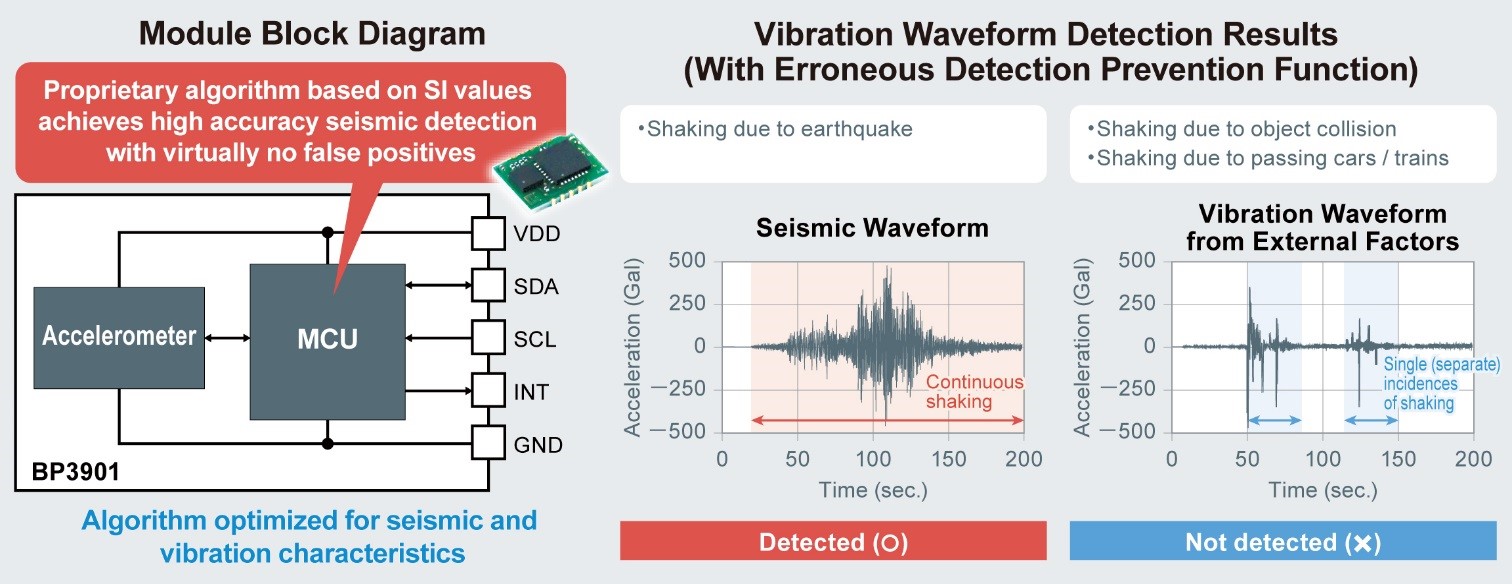
The BP3901 incorporates a 3-axis accelerometer (from ROHM Group company Kionix) in a compact 11.8 x 8.6 x 2.5mm module package. ROHM developed a unique algorithm focused on determining SI (Spectrum Intensity) values. This algorithm features a high correlation with measured seismic intensity data used for earthquake damage assessment while it also optimizes the digital signal processing of acceleration data and calculation parameters/sequence through analysis of measured excitation data. This makes it possible to accurately measure the seismic level, enabling more precise earthquake detection compared with conventional mechanical sensors.
ROHM’s sensor adds the following 2 functions that further improve detection accuracy –
a) False detection prevention function distinguishes between seismic and external factors’ vibrations.
In applications requiring earthquake detection, false detection can occur due to various vibrations caused by collisions with external objects. However, by conducting detailed analysis of vibration waveforms and integrating a false detection prevention function, ROHM was able to distinguish between waveforms due to external factors’ vibrations and actual seismic events.
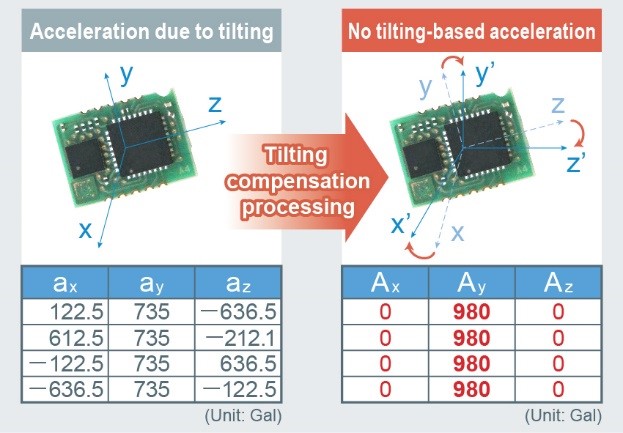
b) Angle compensation function provides a mounting tolerance of ±15°.
Conventional earthquake detectors can encounter problems in detecting earthquakes due to deviations in the internal seismic detection function and inclination that occurs over time. In contrast, the BP3901 achieves angle correction by combining the characteristics of the built-in accelerometer with new angle compensation operation. This allows it to correct for inclination within the vertical planes by up to ±15° (3x that of conventional products) in response to the gravitational acceleration of the Earth.
- Contributes to longer application operation by reducing standby current consumption
The module is designed to stay in standby mode until a seismic event is detected. Since the device needs to be in standby state for long periods to prolong application operation, it is important to reduce current consumption during standby as much as possible. The BP3901 achieves low standby current consumption (3.5uA) by optimizing arithmetic processing. For example, installing this module in a fan heater exposed to an average of 10 seismic events a month (duration: 180s/time) enables operation for up to 5 years or more on just 2 alkaline AA batteries (in series).
- Stores seismic data for analysis
The BP3901 saves calculated seismic data in non-volatile memory when the vibration exceeds a certain level. The last 16 seismic events can be stored in order of earthquake magnitude. Analyzing earthquake data collected at various locations will make it possible to predict future earthquakes. In addition, by enabling comparison of past earthquake data with damage conditions and equipment deterioration it is also expected to see use in earthquake recovery work and maintenance prioritization.
Applications
- Smart meters (power, gas)
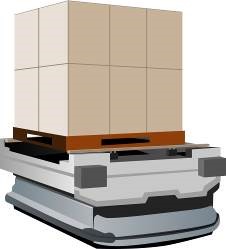
- Unmanned transport vehicles
- Automatic doors
- Infrastructures such as roads and buildings
- And more…Vending machines
- Household appliances (i.e. fan heaters, lighting)
- Distribution boards (breakers), AC outlets

For more information, visit: www.rohm.com

